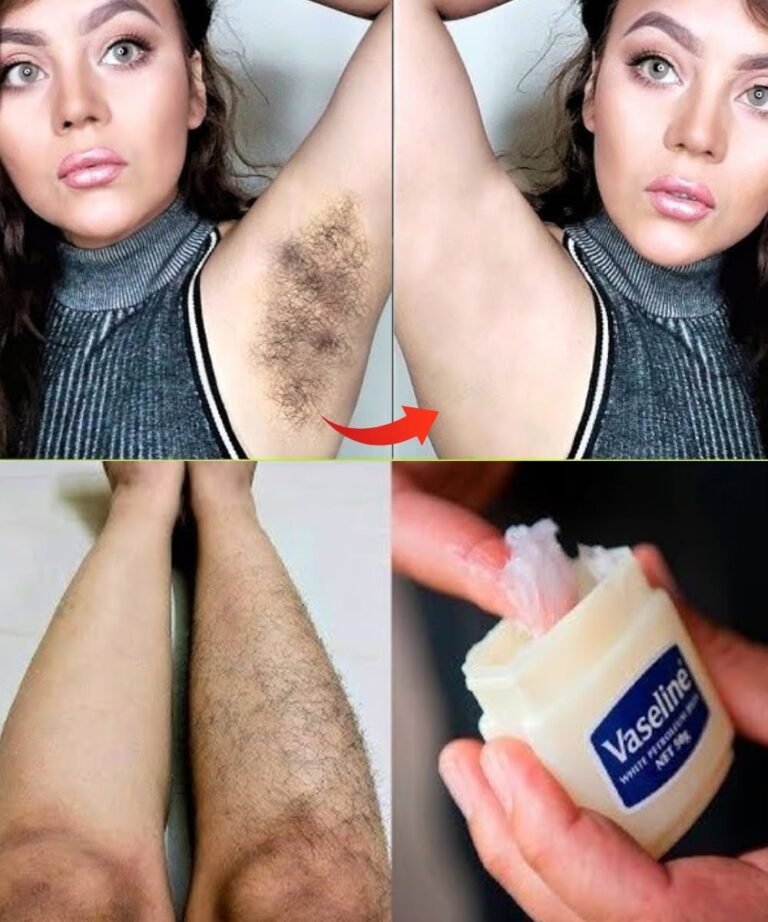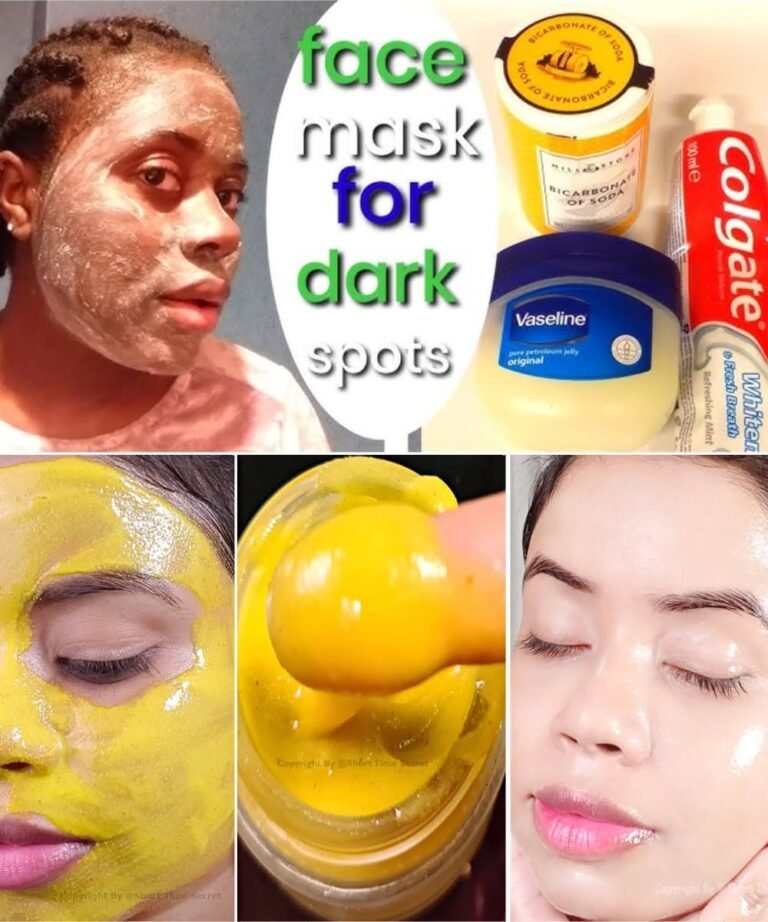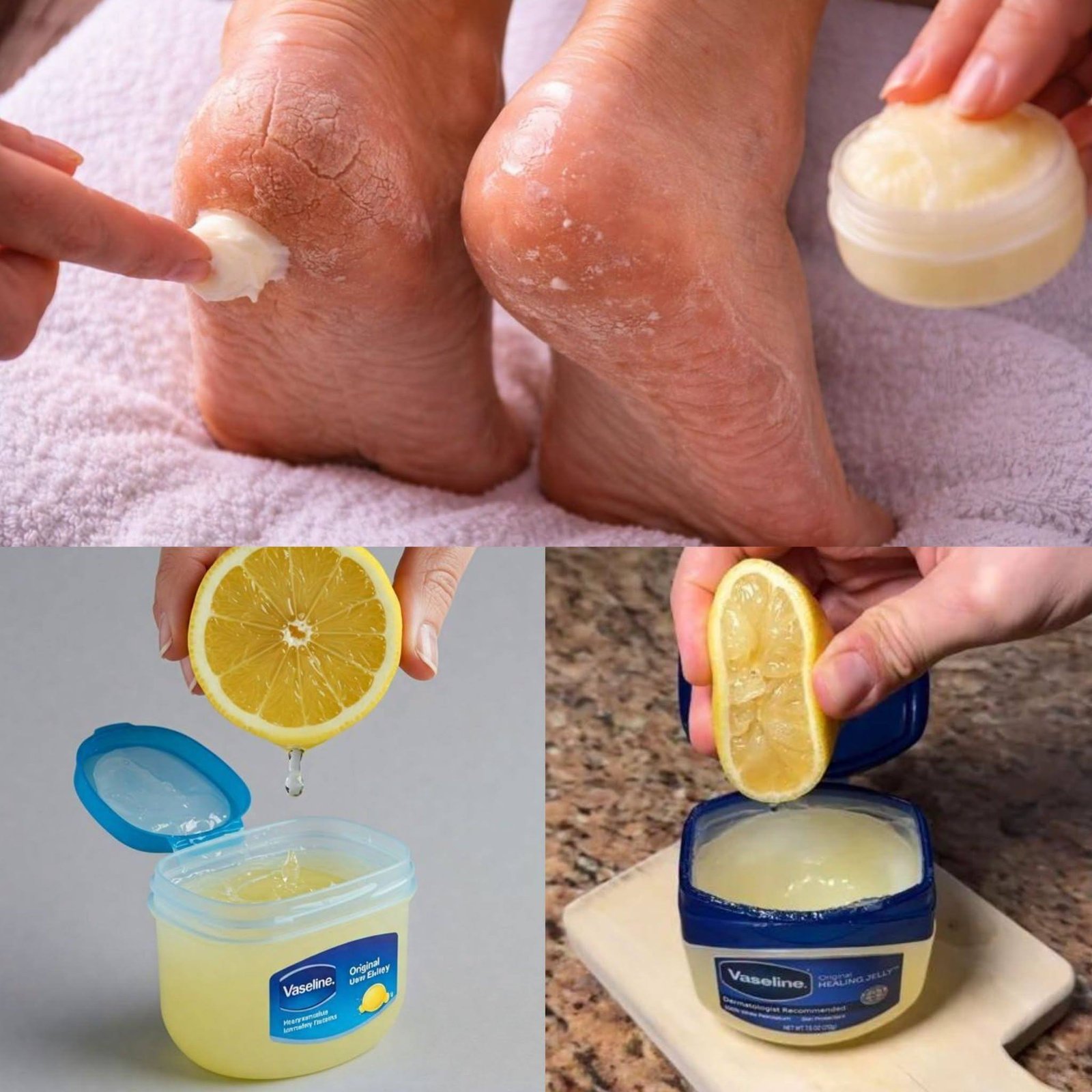
Mix Vaseline with Lemon and you will be shocked! If only I had known about this earlier!
I had used Vaseline for years without thinking much about it. Dry lips? Vaseline. Rough heels? Vaseline. Cracked cuticles? Another little dab.
Lemon was just as ordinary—something I squeezed over salads or dropped into water.
Then I started seeing people mixing the two together and using the combination on rough heels, elbows, knees, hands, nails, and dark-looking patches of skin. Some claimed their skin looked completely different after only a few applications.
The combination sounds almost too simple, but there’s an interesting reason people notice a difference.
Petroleum jelly is an extremely effective occlusive, meaning it forms a barrier that reduces moisture loss from the skin. Lemon juice, meanwhile, contains citric acid and vitamin C, although fresh lemon juice is much more acidic and unpredictable than a properly formulated vitamin C skincare product.
Put them together and you get a mixture that can make certain areas feel incredibly soft—but there’s one important lemon rule that makes all the difference.
1. Vaseline Can Transform Very Dry Skin
Petroleum jelly doesn’t hydrate skin by pouring moisture into it.
Instead, it creates an occlusive layer that dramatically reduces transepidermal water loss.
That’s why it works particularly well when applied to slightly damp skin.
Rather than allowing that moisture to evaporate, the petroleum jelly helps keep it where you want it.
This is also why skin can feel noticeably softer by the following morning.
2. Rough Heels Are Where Vaseline Really Shines
If I had to choose one place to use petroleum jelly, it would probably be the feet.
After bathing, dry the feet but leave the skin slightly damp. Massage a thin layer of Vaseline over rough heels and put on cotton socks.
Leave it overnight.
The following morning, thick, dry skin can feel considerably softer.
Interestingly, you don’t even need lemon for this trick. Petroleum jelly does most of the heavy lifting.
3. Lemon Contains Citric Acid
Here’s why lemon entered the viral recipe.
Lemon juice naturally contains citric acid, which belongs to the alpha-hydroxy-acid family.
AHAs are widely used in skincare because properly formulated concentrations can help exfoliate the surface of the skin.
But there’s an enormous difference between a professionally formulated citric-acid product and squeezing a fresh lemon onto your face.
Fresh lemon juice can be extremely acidic and irritating.
So although the chemistry behind the idea isn’t completely random, application matters enormously.
4. Dry Elbows Can Look Better Surprisingly Quickly
Sometimes an area appears darker simply because the surface is dry, thickened, and rough.
Moisturizing it consistently can change how light reflects from the skin, making the area appear smoother and more even.
For elbows, I prefer applying plain Vaseline after a shower.
If you’re experimenting with the lemon mixture, keep it away from cracked, freshly shaved, or irritated skin.
If it stings, wash it off.
Your skincare routine isn’t supposed to be a bravery test.
5. It’s Wonderful Around Dry Nails and Cuticles
This is another place where Vaseline earns its reputation.
Put a tiny amount around the nails before bed and massage it into the cuticles.
Repeated handwashing, cleaning products, cold weather, and dry indoor air can strip moisture from the skin around the nails.
An occlusive layer overnight can make those areas feel noticeably softer.
For this particular use, skip the lemon entirely. Citric acid around tiny cuts or torn cuticles can sting fiercely.
6. Vaseline Can Help Protect Chapped Lips
Petroleum jelly is also excellent for reducing moisture loss from dry lips.
Apply a very thin layer before bed or whenever lips feel dry.
But despite countless social-media recipes suggesting otherwise, don’t add lemon juice to your lips.
Lips have a delicate barrier, and acidic lemon juice can cause irritation rather than making them healthier.
Plain Vaseline wins this round easily.
7. What About Dark Knees and Elbows?
This is probably the biggest reason the Vaseline-and-lemon trick became viral.
People often claim lemon “bleaches” dark skin.
That’s an oversimplification.
Lemon contains acids and antioxidant compounds, but repeatedly irritating the skin can actually make pigmentation problems worse, particularly in people prone to post-inflammatory hyperpigmentation.
Meanwhile, moisturizing thick, dry skin can make knees and elbows look smoother and less dull.
So don’t scrub aggressively.
Gentle care usually wins.
8. It Makes a Fantastic Overnight Hand Treatment
This is one of my favorite versions.
Wash your hands before bed, apply your regular fragrance-free moisturizer, then spread a very thin layer of Vaseline over particularly dry areas.
The petroleum jelly acts as the final occlusive layer.
If your hands are extremely dry, lightweight cotton gloves can be worn overnight.
By morning, they often feel dramatically softer.
Again, there’s no need for lemon on cracked hands.
9. The Mixture Isn’t a Wrinkle Eraser—But There’s an Interesting Illusion
People sometimes apply Vaseline and lemon and wake up convinced their wrinkles disappeared.
Something real may have changed—but not the underlying structure of the skin overnight.
When dry surface skin becomes better moisturized, fine dehydration lines can temporarily appear less obvious.
The skin looks plumper and smoother.
That’s one reason a simple moisturizer can sometimes produce a surprisingly impressive before-and-after photograph.
10. Here’s the Lemon Detail Most Viral Videos Forget
Fresh lemon juice and sunlight are not always friendly companions.
Citrus juice on skin followed by ultraviolet exposure can trigger phytophotodermatitis—an inflammatory reaction associated with certain plant compounds plus UVA exposure.
It can cause redness, blistering, and subsequently dark pigmentation.
That’s why I’d never recommend coating exposed skin in lemon juice before going outside.
This is especially important on the face, hands, and arms.
So Should You Actually Mix Them?
You can make a very mild mixture for small areas of intact, thick skin, such as rough heels or elbows, but lemon isn’t what makes Vaseline such an effective moisturizer.
If your goal is simply softer skin, plain petroleum jelly is the easier and gentler option.
If you still want to try the viral combination, I’d keep the lemon extremely diluted and use it as a short-contact treatment rather than leaving concentrated lemon juice underneath petroleum jelly overnight.
My Gentler Vaseline & Lemon Heel Treatment
Rather than mixing equal amounts of lemon juice and Vaseline—which can be unnecessarily harsh—I use a much milder approach.
You’ll need
- 1 teaspoon Vaseline
- ½ teaspoon aloe vera gel
- 2–3 drops fresh lemon juice
- 1 teaspoon finely mashed ripe avocado
Mix everything immediately before using it.
Apply a thin layer to a small patch of intact heel skin first. If there’s no burning or significant irritation, spread it over rough heel areas.
Leave it on for approximately 10 minutes, then rinse and dry your feet.
Now comes the useful part:
Apply a thin layer of plain Vaseline to slightly damp heels and put on cotton socks overnight.
The lemon mixture is washed away, while the petroleum jelly stays behind to reduce moisture loss.
The Version I Like Even Better
If you have sensitive skin, skip the lemon completely.
After a warm shower, apply a regular moisturizer containing ingredients such as glycerin or urea, then seal it with a very thin layer of petroleum jelly.
For rough heels, this can be considerably more predictable than experimenting with kitchen acids.
Sometimes the least exciting recipe produces the best-looking skin.
Where I Would Never Use the Lemon Mixture
Keep fresh lemon away from the eyes, lips, broken skin, freshly shaved areas, active rashes, and irritated facial skin.
And don’t use it immediately before sun exposure.
If your goal is facial brightening or pigmentation care, a properly formulated skincare product containing vitamin C, niacinamide, or an appropriate exfoliating acid gives you much better control than squeezing fruit onto your face.
The Bottom Line
The viral Vaseline-and-lemon trick contains one genuinely excellent ingredient for dry skin:
petroleum jelly.
It forms a protective barrier that reduces moisture loss and can make rough heels, elbows, hands, and cuticles feel dramatically softer.
Lemon contributes citric acid, but fresh juice is unpredictable and can irritate skin—so more lemon definitely doesn’t mean better results.
The biggest surprise may therefore be simpler than the viral videos suggest: