🌿 Discover Nature’s Secret: 3 Gentle Guava Leaf Remedies to Support Oral Care Naturally
🌿 Discover Nature’s Secret: 3 Gentle Guava Leaf Remedies to Support Oral Care Naturally
Healthy teeth and gums depend on consistent oral care. Brushing with fluoride toothpaste, cleaning between the teeth, limiting sugary foods, and having regular dental checkups remain the most reliable ways to protect your smile.
At the same time, guava leaves have been used traditionally in different cultures as part of oral-care practices. Guava leaves contain plant compounds such as flavonoids and tannins that have been studied for their potential antimicrobial and soothing properties.
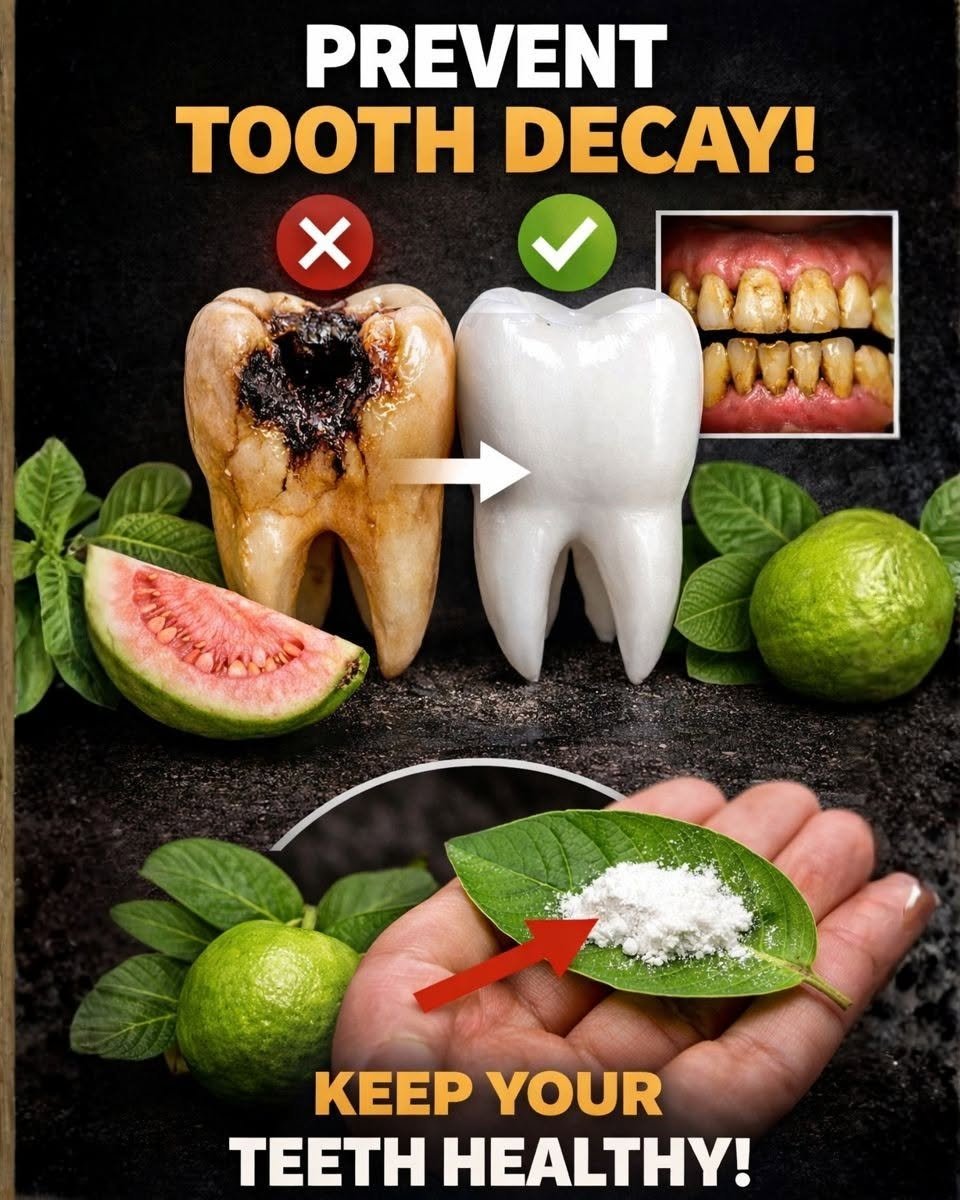
However, it is important to keep expectations realistic: guava leaves cannot repair cavities, rebuild damaged enamel, or replace professional dental treatment.
Here are three gentle ways guava leaves are traditionally used as a complement to normal oral hygiene.
🌿 Why Are Guava Leaves Used for Oral Care?
Guava leaves (Psidium guajava) contain several naturally occurring compounds that researchers have investigated for their effects on oral microorganisms and inflammation.
Traditional uses include:
- Supporting a fresh, clean feeling in the mouth
- Helping maintain gum comfort
- Providing a mild cleansing rinse
- Complementing everyday oral-hygiene habits
Scientific evidence is still limited compared with established dental treatments, so these uses should be viewed as supportive rather than curative.
🌿 Remedy 1: Fresh Guava Leaves
Chewing clean guava leaves is a traditional practice in some communities.
How to use:
- Choose clean, pesticide-free guava leaves.
- Wash them thoroughly with clean water.
- Chew a small amount gently.
- Spit out the leaves afterward.
- Rinse your mouth with water.
This may leave the mouth feeling refreshed, but it should not replace brushing and flossing.
Important:
Do not chew leaves that may have been exposed to pesticides, chemicals, or other contaminants.
🍃 Remedy 2: Guava Leaf Mouth Rinse
A simple guava-leaf infusion can be used as an occasional mouth rinse.
How to prepare:
- Wash several guava leaves thoroughly.
- Place them in about 1–2 cups of water.
- Bring the water to a boil and simmer briefly.
- Allow the liquid to cool completely.
- Strain out the leaves.
Swish a small amount around the mouth and spit it out.
Why do people use it?
A guava-leaf rinse may provide:
- A refreshed mouthfeel
- Gentle cleansing
- Temporary support for oral comfort
Avoid swallowing large amounts, and stop using it if it causes irritation.
🌱 Remedy 3: A Simple Guava Leaf Preparation
Guava leaves can also be crushed and used traditionally as an external oral-care preparation.
However, scrubbing a homemade leaf paste aggressively against teeth is not recommended. Abrasive ingredients can potentially irritate gums or contribute to enamel wear.
If you choose to use a guava-leaf preparation, keep it gentle and rinse thoroughly afterward.
Avoid adding salt, baking soda, lemon juice, vinegar, or other abrasive or acidic ingredients simply to make the preparation “stronger.”
🪥 The Most Important Part of Tooth Care
Natural preparations should always remain secondary to proven dental habits.
For everyday protection:
✅ Brush twice daily with fluoride toothpaste
✅ Clean between your teeth daily with floss or another suitable interdental cleaner
✅ Limit frequent sugary snacks and drinks
✅ Drink water regularly
✅ Avoid tobacco products
✅ Have regular dental examinations
These habits have much stronger evidence for preventing tooth decay and gum disease than homemade herbal remedies.
⚠️ Can Guava Leaves Cure Tooth Decay?
No.
A cavity is caused by damage to the tooth structure. Once a cavity has formed, chewing leaves or rinsing with herbal preparations cannot rebuild the damaged tooth.
Likewise, guava leaves cannot:
❌ Fill a cavity
❌ Rebuild lost enamel
❌ Remove hardened tartar
❌ Treat a dental abscess
❌ Replace a filling or other dental treatment
Natural oral-care practices may provide a feeling of freshness or comfort, but they should never delay necessary dental care.
🦷 When Should You See a Dentist?
Don’t rely on home remedies if you have:
- Persistent toothache
- Sensitivity that keeps returning
- A visible hole or dark spot in a tooth
- Swollen or bleeding gums
- Facial or jaw swelling
- Pus or a bad taste around a tooth
- Persistent bad breath
- Fever associated with dental pain
These symptoms can indicate a problem that requires professional treatment.
🌿 Final Thoughts
Guava leaves have a long history of traditional use and contain interesting plant compounds that continue to be studied for oral-health applications.
If you enjoy natural approaches, a properly prepared guava-leaf rinse may be considered an occasional complement to your normal oral-care routine.
But the foundation remains simple:
Brush with fluoride toothpaste. Clean between your teeth. Eat a tooth-friendly diet. And see a dentist when something doesn’t feel right.
Natural care can complement good dentistry—but it shouldn’t replace it. 🌿🦷