9 Natural Ways to Support a Cleaner, Healthier Smile 🦷✨
9 Natural Ways to Support a Cleaner, Healthier Smile 🦷✨
Want a cleaner, brighter smile without relying on complicated routines? Good oral health starts with a few simple daily habits, and some natural foods and ingredients may provide additional support.
However, there is an important distinction between supporting oral hygiene and removing tartar. Once plaque hardens into tartar, it cannot safely be removed at home by scrubbing or using acidic household ingredients. Professional dental cleaning may be necessary.
Here are nine gentle options worth knowing.
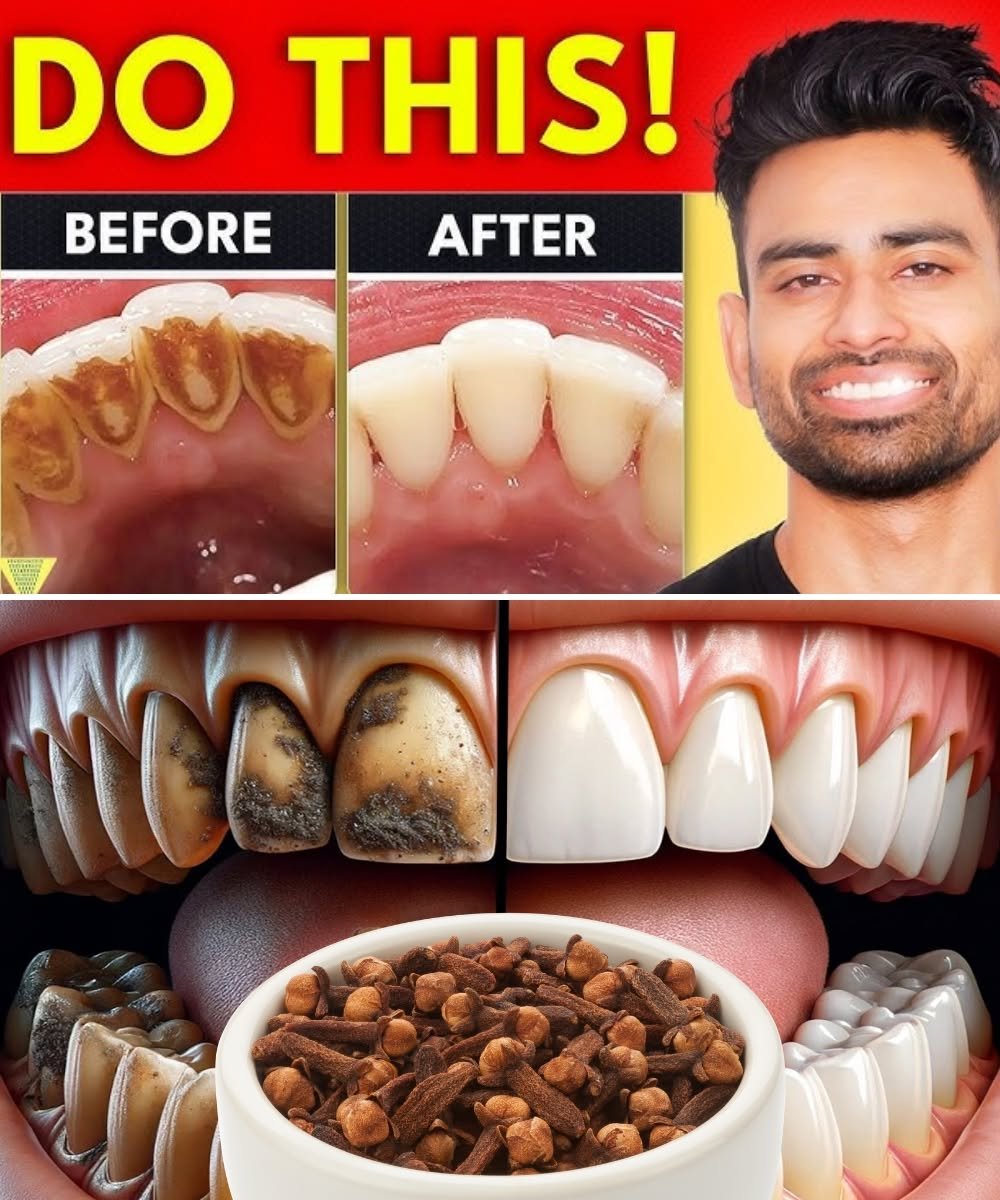
1. Clove: A Traditional Oral-Care Ingredient
Cloves contain eugenol, a compound with antimicrobial and soothing properties. Clove has a long history of traditional dental use.
A safer approach
Rather than applying concentrated clove oil directly to your gums, consider using commercially prepared oral-care products that contain clove or eugenol according to their instructions.
Avoid putting undiluted clove oil directly on the gums because it can cause irritation or tissue damage.
2. Garlic: A Food With Antimicrobial Compounds
Garlic contains sulfur compounds, including allicin, that have antimicrobial activity.
Adding fresh garlic to your normal diet is a much safer approach than rubbing raw garlic directly onto your teeth or gums.
Raw garlic can irritate or even burn sensitive oral tissues when applied directly.
3. Baking Soda: Helpful in the Right Form
Baking soda can help neutralize acids and is commonly included in some toothpaste formulations. Toothpastes containing baking soda can also help remove surface stains.
However, repeatedly scrubbing your teeth with dry baking soda is not the same as using a properly formulated toothpaste.
Better option
Choose a reputable fluoride toothpaste that contains baking soda if you like its cleaning benefits.
Avoid mixing baking soda with lemon juice or other acids. Acid can weaken enamel, especially when combined with abrasion.
4. Coconut Oil: What About Oil Pulling?
Oil pulling involves swishing edible oil around the mouth.
Some research suggests it may modestly reduce certain bacteria or plaque, but evidence is not strong enough to consider it a replacement for brushing and flossing.
If you enjoy oil pulling, use it only as an optional addition to your routine.
Never swallow the oil, and never replace fluoride toothpaste with oil pulling.
5. Aloe Vera: Handle With Care
Aloe vera is sometimes used in oral-care products because of its soothing properties.
If you want to use aloe vera orally, choose a product specifically formulated and labeled for oral use rather than applying household aloe products directly inside your mouth.
Aloe vera cannot remove hardened tartar.
6. Orange Peel: Skip the Acidic Scrubbing
Orange peel is sometimes promoted as a natural teeth whitener because it contains aromatic compounds and vitamin C.
But citrus is acidic, and repeatedly rubbing acidic fruit or peel against your teeth can contribute to enamel erosion.
For this reason, orange peel is not a recommended substitute for proven whitening products.
If you enjoy oranges, simply eat them as part of a balanced diet and rinse your mouth with water afterward.
7. Avoid Vinegar as a Teeth-Cleaning Rinse
White vinegar is sometimes recommended online because its acidity can affect mineral deposits.
But that is exactly why it can be harmful to teeth.
Regular exposure to acidic vinegar can contribute to enamel erosion and tooth sensitivity.
Using vinegar to clean your teeth is therefore not worth the risk.
For daily oral care, stick with fluoride toothpaste and water rather than acidic kitchen ingredients.
8. Green Tea for a Healthy Mouth
Green tea contains catechins and other plant compounds that have been studied for their effects on oral bacteria and gum health.
Enjoying unsweetened green tea can be a reasonable addition to a healthy lifestyle.
However, don’t add vinegar, lemon juice, or abrasive powders to your mouth simply because a viral recipe claims they provide extra cleaning power.
9. Sesame Seeds: Food, Not a Tooth Scrub
Sesame seeds are nutritious and can be part of a balanced diet, but there is no good reason to use them as a substitute for brushing.
Chewing seeds will not safely remove hardened tartar.
For cleaning between teeth, dental floss or an appropriate interdental cleaner is much more effective.
🪥 The Most Important Natural Oral-Care Habits
The simplest habits remain the most valuable.
Brush twice a day
Use a soft-bristled toothbrush and fluoride toothpaste. Brush gently for about two minutes.
Clean between your teeth
Floss or use an appropriate interdental cleaner daily to remove plaque from areas a toothbrush cannot reach.
Drink water
Water helps wash away food particles and supports normal saliva production.
Limit frequent sugar intake
Sugar provides fuel for bacteria that contribute to tooth decay. Reducing frequent sugary snacks and drinks can help protect your teeth.
Don’t smoke
Tobacco can significantly increase the risk of gum disease, tooth staining, and other oral-health problems.
🦷 Can Home Remedies Remove Tartar?
This is one of the biggest misconceptions online.
Plaque is a soft bacterial film that can be removed with regular brushing and cleaning between the teeth. Tartar, also called dental calculus, is hardened plaque that cannot be safely removed with household ingredients.
Trying to scrape tartar away yourself can damage your enamel or gums.
If you have significant buildup, a dental professional can remove it safely.
🚨 When Should You See a Dentist?
Don’t rely on home remedies if you have:
- Bleeding or swollen gums
- Persistent bad breath
- Toothache
- Severe sensitivity
- Loose teeth
- Facial or gum swelling
- A broken tooth
- A dark spot or visible hole in a tooth
These symptoms can indicate problems that require professional evaluation.
🌿 Final Thoughts
Natural ingredients can be interesting additions to a healthy lifestyle, but natural does not automatically mean safe for your teeth.
Acidic ingredients such as vinegar and citrus, abrasive scrubbing, and concentrated essential oils can do more harm than good.
For a healthier smile, keep your routine simple:
✅ Brush twice daily with fluoride toothpaste
✅ Clean between your teeth every day
✅ Drink plenty of water
✅ Limit frequent sugary foods and drinks
✅ Avoid tobacco
✅ Visit your dentist regularly
Your kitchen may contain many useful foods—but when it comes to your teeth, gentle care and evidence-based dental hygiene are the safest long-term strategy.
Disclaimer: This article is for general educational purposes and does not replace professional dental advice. If you have persistent pain, bleeding, swelling, or other oral-health concerns, consult a qualified dentist.



Very helpful tips