
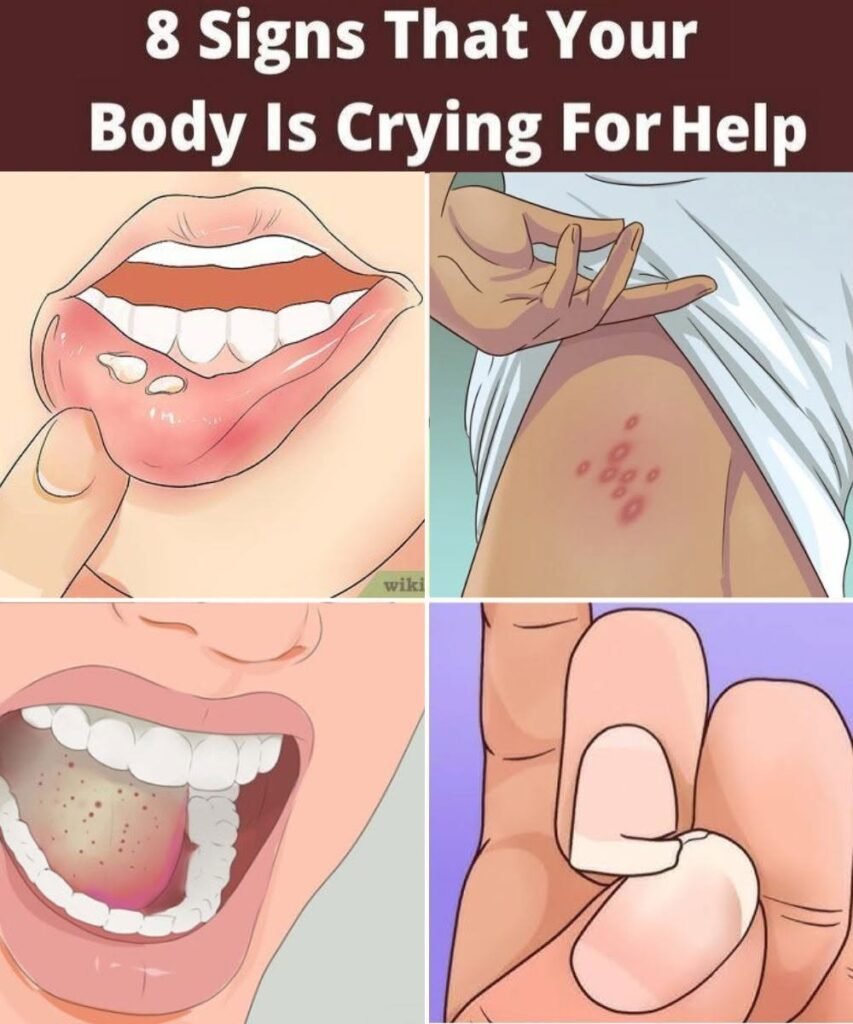
8 Common Signs Your Body May Be Asking for Attention
Our bodies often give us signals when something isn’t quite right. Sometimes these signs are related to everyday factors such as stress, dehydration, lack of sleep, or nutrition. In other cases, they may be linked to an underlying medical condition.
While these symptoms are common and often have harmless explanations, persistent or concerning changes deserve evaluation by a healthcare professional.
1. Mouth Sores (Canker Sores)
What you may notice:
- Small, round, painful sores inside the mouth
- Discomfort while eating or drinking
Possible causes:
- Minor injury from biting the inside of the mouth
- Emotional stress
- Certain acidic or spicy foods
- Nutritional deficiencies, such as low vitamin B12, folate, or iron
- Less commonly, certain medical conditions
What you can do:
- Practice gentle oral hygiene.
- Avoid foods that irritate the sore.
- Stay hydrated.
See a dentist or healthcare provider if sores last longer than two weeks, become unusually large, or occur frequently.
2. Skin Rashes or Red Spots
What you may notice:
- Red patches, bumps, or irritated areas
- Itching or mild discomfort
Possible causes:
- Dry skin
- Allergic reactions
- Heat or friction
- Eczema or other skin conditions
- Infections or other medical conditions
What you can do:
- Keep the skin moisturized.
- Avoid scratching.
- Use gentle, fragrance-free skincare products if your skin is sensitive.
Seek medical care if the rash spreads rapidly, is painful, is accompanied by fever, or does not improve.
3. Changes on the Tongue
What you may notice:
- Red spots
- A white or yellow coating
- Changes in texture or appearance
Possible causes:
- Mild irritation
- Dehydration
- Certain foods or beverages
- Oral hygiene habits
- Infections or other oral conditions
What you can do:
- Drink enough water.
- Brush your tongue gently as part of your oral hygiene routine.
- Maintain regular dental checkups.
See a dentist or healthcare provider if tongue changes are painful, persistent, or accompanied by difficulty swallowing.
4. Brittle or Peeling Nails
What you may notice:
- Nails that split, peel, or break easily
Possible causes:
- Frequent exposure to water or cleaning products
- Dryness
- Low intake of certain nutrients such as iron or protein
- Thyroid disorders or other medical conditions
What you can do:
- Wear gloves during household cleaning.
- Apply moisturizer to your hands and nails regularly.
- Eat a balanced diet that includes adequate protein.
Consult your healthcare provider if your nails suddenly change color, shape, or thickness.
5. Ongoing Fatigue
What you may notice:
- Feeling tired most of the time, even after adequate sleep
Possible causes:
- Poor-quality sleep
- Stress
- Anemia
- Thyroid disorders
- Infections or other health conditions
What you can do:
- Maintain a consistent sleep schedule.
- Eat regular, balanced meals.
- Stay physically active as tolerated.
If fatigue continues for several weeks or interferes with daily life, discuss it with your healthcare provider.
6. Frequent Headaches
What you may notice:
- Tension or throbbing headaches
- Headaches that occur repeatedly
Possible causes:
- Dehydration
- Stress
- Eye strain
- Skipping meals
- Lack of sleep
What you can do:
- Drink enough water.
- Eat meals at regular intervals.
- Take breaks from screens.
- Get adequate sleep.
Seek immediate medical attention for a sudden, severe headache or a headache accompanied by weakness, confusion, vision changes, or difficulty speaking.
7. Digestive Changes
What you may notice:
- Bloating
- Constipation
- Mild stomach discomfort
Possible causes:
- Low-fiber diet
- Inadequate fluid intake
- Stress
- Food intolerances
- Digestive disorders
What you can do:
- Increase dietary fiber gradually.
- Drink plenty of water.
- Stay physically active.
See a healthcare provider if you experience severe pain, blood in your stool, unexplained weight loss, or symptoms that persist.
8. Hair Thinning or Increased Hair Loss
What you may notice:
- More hair than usual on your brush or in the shower
- Gradual thinning of your hair
Possible causes:
- Physical or emotional stress
- Hormonal changes
- Nutritional deficiencies
- Certain medications
- Genetics
What you can do:
- Eat a balanced diet that includes adequate protein and iron.
- Avoid excessive heat or harsh chemical treatments.
- Be gentle when brushing or styling your hair.
Consult a healthcare provider if hair loss is sudden, occurs in patches, or is accompanied by other symptoms.
Daily Habits That Support Overall Health
Simple lifestyle habits can help support your overall well-being:
- Stay hydrated: Drink enough fluids throughout the day.
- Eat balanced meals: Include fruits, vegetables, whole grains, lean proteins, and healthy fats.
- Get enough sleep: Most adults benefit from 7–9 hours of sleep each night.
- Stay active: Aim for regular physical activity, such as walking or other exercises you enjoy.
- Manage stress: Relaxation techniques, spending time outdoors, journaling, or talking with supportive friends or family may help.
When to See a Healthcare Professional
Arrange a medical evaluation if you experience:
- Symptoms lasting longer than two weeks
- Persistent or worsening pain
- Fever, swelling, or unexplained bleeding
- Sudden changes in your skin, nails, mouth, or hair
- Several symptoms occurring together
- Symptoms that interfere with your daily activities
Final Thoughts
Many everyday symptoms have simple explanations, such as dehydration, stress, or lack of sleep. However, similar symptoms can sometimes be early signs of medical conditions that require evaluation.
Paying attention to changes in your body, maintaining healthy daily habits, and seeking medical advice when symptoms persist are practical steps toward protecting your long-term health.
Disclaimer: This article is for informational and educational purposes only and should not be considered medical advice. Symptoms can have many possible causes and should not be used to diagnose a medical condition. If you have persistent, severe, or concerning symptoms, consult a licensed healthcare professional.