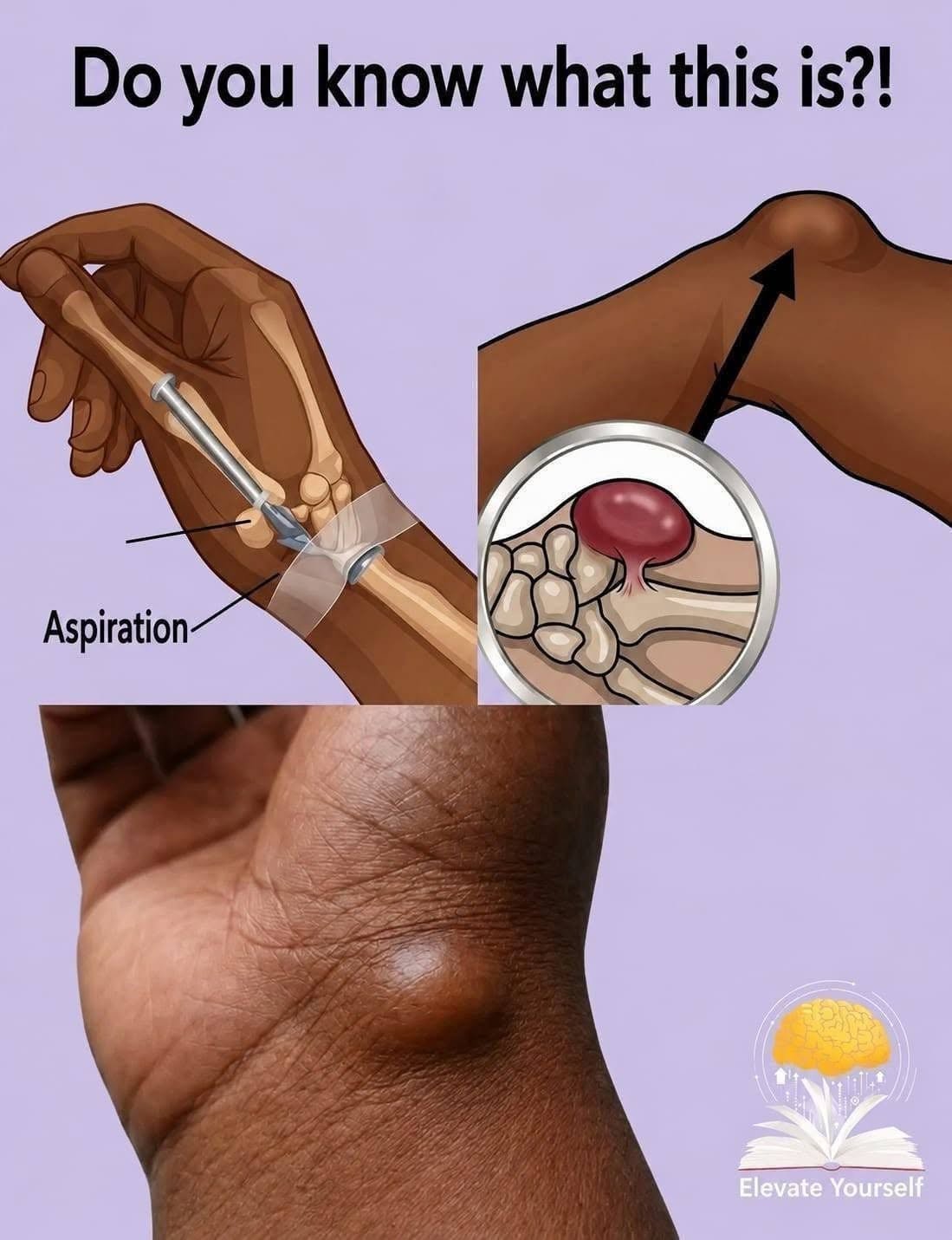
5 Things You Should Know Before Touching a Lump on Your Wrist!
5 Things You Should Know Before Touching a Lump on Your Wrist!
5 Things You Should Know Before Touching a Lump on Your Wrist
Have you suddenly noticed a lump on your wrist?
It may be something harmless, such as a ganglion cyst, but you shouldn’t try to squeeze, pop, puncture, or drain it yourself before knowing what you’re dealing with.
Ganglion cysts are common fluid-filled lumps that often develop around the wrist or hand. They are usually harmless and may disappear without treatment. However, not every wrist lump is a ganglion cyst, so a new or concerning lump deserves proper evaluation.
Here are five important things to know before you touch that bump.
SLIDE 1 | Have You Noticed a Lump on Your Wrist?
STOP! Don’t squeeze or try to “pop” it.
A smooth lump on the wrist may be a ganglion cyst, which is a fluid-filled swelling that commonly develops near a joint or tendon.
Ganglion cysts are especially common on the back of the wrist, although they can also occur on the palm side and in other areas of the hand.
But appearance alone isn’t enough to confirm what a lump is.
There are many possible causes of lumps, so it’s best not to assume that every wrist bump is a ganglion cyst.
SLIDE 2 | What Is a Ganglion Cyst?
A ganglion cyst is a fluid-filled sac containing thick, jelly-like fluid. It usually develops near a joint or tendon.
A ganglion cyst may be:
- Small or several centimeters across
- Painless or uncomfortable
- Soft or firm
- Variable in size
- More noticeable when the wrist is bent or used
Some ganglion cysts change size over time and may eventually disappear without treatment.
If the cyst is near a nerve, it can sometimes cause pain, tingling, numbness, or weakness
SLIDE 3 | Is a Ganglion Cyst Dangerous?
Usually, no.
Ganglion cysts are generally benign and non-cancerous.
If a confirmed ganglion cyst isn’t causing pain or interfering with movement, treatment may not be necessary. Many improve or disappear on their own, although this can take months or longer.
However, you should have a wrist lump medically evaluated if:
- It is painful
- It is getting larger
- It causes numbness or tingling
- It affects wrist or hand movement
- It is hard and doesn’t move
- You’re simply worried about what it might be
A lump that becomes very painful, hot, or red should receive prompt medical attention.
SLIDE 4 | Why Do Ganglion Cysts Develop?
The exact cause isn’t always known.
Ganglion cysts are thought to develop when fluid associated with a joint or tendon collects beneath the skin.
They may sometimes appear after an injury, while repetitive wrist use may make an existing ganglion more noticeable or cause it to change in size.
Possible associations include:
- Previous wrist injuries or sprains
- Changes around a joint or tendon
- Repetitive wrist or hand activity
- Underlying joint problems in some cases
Having one of these factors doesn’t mean you will definitely develop a ganglion cyst.
SLIDE 5 | The Mistake You Should Avoid
Don’t try to break or drain the lump yourself.
That means:
- Don’t hit it with a heavy object.
- Don’t squeeze it forcefully.
- Don’t puncture it with a needle.
- Don’t attempt to drain it at home.
Trying to burst a ganglion can cause infection, skin damage, bleeding, or injury to nearby structures. Some wrist ganglions can also lie close to important nerves or blood vessels, making self-treatment particularly risky.
If a ganglion needs to be drained, aspiration is performed by a healthcare professional using a needle. Even then, the cyst can come back because the underlying cyst structure remains.
SLIDE 6 | Does It Need Surgery?
Not necessarily!
Treatment depends on the diagnosis, the location of the lump, and whether it is causing pain or interfering with normal hand function.
No symptoms
If a confirmed ganglion isn’t causing problems, observation may be all that’s needed.
Mild discomfort
A healthcare professional may recommend reducing activities that aggravate the wrist or using a wrist support for a limited period.
Persistent symptoms
If the cyst is causing significant symptoms, a healthcare professional may consider aspiration, which involves removing fluid with a needle.
Persistent or troublesome cases
In selected cases, surgical removal may be considered, particularly when symptoms continue or the cyst repeatedly causes problems.
Surgery isn’t automatically necessary for every ganglion cyst, and the benefits and risks should be discussed with a qualified healthcare professional.
When Should You See a Doctor About a Wrist Lump?
Don’t try to diagnose a new lump yourself.
Consider getting medical advice if the lump:
- Gets bigger
- Becomes painful
- Is hard or doesn’t move
- Causes numbness or tingling
- Makes it difficult to move your wrist or hand
- Becomes red or hot
- Appears after a significant injury
- Remains present and concerns you
A healthcare professional can examine the lump and determine whether it appears to be a ganglion or whether additional testing is needed.
Final Thoughts
A lump on your wrist can certainly be alarming, but many wrist lumps—particularly ganglion cysts—are harmless and may improve without treatment.
The most important thing is not to try to pop, puncture, or drain the lump yourself. If you’re unsure what it is, if it’s changing, or if it’s causing pain or other symptoms, have it evaluated by a healthcare professional.
A little caution can save you from turning a harmless bump into a much bigger problem.