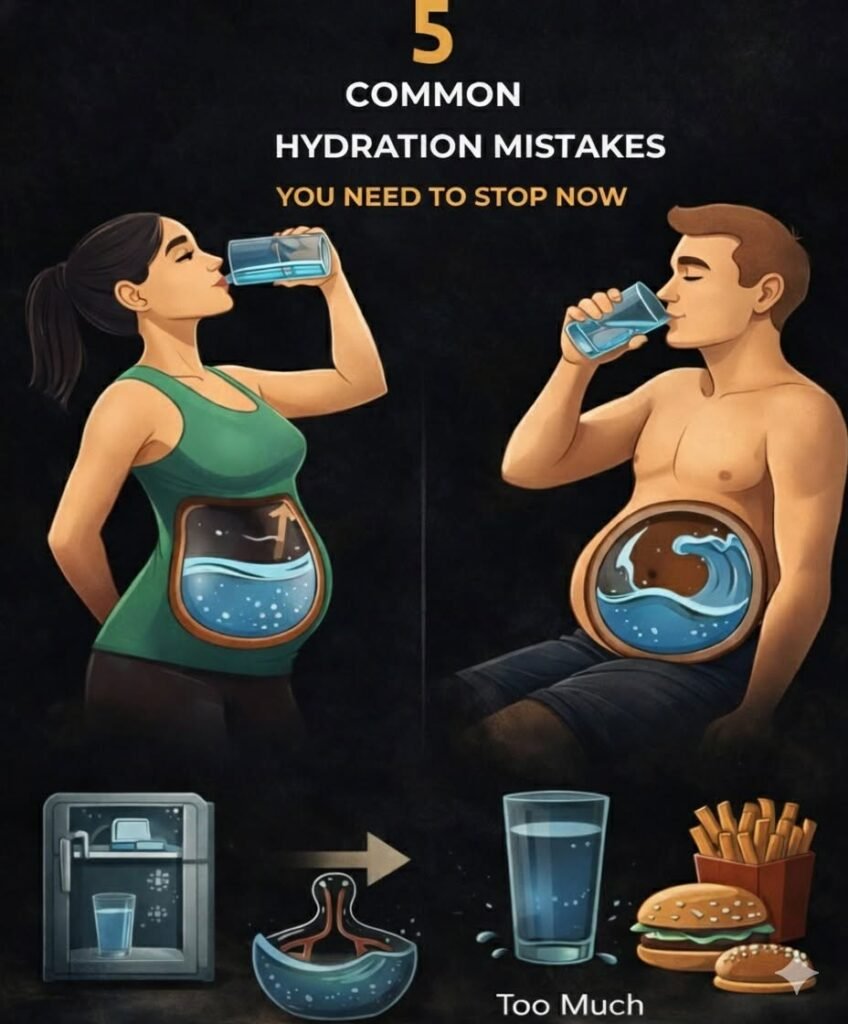
5 Common Water Drinking Mistakes That May Affect Your Hydration
Water is essential for nearly every function in your body—from regulating temperature and supporting digestion to maintaining healthy skin and keeping your brain focused. While most people know they should drink enough water, how you drink it also matters.
Certain everyday habits can make it harder to stay properly hydrated or may leave you feeling tired, sluggish, or thirsty even when you think you’re drinking enough.
Here are five common hydration mistakes and simple ways to avoid them.
Why Staying Properly Hydrated Matters
Water helps your body:
- Regulate body temperature
- Transport nutrients and oxygen
- Support kidney function
- Lubricate joints
- Aid digestion
- Improve concentration and energy levels
Even mild dehydration can contribute to headaches, fatigue, dry skin, and reduced physical or mental performance.
1. Waiting Until You Feel Thirsty
Thirst is your body’s natural reminder to drink, but by the time you feel thirsty, you may already be mildly dehydrated—especially during hot weather or exercise.
Better Habit
- Drink small amounts of water regularly throughout the day.
- Keep a reusable water bottle nearby.
- Increase your intake during exercise or when spending time outdoors.
2. Drinking Large Amounts All at Once
Some people forget to drink for hours and then consume several glasses in one sitting. While this helps replace fluids, drinking excessive amounts too quickly isn’t always the most comfortable or effective approach.
Better Habit
Sip water steadily throughout the day instead of trying to “catch up” all at once.
3. Ignoring Your Activity Level
Your hydration needs change depending on your lifestyle.
You may need more water if you:
- Exercise regularly
- Spend time in hot or humid weather
- Have a physically demanding job
- Have a fever or illness causing fluid loss
Better Habit
Drink extra water before, during, and after physical activity, and replace fluids lost through sweating.
4. Depending Too Much on Sugary Drinks
Soft drinks, energy drinks, and sweetened beverages may contain large amounts of added sugar. While they provide fluid, they shouldn’t replace water as your primary source of hydration.
Better Habit
Choose:
- Plain water
- Sparkling water without added sugar
- Herbal tea
- Water infused with lemon, cucumber, or fresh fruit
These options help maintain hydration without unnecessary calories.
5. Forgetting to Drink Throughout the Day
Busy schedules often make people forget to drink until late afternoon.
Easy Ways to Stay on Track
- Drink a glass of water after waking up.
- Have water with every meal.
- Carry a reusable bottle.
- Set reminders on your phone.
- Drink before and after exercise.
Small habits repeated consistently are usually more effective than occasional large amounts.
Does Water Temperature Matter?
Many people wonder whether cold or room-temperature water is better.
The good news is that both hydrate your body effectively.
Some people prefer cold water after exercise because it feels refreshing, while others find room-temperature water easier to drink throughout the day. The best choice is simply the one that helps you drink enough.
Signs You May Need More Water
Watch for these common signs:
- Dry mouth
- Headaches
- Dark yellow urine
- Fatigue
- Dizziness
- Dry skin
- Feeling thirsty
If these symptoms persist despite drinking fluids, consult a healthcare professional.
Simple Daily Hydration Tips
Healthy hydration doesn’t have to be complicated.
Try these habits:
- Start your morning with one glass of water.
- Drink regularly instead of waiting until you’re thirsty.
- Eat water-rich foods like watermelon, oranges, cucumbers, and lettuce.
- Carry a reusable water bottle wherever you go.
- Increase fluids during hot weather or exercise.
How Much Water Do You Need?
There isn’t one perfect amount for everyone.
Your needs depend on factors such as:
- Age
- Body size
- Physical activity
- Climate
- Overall health
- Pregnancy or breastfeeding
Many healthy adults meet their hydration needs by drinking water regularly throughout the day and paying attention to thirst and urine color. Pale yellow urine generally indicates good hydration.
Final Thoughts
Proper hydration isn’t only about drinking more water—it’s also about developing consistent habits. Avoid waiting until you’re very thirsty, sip water throughout the day, adjust your intake based on activity and weather, and choose water over sugary drinks whenever possible.
Small daily improvements can support better energy, clearer thinking, healthier skin, and overall well-being.
Disclaimer: This article is for educational purposes only and does not replace professional medical advice. If you have kidney disease, heart conditions, or other medical concerns that affect fluid intake, consult your healthcare provider for personalized guidance.