3 Ways to Use Guava Leaves for Oral Health and Toothache Relief
3 Ways to Use Guava Leaves for Oral Health and Toothache Relief
Guava leaves have been used in traditional medicine for generations. They contain naturally occurring compounds such as flavonoids, tannins, and other plant chemicals that have been studied for their potential antibacterial and anti-inflammatory properties.
Because of these properties, guava leaves are sometimes used in traditional oral-care practices for temporary toothache relief, gum discomfort, and general mouth hygiene.
However, it is important to understand one thing clearly: guava leaves cannot repair a dental cavity or replace professional dental treatment. A decayed tooth may require a filling, crown, root canal treatment, or another procedure depending on how advanced the decay is.
Here are three simple ways people traditionally use guava leaves as a complementary oral-care practice.
Why Are Guava Leaves Used for Oral Health?
Guava leaves contain plant compounds that have demonstrated antimicrobial and anti-inflammatory activity in laboratory and preliminary research.
Potential benefits being investigated include:
- Supporting oral hygiene
- Helping reduce bacterial activity
- Soothing minor gum irritation
- Providing temporary relief from oral discomfort
- Supporting healthy gums as part of a broader oral-care routine
These potential benefits should not be confused with treating or eliminating tooth decay.
1. Chew Fresh Guava Leaves
Fresh guava leaves are one of the simplest traditional ways to use the plant for oral care.
What You Need
- 1–2 young guava leaves
- Clean drinking water
Step-by-Step Instructions
Step 1: Wash the leaves thoroughly under clean running water.
Step 2: Gently chew the leaves for a short period, allowing their natural juices to mix with saliva.
Step 3: Avoid swallowing large pieces of the leaves.
Step 4: Spit out the leaves and rinse your mouth with clean water.
Potential Benefit
Chewing guava leaves may provide a temporary soothing sensation and can be used as a traditional oral-hygiene practice.
However, it should not be considered a proven treatment for an existing cavity or severe toothache.
2. Make a Guava Leaf Mouth Rinse
A guava leaf infusion is another traditional preparation that can be used as a mouth rinse.
Ingredients
- 5–10 clean guava leaves
- About 1 cup of water
Step-by-Step Preparation
Step 1: Wash the guava leaves thoroughly.
Step 2: Place the leaves in a small saucepan with water.
Step 3: Bring the water to a boil and simmer the leaves for several minutes.
Step 4: Remove the mixture from the heat and allow it to cool completely.
Step 5: Strain the liquid carefully to remove the leaves.
How to Use It
Once completely cooled, gently swish a small amount around your mouth and then spit it out.
Do not use hot liquid in your mouth, and avoid swallowing the rinse.
Potential Benefit
Traditional guava leaf mouth rinses may help support oral hygiene because guava leaves contain compounds with antimicrobial properties.
More research is needed to determine how effective guava leaf preparations are compared with established dental treatments and commercially formulated mouthwashes.
3. Prepare a Guava Leaf Paste for the Gums
Some traditional practices involve crushing fresh guava leaves into a paste and applying a small amount to the gums.
What You Need
- A few thoroughly washed guava leaves
- A clean mortar and pestle
Avoid adding salt if your gums are irritated, bleeding, or sensitive, because it may cause additional discomfort.
Step-by-Step Instructions
Step 1: Wash the leaves thoroughly.
Step 2: Crush them using a clean mortar and pestle until they form a soft paste.
Step 3: Apply a very small amount to the affected gum area.
Step 4: Stop using it if you experience burning, irritation, swelling, or an allergic reaction.
Important Note
There is not enough clinical evidence to consider guava leaf paste a treatment for dental cavities or dental infections.
If you have swelling, severe pain, pus, fever, or a bad taste coming from a tooth, seek professional dental care instead of relying on a homemade remedy.
Can Guava Leaves Actually Cure Tooth Decay?
No.
This is one of the most important points to understand.
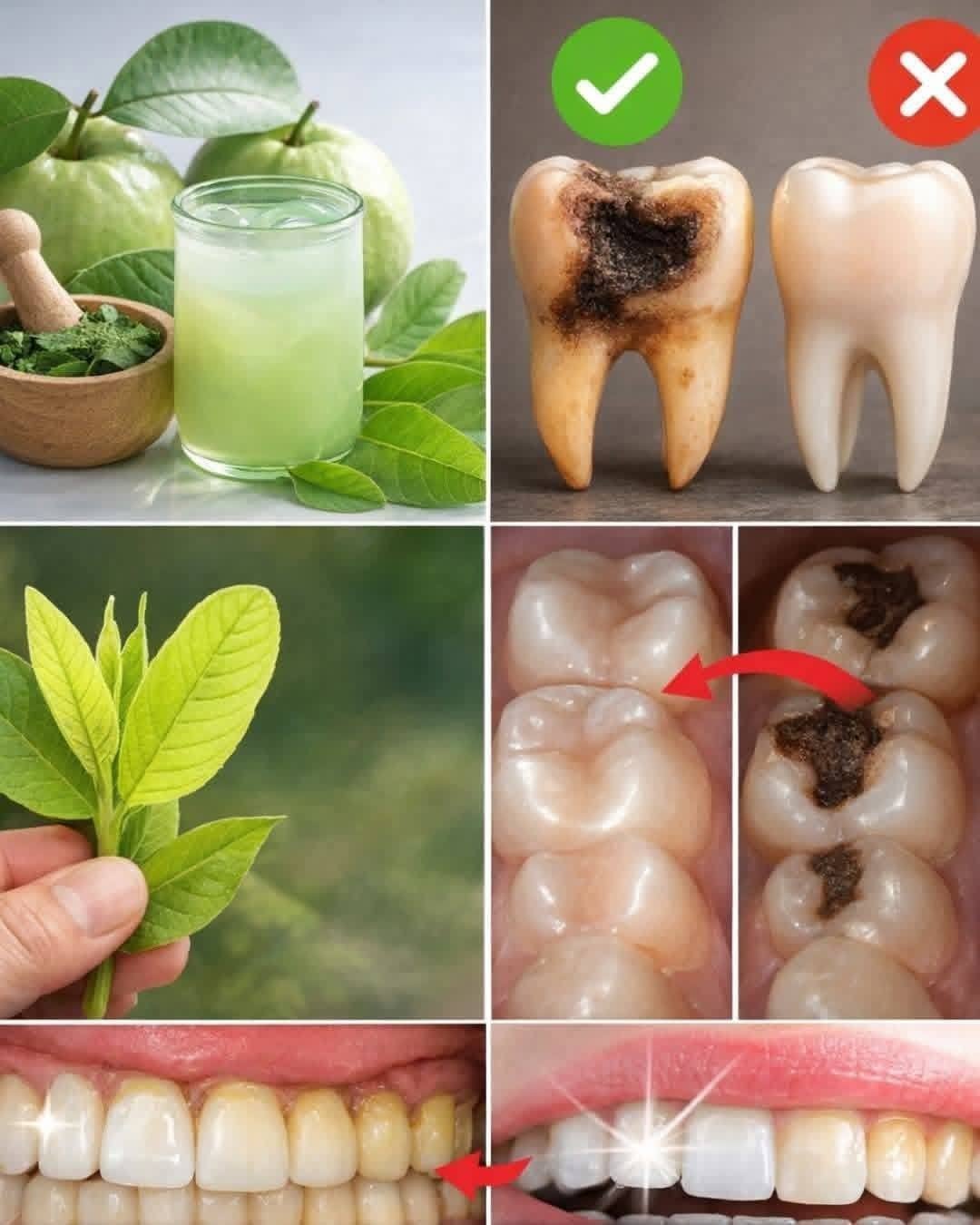
A dental cavity occurs when acids produced by oral bacteria damage the tooth structure. Once a significant hole has formed, simply chewing leaves or applying a herbal preparation cannot rebuild the lost tooth structure.
Early tooth-surface mineral loss may sometimes be managed or reversed with appropriate preventive dental care, particularly fluoride exposure and improved oral hygiene. But an established cavity generally requires assessment by a dentist.
Guava leaves may be considered a complementary home practice for oral comfort, but they should not be presented as a cure for tooth decay.
Can Guava Leaves Relieve Toothache?
They may provide temporary soothing effects for some people, but toothache has many possible causes.
Pain can result from:
- Tooth decay
- Gum inflammation
- A cracked tooth
- Dental infection
- Tooth sensitivity
- An impacted tooth
- Other dental conditions
Treating the pain without treating the underlying cause can allow a dental problem to progress.
If tooth pain lasts more than a short period, keeps returning, or becomes severe, arrange a dental examination.
Signs You Should See a Dentist
Don’t rely on home remedies if you experience:
- Severe or persistent tooth pain
- Facial or jaw swelling
- Swollen gums
- Pus around a tooth
- Fever
- Difficulty swallowing
- Difficulty breathing
- A broken or severely damaged tooth
- Increasing sensitivity to hot or cold
- A visible hole in the tooth
Dental infections can become serious and require professional treatment.
How to Protect Your Teeth From Cavities
The most effective approach to preventing tooth decay is consistent oral care.
Brush Twice a Day
Brush your teeth twice daily using fluoride toothpaste.
Use a soft-bristled toothbrush and avoid brushing so aggressively that you irritate your gums.
Floss or Clean Between Your Teeth
Food particles and plaque can accumulate between teeth where a toothbrush may not reach effectively.
Daily cleaning between the teeth can help support gum health and reduce plaque buildup.
Limit Frequent Sugary Foods and Drinks
Frequent exposure to sugar can increase the risk of tooth decay.
Instead of constantly sipping sweet drinks or eating sugary snacks throughout the day, limit their frequency and maintain good oral hygiene.
Schedule Regular Dental Checkups
Regular dental examinations allow problems to be identified before they become more advanced.
Your dentist can determine whether a tooth needs preventive care, a filling, or another type of dental treatment.
Guava Leaves vs. Professional Dental Treatment
Guava leaves may be an inexpensive traditional option for supporting oral hygiene, but they are not equivalent to professional dental care.
| Guava Leaves | Professional Dental Care |
|---|---|
| May provide temporary soothing effects | Identifies the underlying dental problem |
| Contains naturally occurring plant compounds | Uses clinically established treatments |
| Can be used as a complementary practice | Can repair cavities and damaged teeth |
| Does not rebuild a large cavity | Can restore damaged tooth structure |
| Evidence for dental treatment is limited | Supported by established dental practice |
Final Thoughts
Guava leaves have a long history of traditional use and contain natural compounds that may support oral hygiene and provide temporary comfort.
You can traditionally use them by chewing clean leaves, preparing a cooled leaf rinse, or making a simple leaf paste. However, these methods should be viewed only as complementary home-care practices.
They cannot remove an established cavity, rebuild a severely damaged tooth, or replace antibiotics or professional dental treatment when an infection is present.
For healthy teeth and gums, make fluoride toothpaste, daily brushing, cleaning between your teeth, a balanced diet, and regular dental checkups the foundation of your oral-care routine.
If you have persistent tooth pain, swelling, fever, or a visible cavity, the safest step is to consult a qualified dentist.