
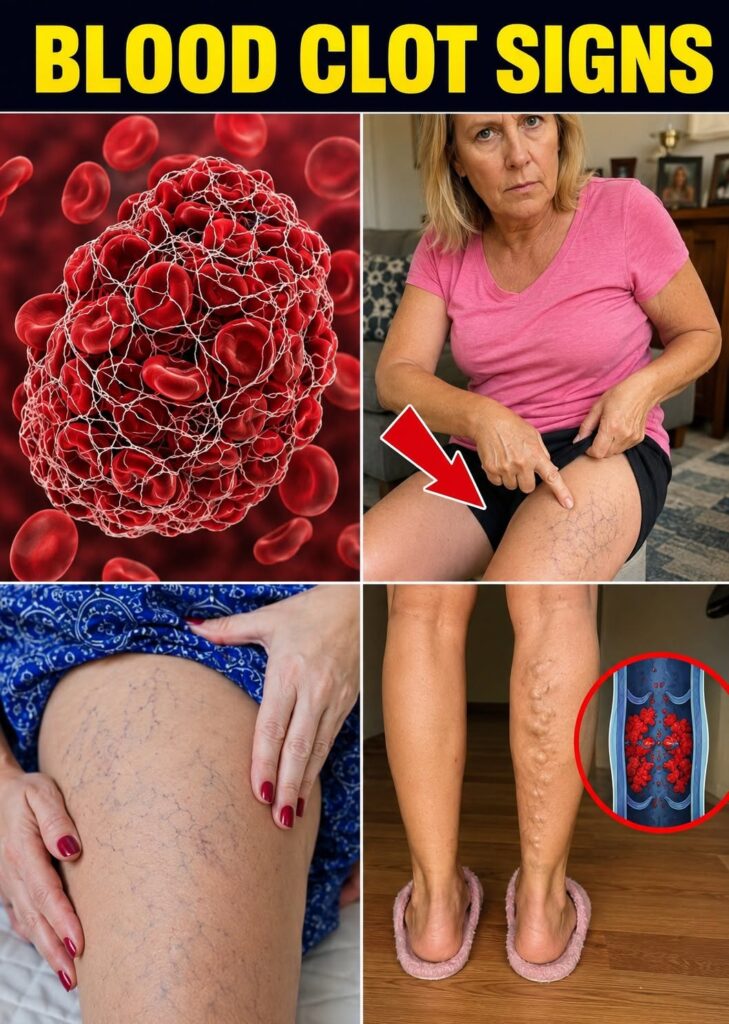
That heavy, aching leg is not “just tired.” When a blood clot starts forming in a deep vein, it turns one side of the body into a pressure chamber: swelling, warmth, tenderness, and skin that looks wrong under the light.
The first clue is often so ordinary people wave it off. One calf feels tight after sitting, one ankle puffs up by evening, and the skin starts to shine like it’s been stretched over a balloon.
Then the real trap snaps shut: the clot doesn’t need to shout to be dangerous. It can sit there like a cork jammed into a drainpipe, quietly blocking vibrant, oxygen-rich circulation while the rest of the body keeps pretending nothing is happening.
That’s why these signs matter. Not because your body is being dramatic, but because the system that keeps blood moving has hit a traffic jam, and traffic jams in veins do not stay polite for long.
The leg that starts sending alarms first
Swelling in one leg is not the kind of thing you “sleep off.” It’s the body’s version of a road closure, except the road is carrying the fuel your tissues need to stay alive and responsive.
Think of the vein like a city tunnel after a pileup. Blood backs up behind the blockage, pressure rises, and the leg begins to feel heavy, tight, and strangely full even when you haven’t done anything to earn it.
By the time you notice your sock leaving a deeper ring on one side than the other, the congestion is already building. And if the leg feels warm to the touch, that heat is not reassurance — it’s a flare signal from tissue under stress.
The ugly part is how easily this gets mistaken for a strain, a long walk, or “just aging.” A muscle pull usually argues with you and then backs down; a clot keeps pressing forward, stubborn and silent.
Why the leg notices it first is simple: gravity is merciless. Blood can pool in the lower body like dirty water in a cracked basement, and once it starts collecting, the whole system gets sluggish fast.
Why the skin changes before you feel panic
Redness, bluish patches, or skin that looks unnaturally shiny are not cosmetic details. They are surface evidence that the deeper plumbing is under strain and the oxygen supply is being squeezed.
Picture a garden hose kinked under a heavy box. The hose still holds water, but the flow is distorted, the pressure pattern changes, and the ground around it starts showing the damage before the hose bursts.
That is what clotting does inside a leg vein. It turns smooth flow into a choking bottleneck, and the skin often tells the truth before the person is ready to believe it.
And nobody built a Super Bowl ad around the boring little habits that protect circulation. The supplement industry would rather sell you a shiny bottle than admit the body responds hard to movement, hydration, and anything that keeps blood from turning sluggish and thick.
But the real secret is not glamour. It is the Cellular Flow Reset: the body’s own ability to keep blood moving before it turns into a jammed-up mess.
The chest warning that changes everything
When a clot breaks loose and travels, the story changes fast. Sudden shortness of breath, chest pain that bites harder with every breath, dizziness, a racing heartbeat — those are not “wait and see” symptoms.
Think of a chunk of debris tearing free from a clogged pipe and shooting into a narrower line downstream. The problem is no longer local; now it threatens the flow that keeps the lungs and heart working under pressure.
That’s why the body can go from a sore calf to a full emergency without giving you a neat warning label. The clot does not care that you were planning to finish errands, answer emails, or push through one more day.
The ugliest truth in health is that the cheapest fix gets the least airtime. Nobody profits from telling you that regular movement, loose clothing, and getting up before the legs go numb can keep the circulation from turning into sludge.
Over time, people who pay attention notice a different kind of morning: less stiffness, less one-sided puffiness, fewer moments of wondering why one leg feels like it belongs to someone else.
Why some bodies get hit harder
Long flights, desk marathons, recovery after surgery, smoking, hormone medications, pregnancy, extra body weight, and family history all stack the deck. They slow the river, and once the river slows, clots have more chances to grab hold.
For a man sitting through hour after hour of work, it can feel like a dead weight in the calf that gets worse by evening. For a woman balancing pregnancy, hormones, or long stretches of standing, the warning may show up as tightness, swelling, and a leg that feels hotter than the other side.
Different lives, same cruel pattern: circulation gets lazy, blood thickens into a sluggish mess, and the body starts paying the price in the places farthest from the heart.
Think of it like a house with one blocked gutter and one overflowing downspout. The water doesn’t disappear; it pools where it should never be, and the damage shows up in the walls long before the storm is over.
The first thing people notice after they start respecting the signals is that their body stops feeling like a mystery. The leg is less angry, the skin looks less strained, and the daily routine stops being interrupted by that nagging, one-sided heaviness.
The part most people miss
One common habit can wreck the whole process: staying still for too long and assuming “I’ll move later” is harmless. It isn’t. Stillness lets blood settle, and settled blood is exactly the environment where trouble gathers.
That’s why the next layer matters so much: the Mineral Surge that keeps circulation from dragging. The wrong pairing can blunt it, and the right one can make the whole system feel like it finally remembered how to move.
This article is for informational purposes only and does not replace professional medical advice. Please consult your healthcare provider for personalized guidance.