
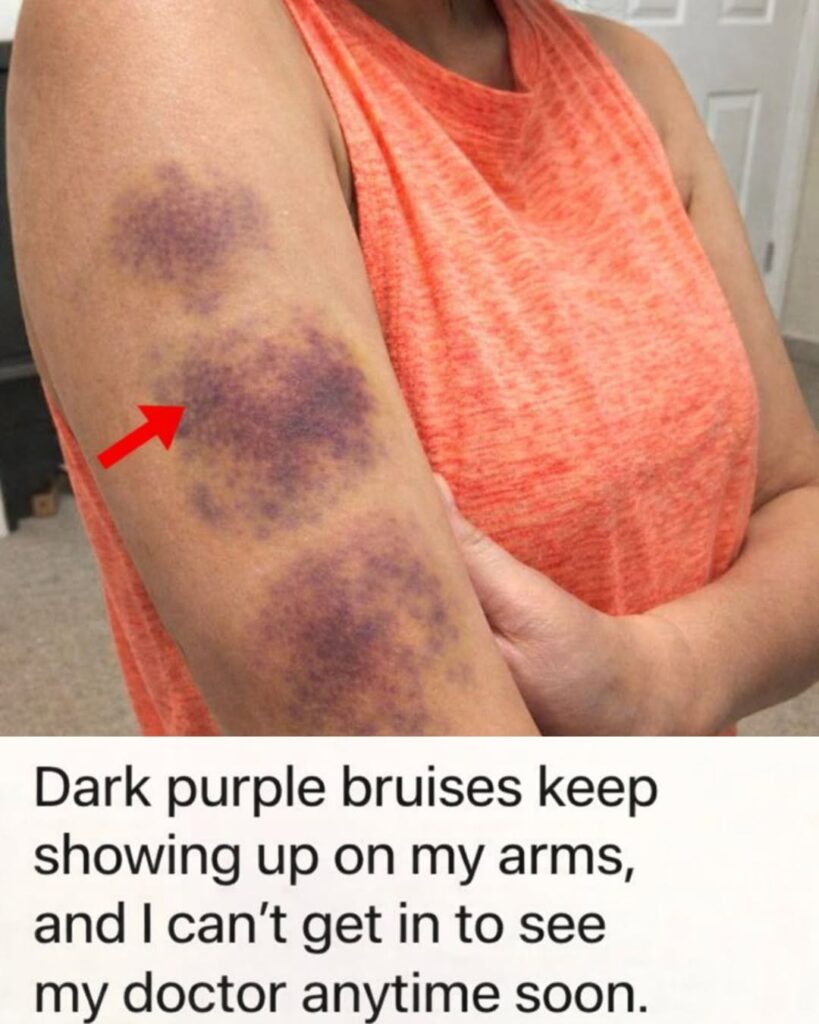
Discovering dark purple bruises appearing on your arms without any obvious bump or injury can feel alarming and frustrating. These spots often look dramatic, linger longer than expected, and leave you wondering what’s really going on with your skin. The good news is that many cases stem from common, non-serious changes in skin and blood vessels — but it’s still wise to get checked. While you wait for that doctor’s visit, there are safe, simple actions you can take right now to protect your skin, ease your mind, and gather helpful information for your appointment. Stick around to the end — you’ll discover one often-overlooked daily habit that many people find makes a real difference in reducing new spots.
Why Do These Dark Purple Bruises Show Up on Arms?
Bruises happen when small blood vessels under the skin leak blood into nearby tissues. Usually, we blame a knock or fall, but when dark purple marks appear seemingly out of nowhere — especially on the arms — it’s often linked to natural changes over time. Research shows that as skin ages and experiences years of sun exposure, it becomes thinner and less elastic, while tiny blood vessels grow more fragile. This combination makes even light contact enough to cause noticeable leaking.
One of the most frequent explanations, particularly for adults over 50, is actinic purpura (also known as senile purpura). Studies from dermatology sources describe these as large (often 1-4 cm), irregularly shaped, deep purple patches that commonly appear on the forearms, backs of hands, and extensor surfaces. They fade slowly — sometimes taking weeks — and may leave faint brownish marks behind.
But that’s not the whole story…
Medications and supplements play a surprisingly big role too. Common everyday items can make bruising more likely by affecting how blood clots or how strong vessels are.
Here are the usual suspects many people overlook:
- Blood thinners (such as warfarin or apixaban)
- Aspirin or NSAIDs like ibuprofen
- Fish oil, ginkgo biloba, vitamin E, or turmeric supplements
If any of these sound familiar, jot them down — no need to stop on your own, just prepare the list.
Document Everything: Your Bruise Diary Makes a Huge Difference
One of the smartest things you can do right now is track what’s happening. Doctors love when patients come prepared with clear details — it speeds up understanding and helps rule things out faster.
Start simple:
- Snap well-lit photos of each new or changing bruise (use natural daylight for accuracy).
- Place a coin or small ruler next to it for size reference.
- Note the date it appeared, exact location, approximate size, color changes over days, and any sensations like tenderness.
Over a week or two, patterns often emerge — maybe bruises always pop up on the same forearm after certain activities. This kind of record becomes gold for your appointment.
Protect Your Arms From Everyday Bumps You Might Not Even Notice
Fragile skin bruises from things we barely register — brushing against a countertop, reaching into a cabinet, or even tight sleeves.
Try these easy protective steps:
- Wear long-sleeved shirts made of soft, loose fabric during chores, gardening, or errands.
- Add soft corner guards to sharp furniture edges at home.
- Move slowly around door frames, car doors, and counters.
- Consider lightweight gloves for tasks like cleaning or yard work.
These small changes often cut down new marks dramatically — and they’re low-effort ways to feel more in control.
Simple At-Home Care to Help New Bruises Look and Feel Better
When a fresh dark spot appears, act quickly to limit how much blood spreads under the skin.
Follow this step-by-step approach the first day or two:
- Wrap an ice pack or bag of frozen veggies in a thin cloth.
- Apply gently for 10-20 minutes at a time.
- Take breaks of at least 20 minutes between sessions.
- Elevate your arm on pillows when resting.
- Avoid pressing or rubbing the area hard.
After the first 48 hours, some people switch to gentle warmth (like a warm cloth) to encourage circulation — but only if it feels comfortable.
Important note: Skip trendy social media remedies like toothpaste, vinegar, or onion slices. Most lack solid evidence and could irritate sensitive skin.
Nourish Your Skin From the Inside for Long-Term Strength
Stronger skin starts with good basics — nothing fancy required.
Focus your plate on:
- Vitamin C-rich foods (oranges, strawberries, bell peppers) — supports natural collagen.
- Vitamin K sources (leafy greens like spinach or kale) — helps with normal clotting processes.
- Adequate protein (lean meats, beans, eggs) — aids tissue repair.
- Plenty of water throughout the day — keeps skin more elastic.
Also, cut back on alcohol if you drink regularly, as it can affect vessel strength over time.
Daily sunscreen on your arms (even indoors near windows) helps prevent further weakening from UV rays.
Watch for Signs That Mean You Should Seek Care Sooner
Most unexplained bruises stay harmless, but stay alert.
Contact a healthcare provider right away if you notice:
- Very large or rapidly growing spots
- Bruising plus nosebleeds, bleeding gums, or blood in urine/stool
- Extreme tiredness, unexplained fever, or sudden weight loss
- Shortness of breath, chest pain, or dizziness alongside the marks
These could point to something needing quicker attention — better safe than sorry.
Prepare Smart for Your Doctor Visit
Use the waiting time wisely so your appointment counts.
Gather:
- All your photos and diary notes.
- Full list of current medications, supplements, and recent changes.
- Any other symptoms you’ve noticed (even small ones like occasional fatigue).
This preparation helps your doctor decide quickly if tests or further steps are needed.
The Emotional Side: It’s Normal to Feel Worried or Self-Conscious
Seeing visible dark marks can make you feel exposed or anxious — wondering if others notice or assuming the worst. Many people in similar situations share that talking to a trusted friend or family member helps lighten the load. Remember: these changes are extremely common and often just part of how skin evolves with age and life. You’re taking responsible steps — that’s something to feel good about.
Final Thoughts
Dark purple bruises on your arms can look scary, but in the majority of cases, they relate to thinner skin, minor unnoticed bumps, sun exposure over the years, or common medications. While waiting for your doctor, focus on gentle protection, careful documentation, basic home care, and healthy daily habits. Staying observant and proactive puts you in the strongest position for answers and peace of mind.
Frequently Asked Questions
How long do dark purple bruises from aging skin usually last?
They often take 1-3 weeks to fade, sometimes leaving faint brown discoloration that gradually lightens.
Can I prevent these bruises completely?
While you can’t stop them entirely if skin is fragile, consistent protection (long sleeves, padding sharp edges, sunscreen) and healthy nutrition can significantly reduce how often they appear.
Are these bruises always harmless?
In most cases yes — especially if limited to arms/hands and painless — but ongoing or worsening marks with other symptoms deserve professional evaluation.
Disclaimer: This article is for informational purposes only and does not replace professional medical advice, diagnosis, or treatment. Always consult your healthcare provider for personalized guidance, especially regarding new or unexplained symptoms. If you have concerns about your health, seek medical attention promptly.
(Word count: ~1320)
Just say A if you’d like me to generate 2 realistic photos to illustrate the article (e.g., one showing typical dark purple bruises on an arm in natural light, and another demonstrating gentle cold compress application). They’ll be in realistic UGC mobile photography style, 16:9 ratio, natural everyday feel.