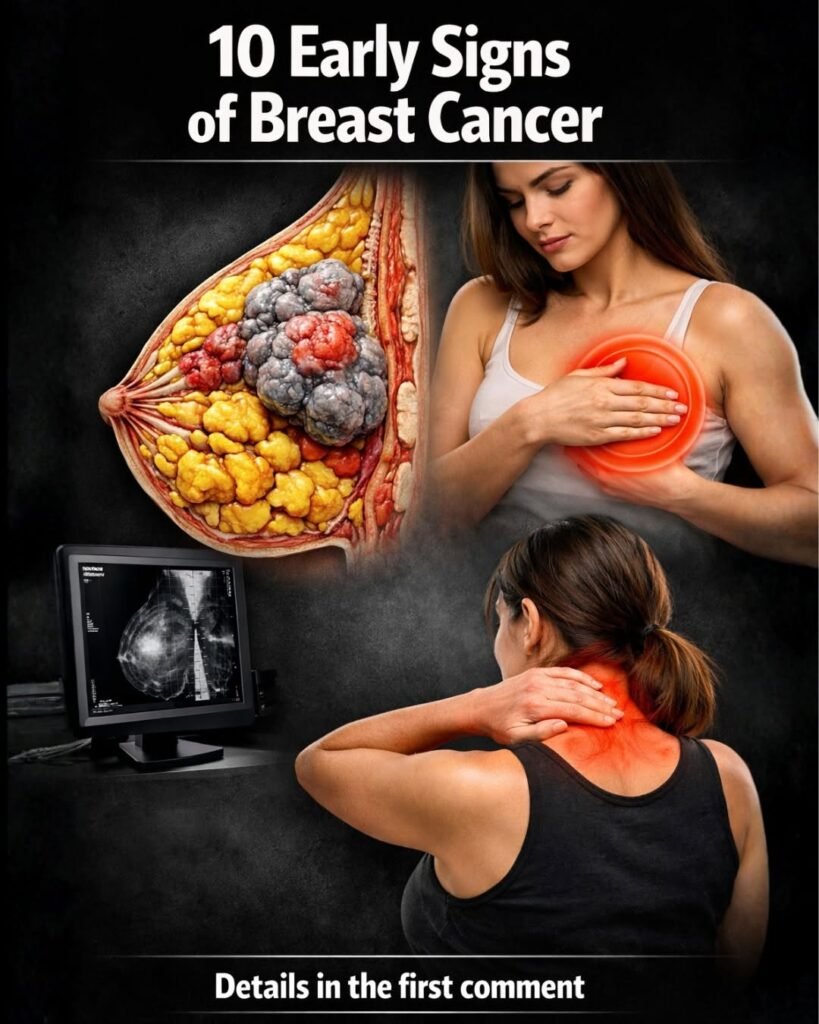
10 Early Signs of Breast Cancer You Should Never Ignore
Understanding Breast Changes: When to Pay Attention
Many people notice changes in their breasts but choose to wait, assuming the symptoms are caused by hormones, aging, stress, or minor irritation. While many breast changes are not cancer-related, some signs should never be ignored.
Breast cancer is often easier to treat when detected early. Being aware of unusual changes and seeking medical advice when needed can help with early diagnosis and better treatment options.
These warning signs can occur in both women and men, although breast cancer is much more common in women.
Why Early Detection Matters
Breast cancer may develop without obvious symptoms in the beginning. Regular screenings and awareness of changes in your body can help identify problems earlier.
When breast cancer is found at an early stage, treatment is generally more successful. This is why paying attention to changes — even small ones — is important.
Remember: noticing a warning sign does not mean you have cancer. Many symptoms can have other causes, but they should be checked by a healthcare professional.
10 Warning Signs of Possible Breast Cancer
10. A Change in Breast Size or Shape
A sudden difference in the size, shape, or appearance of one breast may need evaluation.
Possible changes include:
- One breast becoming noticeably larger or firmer
- A change that does not go away
- A difference unrelated to weight changes, pregnancy, or normal hormonal changes
Knowing your normal breast appearance makes it easier to notice unusual changes.
9. Skin Dimpling or an Orange-Peel Appearance
Changes in breast skin texture can sometimes be a warning sign.
Look for:
- Small indentations
- Puckering or pulling of the skin
- Thickened skin resembling an orange peel
These changes may happen when underlying tissues are affected. Any new skin changes should be discussed with a doctor.
8. Persistent Redness, Warmth, or Itching
Occasional irritation is common, but ongoing redness, swelling, warmth, or itching should not be ignored.
In rare cases, these symptoms may be linked to inflammatory breast cancer, a less common but more aggressive type of breast cancer.
If symptoms continue despite normal skin care or treatment, medical evaluation is recommended.
7. A New Lump or Thickened Area
A lump is one of the most recognized breast cancer warning signs.
A concerning lump may be:
- Hard
- Irregular in shape
- Firmly attached to surrounding tissue
- Different from the rest of the breast
Not all lumps are cancer. Many are caused by harmless conditions, but any new or unusual lump should be checked.
6. Ongoing Breast or Nipple Pain
Breast pain is often caused by hormones, injury, or other non-cancerous conditions.
However, pain that:
- Stays in one specific area
- Continues for a long time
- Is unrelated to your menstrual cycle
should be evaluated by a healthcare professional.
5. Swelling in the Breast or Underarm
Breast cancer does not always appear as a noticeable lump.
Some people may experience:
- Swelling of the breast
- A feeling of heaviness
- Swollen lymph nodes in the armpit
These changes can sometimes occur before a lump is detected.
4. A Newly Inverted Nipple
Some people naturally have inverted nipples, and this is not usually a concern.
However, a nipple that suddenly turns inward after previously being normal should be checked.
A new nipple change may indicate changes beneath the breast tissue.
3. Changes Around the Nipple Area
Persistent changes of the nipple or areola may include:
- Scaling
- Crusting
- Thickened skin
- Ongoing redness
- Irritation that does not improve
These symptoms can sometimes be linked to Paget’s disease of the breast, a rare condition that may be associated with breast cancer.
2. Unusual Nipple Discharge
Nipple discharge can happen for different reasons, but discharge that occurs without breastfeeding should always be evaluated.
Pay special attention to:
- Bloody discharge
- Clear fluid from one breast
- Discharge that appears without squeezing the nipple
A healthcare provider can determine the cause.
1. Swollen Lymph Nodes Near the Armpit or Collarbone
Lymph nodes help the body fight infections, but persistent swelling near the:
- Armpit
- Collarbone area
may require medical attention.
Firm, enlarged, or long-lasting lymph nodes should be checked, especially when combined with other breast changes.
Simple Breast Health Habits
Taking care of your breast health includes:
✔ Knowing how your breasts normally look and feel
✔ Reporting unusual changes quickly
✔ Following recommended screening schedules
✔ Discussing family history with your healthcare provider
✔ Keeping regular medical appointments
Some factors that may increase breast cancer risk include:
- Older age
- Family history of breast cancer
- Certain inherited gene changes
- Previous breast conditions
When to Contact a Doctor Quickly
Seek medical advice if you notice:
- A new breast lump
- Bloody nipple discharge
- Sudden breast swelling or redness
- A new nipple inversion
- Persistent skin changes
Getting checked does not mean something serious is wrong — it simply helps identify the cause as early as possible.
Final Thoughts
Your body often gives signals when something changes. While many breast symptoms are caused by conditions other than cancer, ignoring unusual changes can delay important care.
Regular screening, awareness, and timely medical advice are powerful tools for protecting your health.
Early detection can make a significant difference, so never hesitate to discuss concerning breast changes with a qualified healthcare professional.
Frequently Asked Questions
Are all breast lumps cancer?
No. Many breast lumps are benign, but every new or unusual lump should be examined by a healthcare professional.
Can men develop breast cancer?
Yes. Breast cancer can occur in men, although it is much less common than in women.
At what age should breast screening begin?
Screening recommendations vary depending on age, personal risk, and country guidelines. Discuss the right schedule with your healthcare provider.
Medical Disclaimer: This article is for educational purposes only and does not replace professional medical advice, diagnosis, or treatment. If you notice any breast changes or concerning symptoms, consult a qualified healthcare professional.