10 Common Types of Headaches: Causes, Symptoms, and Natural Ways to Find Relief
Headaches are one of the most common medical complaints worldwide. While many headaches are temporary and improve with rest or hydration, others may signal an underlying condition that requires medical attention.
Understanding the type of headache you’re experiencing can help you choose appropriate self-care and know when it’s time to see a healthcare professional.
Below are 10 common headache types, their possible causes, and natural strategies that may help manage symptoms.
1. Tension Headache
Possible Causes
- Stress
- Anxiety
- Poor posture
- Eye strain
- Muscle tension
- Lack of sleep
Common Symptoms
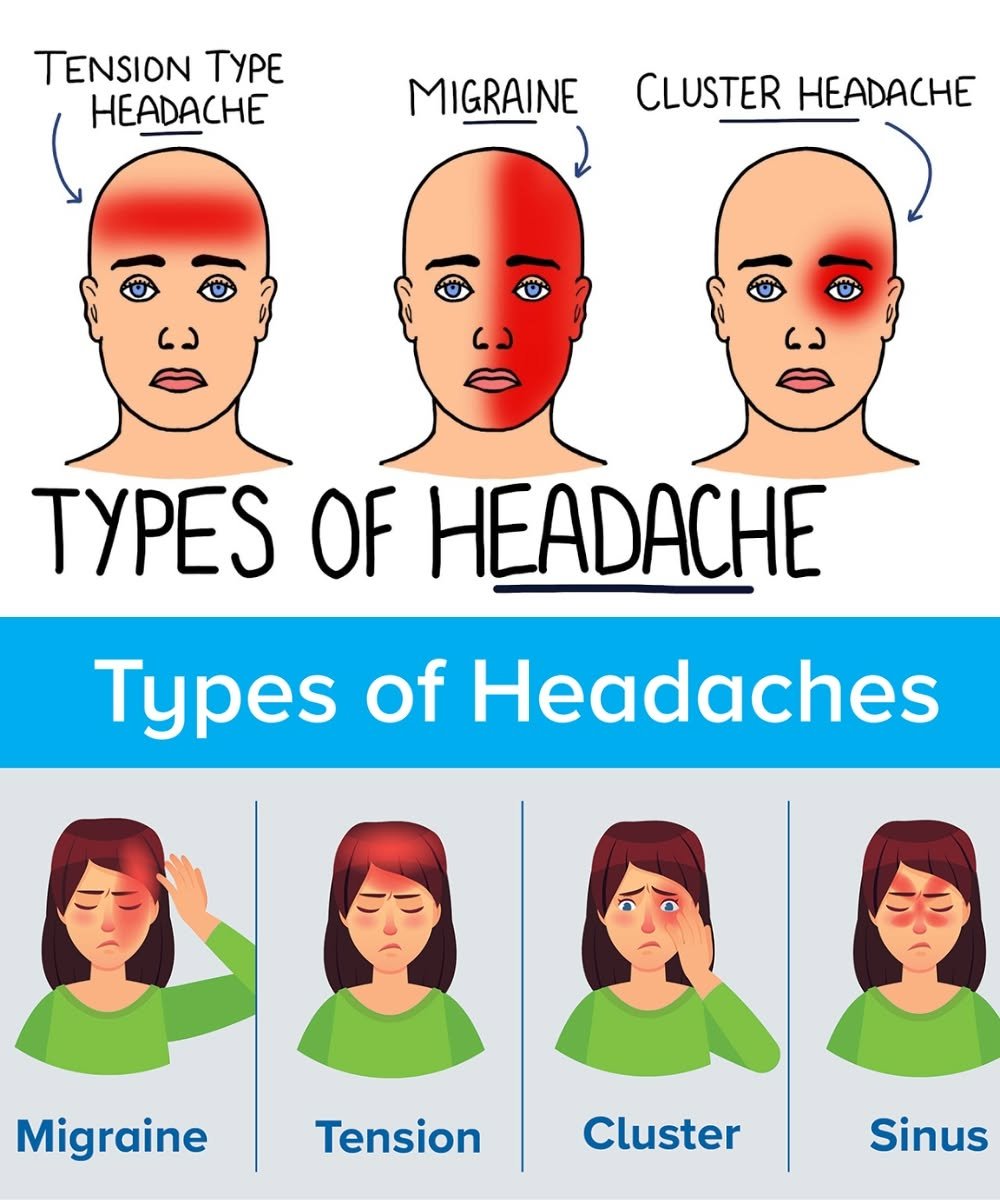
- Dull, aching pain
- Tightness across the forehead
- Pressure around the head
- Neck and shoulder stiffness
Natural Relief Tips
- Gentle neck stretching
- Stress management
- Adequate sleep
- Warm compress on the neck
- Staying hydrated
2. Migraine
Possible Triggers
- Hormonal changes
- Lack of sleep
- Bright lights
- Strong odors
- Certain foods
- Stress
Common Symptoms
- Moderate to severe throbbing pain
- Usually on one side of the head
- Nausea
- Vomiting
- Sensitivity to light and sound
Natural Relief Tips
Some people benefit from:
- Resting in a dark, quiet room
- Drinking enough water
- Ginger for nausea
- Identifying and avoiding personal migraine triggers
- Maintaining a consistent sleep schedule
Discuss supplements such as magnesium with your healthcare provider before using them.
3. Cluster Headache
Possible Causes
The exact cause is not fully understood, but cluster headaches are believed to involve the brain’s hypothalamus.
Symptoms
- Severe pain around one eye
- Eye redness or tearing
- Nasal congestion on the affected side
- Occurring in repeated cycles or “clusters”
What Helps
Cluster headaches usually require medical treatment. During an attack, some people find temporary comfort from:
- Resting in a quiet environment
- Applying a cool compress
Seek medical care for diagnosis and treatment options.
4. Sinus Headache
Possible Causes
- Sinus infection
- Allergies
- Nasal inflammation
Symptoms
- Pain around the forehead
- Pressure in the cheeks
- Facial tenderness
- Nasal congestion
Natural Relief Tips
- Saline nasal rinse
- Warm compress over the sinuses
- Steam inhalation
- Drinking warm fluids
If symptoms last more than several days or are accompanied by fever, consult a healthcare professional.
5. Medication-Overuse (Rebound) Headache
Possible Causes
Frequent use of pain-relieving medications may actually increase headache frequency.
Symptoms
- Daily or near-daily headaches
- Headaches that return when medication wears off
What to Do
Never stop prescription medications suddenly without medical advice.
A healthcare provider can recommend a safe plan to reduce medication overuse.
6. Exercise (Exertional) Headache
Possible Triggers
- Heavy lifting
- Running
- Intense exercise
Symptoms
- Pulsating headache during or shortly after physical activity
Natural Relief Tips
- Stay hydrated.
- Warm up before exercise.
- Avoid exercising in extreme heat.
- Build exercise intensity gradually.
Sudden severe headaches during exercise require immediate medical evaluation.
7. Caffeine Withdrawal Headache
Cause
Suddenly reducing or stopping caffeine after regular use.
Symptoms
- Dull headache
- Fatigue
- Difficulty concentrating
- Irritability
Natural Relief Tips
Reduce caffeine gradually instead of stopping abruptly.
Maintain good hydration and get enough rest during the adjustment period.
8. Hormonal Headaches
Possible Causes
Hormonal fluctuations during:
- Menstruation
- Pregnancy
- Perimenopause
- Menopause
Symptoms
- Migraine-like pain
- Fatigue
- Mood changes
Natural Relief Tips
- Regular meals
- Good sleep habits
- Stress reduction
- Gentle exercise
If headaches become frequent or severe, speak with your healthcare provider.
9. High Blood Pressure and Headaches
Most people with high blood pressure do not experience headaches.
However, a sudden, severe elevation in blood pressure (hypertensive crisis) may cause headache and requires immediate medical attention.
Seek emergency care if headache occurs with:
- Chest pain
- Shortness of breath
- Vision changes
- Confusion
- Weakness
- Blood pressure of 180/120 mmHg or higher
10. Ice Pick Headache
Characteristics
Ice pick headaches are brief, sharp, stabbing pains that usually last only a few seconds.
Symptoms
- Sudden stabbing pain
- Usually around the eye or temple
- Comes without warning
What May Help
Keeping a headache diary may help identify possible triggers.
If these headaches become frequent, consult a healthcare professional for evaluation.
Healthy Habits That May Reduce Headaches
Many headaches can be reduced by healthy lifestyle habits.
Try to:
- Drink enough water.
- Sleep 7–9 hours each night.
- Eat regular, balanced meals.
- Exercise regularly.
- Limit excessive alcohol.
- Manage stress.
- Maintain good posture.
- Take regular breaks from screens.
When Should You See a Doctor?
Seek medical attention if you experience:
- A sudden, extremely severe headache (“thunderclap headache”)
- Headache after a head injury
- Fever with a stiff neck
- Confusion or difficulty speaking
- Weakness or numbness
- Vision changes
- Seizures
- A headache that continues to worsen
- New headaches after age 50
- Frequent headaches affecting daily life
These symptoms may indicate a serious medical condition.
Frequently Asked Questions
What is the most common type of headache?
Tension headaches are the most common type and are often linked to stress, muscle tension, or fatigue.
Can dehydration cause headaches?
Yes. Dehydration is a common trigger for headaches in many people. Drinking adequate fluids may help prevent them.
Are natural remedies effective?
Some natural approaches—such as hydration, adequate sleep, stress management, and identifying personal triggers—may help reduce headaches. However, they should not replace medical treatment when necessary.
When should headaches be taken seriously?
Seek immediate medical care for sudden severe headaches or headaches accompanied by neurological symptoms, fever, confusion, or vision changes.
Final Thoughts
Not all headaches are the same. Identifying the type of headache and understanding its possible triggers can help guide appropriate self-care and medical treatment.
Healthy habits—including good hydration, regular sleep, balanced nutrition, stress management, and routine physical activity—can reduce headache frequency for many people. If headaches become severe, frequent, or unusual, consult a qualified healthcare professional for an accurate diagnosis and personalized treatment plan.
Disclaimer: This article is for educational purposes only and is not intended to diagnose or treat medical conditions. Always seek professional medical advice for persistent, severe, or unexplained headaches.