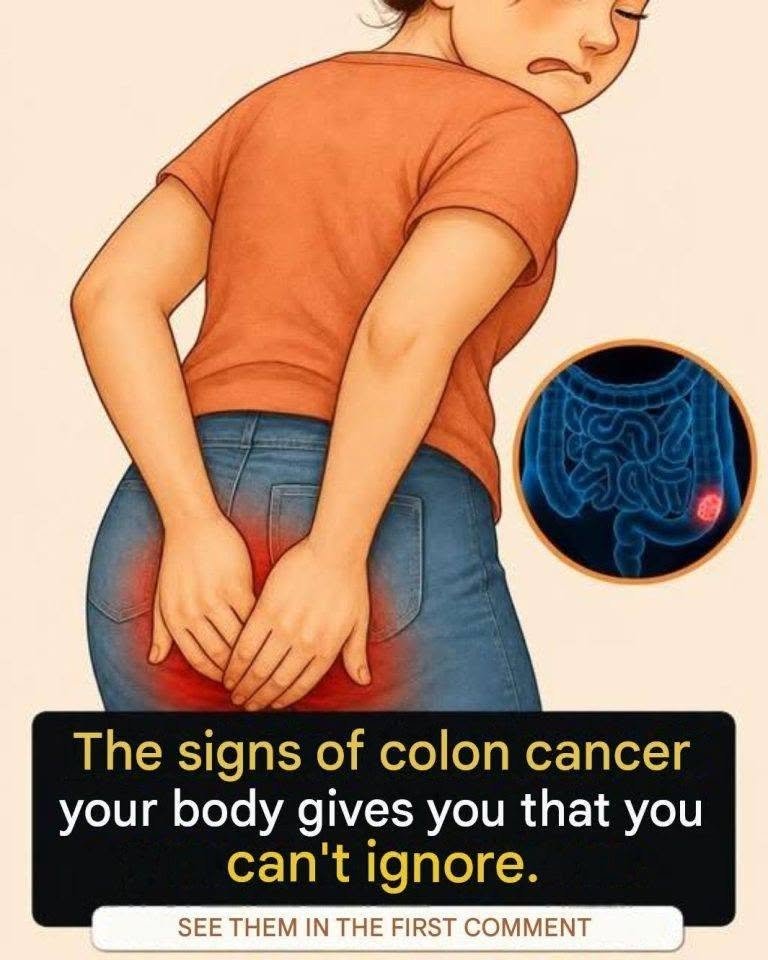
🚨 Colon Cancer: 7 Warning Signs You Should Never Ignore
🚨 Colon Cancer: 7 Warning Signs You Should Never Ignore
Colon cancer can develop quietly, and in its early stages, some people may have few or no symptoms. That is why recognizing persistent changes in your body—and following recommended screening guidelines—is so important.
Having one or more of the symptoms below **does not mean you have colon cancer**. Many of them can be caused by hemorrhoids, infections, irritable bowel syndrome, dietary changes, or other conditions. However, persistent or unusual symptoms should be evaluated by a healthcare professional.
## 1. Persistent Changes in Bowel Habits
A lasting change in your normal bowel pattern can be an important warning sign.
This may include:
* Ongoing constipation
* Persistent diarrhea
* Alternating constipation and diarrhea
* A noticeable change in stool frequency or consistency
* Changes that continue for several weeks
Temporary digestive problems are common, but persistent changes deserve medical attention.
## 2. Blood in the Stool
Blood in or on your stool should not be ignored.
It may appear as:
* Bright red blood
* Dark red blood
* Black or tar-like stools
Hemorrhoids and anal fissures are common causes of rectal bleeding, but there are many possible explanations. A healthcare professional can determine the cause.
## 3. Persistent Abdominal Pain or Bloating
Ongoing abdominal discomfort may include:
* Cramping
* Gas
* Bloating
* Pressure
* Pain that does not improve
These symptoms are common and often have causes other than cancer. However, persistent abdominal symptoms—especially when combined with other warning signs—should be checked.
## 4. A Feeling That Your Bowel Hasn’t Fully Emptied
Some people experience a repeated sensation that they still need to have a bowel movement even after using the bathroom.
If this feeling continues or becomes disruptive, talk with a healthcare professional.
## 5. Unexplained Fatigue or Weakness
Colon cancer can sometimes cause slow blood loss, which may contribute to iron-deficiency anemia.
Possible symptoms include:
* Unusual tiredness
* Weakness
* Dizziness
* Shortness of breath with normal activity
Fatigue has many possible causes, so it does not automatically indicate cancer—but unexplained or persistent fatigue deserves attention.
## 6. Unexplained Weight Loss
Losing weight without intentionally changing your diet or exercise routine can have many causes.
However, unexplained weight loss should be discussed with a healthcare professional, particularly when it occurs alongside bowel changes, bleeding, abdominal pain, or persistent fatigue.
## 7. Persistent Changes in Stool Appearance
A consistent change in stool shape or appearance can have many causes, including diet and bowel disorders.
If your stools remain noticeably different from your normal pattern for an extended period, particularly when accompanied by other symptoms, seek medical advice.
# Why Early Detection Matters
Colon cancer often begins as small growths called **polyps**. Some polyps can eventually become cancerous.
Regular colorectal cancer screening can help detect precancerous polyps and cancer at an earlier stage—sometimes before symptoms appear.
For people at average risk, many guidelines recommend beginning colorectal cancer screening at **age 45**, while people with certain risk factors may need earlier or more frequent screening.
# Who May Have a Higher Risk?
Risk can be increased by factors such as:
* Older age
* A family history of colorectal cancer
* A personal history of colorectal polyps
* Certain inflammatory bowel diseases
* Smoking
* Heavy alcohol consumption
* Physical inactivity
* Obesity
* Type 2 diabetes
* Diets high in processed meat and excessive red meat
Having a risk factor does not mean you will develop colon cancer. It simply means discussing your individual screening needs with a healthcare professional may be especially important.
# Can Colon Cancer Be Prevented?
Not every case can be prevented, but several healthy habits may help lower colorectal cancer risk.
Try to:
* Eat plenty of vegetables, fruits, whole grains, and legumes.
* Choose fiber-rich foods regularly.
* Limit processed meat and excessive red meat.
* Stay physically active.
* Maintain a healthy weight.
* Avoid tobacco.
* Limit alcohol.
* Follow recommended colorectal cancer screening guidelines.
# When Should You See a Doctor?
Don’t wait if you notice **blood in your stool, persistent bowel changes, unexplained weight loss, ongoing abdominal pain, or unexplained fatigue**.
These symptoms do not necessarily mean cancer, but finding the real cause early is important. If symptoms persist for more than a couple of weeks—or are severe or worsening—contact a healthcare professional.
## Final Thoughts
Colon cancer can be difficult to recognize early because it may cause no symptoms at first. That’s why both **awareness and routine screening** matter.
Pay attention to persistent changes in your bowel habits, blood in the stool, abdominal discomfort, unexplained fatigue, or unexplained weight loss.
Most importantly, don’t panic if you experience one of these symptoms. **Symptoms are not a diagnosis.** The right step is to get medically evaluated and find out what is actually causing them.
Early attention can make a meaningful difference.