💤 Could Your Sleeping Position Affect Your Stroke Risk?
💤 Could Your Sleeping Position Affect Your Stroke Risk?
Imagine settling into bed after a long day, falling asleep comfortably, and waking up feeling refreshed. Most of us rarely think about how our sleeping position affects our health.
But your sleep posture can influence your breathing, neck alignment, comfort, and sleep quality. For people who snore, have sleep apnea, or experience neck and back discomfort, choosing a supportive sleeping position may make a meaningful difference.
Does your sleeping position directly determine your risk of stroke? Not necessarily. Stroke risk is influenced by many established factors, including high blood pressure, diabetes, smoking, high cholesterol, heart disease, and sleep apnea. However, improving sleep quality and addressing breathing problems can be an important part of overall cardiovascular health.
Let’s look at what your sleeping position can—and cannot—do.
🌙 Why Does Sleeping Position Matter?
We spend roughly one-third of our lives asleep, often staying in the same position for hours.
Your sleeping posture can affect:
- Neck and spinal alignment
- Airway opening and breathing
- Snoring and sleep-disordered breathing
- Muscle and joint pressure
- Comfort and sleep quality
For some people, especially those with sleep apnea or chronic pain, a small change in sleeping position can make a noticeable difference.
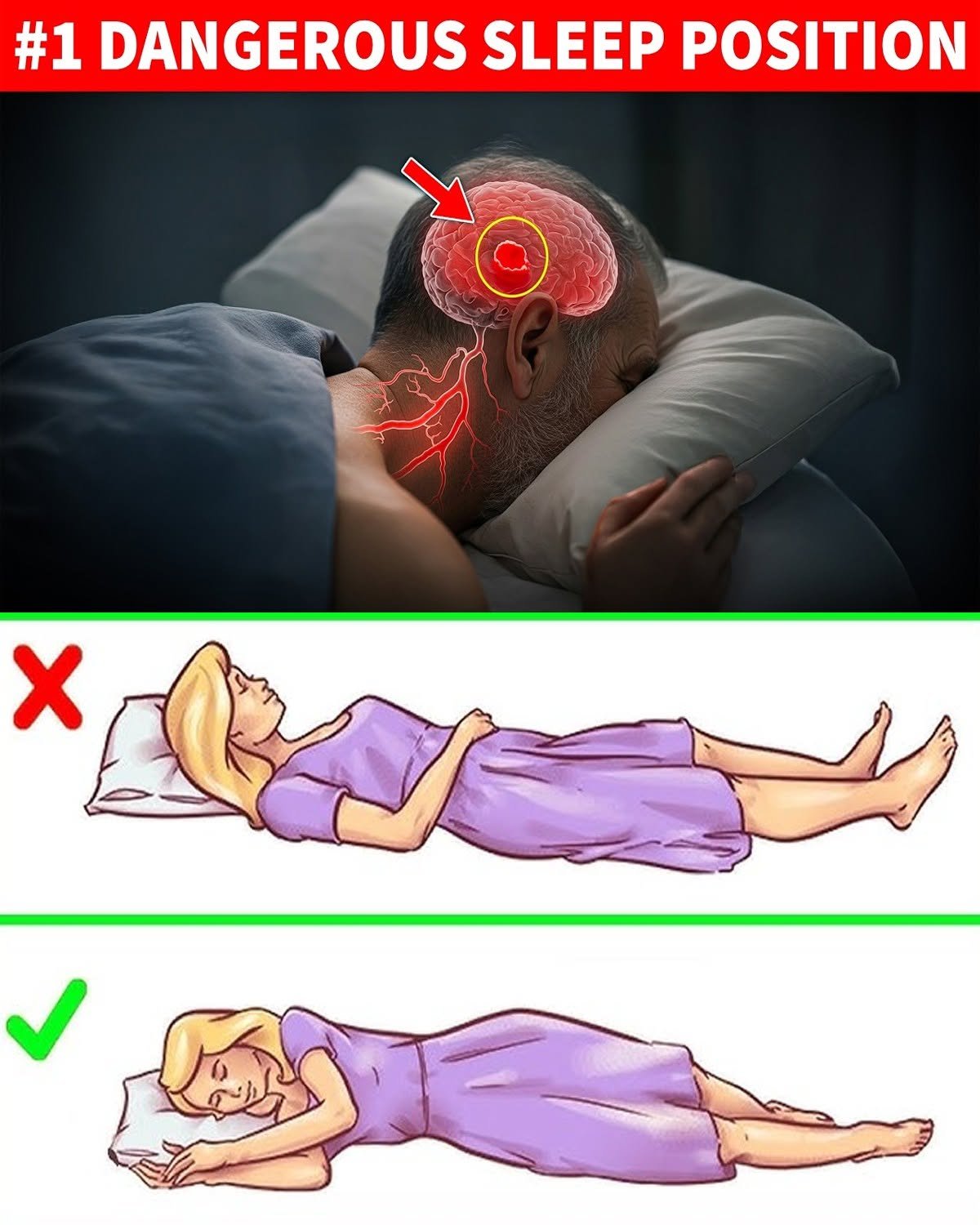
🚫 Is Stomach Sleeping Dangerous?
Sleeping on your stomach, also called prone sleeping, is not automatically dangerous or proven to cause a stroke.
However, it can force your head to remain turned to one side for extended periods. This may contribute to:
- Morning neck stiffness
- Shoulder discomfort
- Back strain
- Poor sleeping comfort
There is currently not strong evidence that ordinary stomach sleeping directly blocks blood flow to the brain or independently causes a stroke.
If stomach sleeping leaves you uncomfortable, gradually changing to your side or back may be worth trying.
🛏️ 7 Potential Benefits of Finding a Better Sleeping Position
1. More Comfortable Neck Alignment
A properly positioned pillow can keep your head and neck in a more natural alignment.
Side sleepers generally benefit from a pillow that fills the space between the head and mattress without pushing the neck too far upward.
2. Less Neck and Back Strain
A supportive sleep position can reduce pressure on muscles and joints.
Both side and back sleeping can work well when the mattress and pillow provide appropriate support.
3. Easier Breathing for Some People
For people who snore or have obstructive sleep apnea, side sleeping may reduce airway collapse compared with sleeping on the back.
Better breathing during sleep can mean fewer interruptions and improved sleep quality.
4. Potentially Better Sleep Quality
Comfort matters.
If your sleeping position causes pain, frequent adjustments, or pressure points, you may wake repeatedly throughout the night.
A comfortable position can help you remain asleep longer and wake feeling more rested.
5. Reduced Morning Stiffness
Keeping your spine and neck properly supported may reduce morning aches and stiffness.
Try experimenting with your pillow height and sleeping position rather than assuming one position is best for everyone.
6. Better Management of Certain Sleep Problems
People with conditions such as sleep apnea or acid reflux may benefit from specific sleeping positions.
For example, side sleeping can be helpful for some people with sleep-disordered breathing, while left-side sleeping and upper-body elevation may help some people with nighttime acid reflux.
7. Supporting Overall Heart and Brain Health
Good sleep is an important part of cardiovascular health.
Rather than focusing on one “perfect” sleeping position, pay attention to the bigger picture:
- Maintain healthy blood pressure.
- Stay physically active.
- Avoid smoking.
- Eat a balanced diet.
- Manage cholesterol and blood sugar.
- Get adequate, consistent sleep.
- Seek evaluation if you regularly snore or stop breathing during sleep.
These factors have a much stronger connection to stroke prevention than sleeping position alone.
🛌 How to Find a More Comfortable Sleeping Position
If you want to experiment with your sleep posture, make gradual changes.
| Adjustment | How It May Help |
|---|---|
| Use a body pillow | Can make side sleeping more comfortable |
| Choose an appropriate pillow | Helps keep the neck aligned |
| Try side sleeping | May improve breathing for some people |
| Use a supportive mattress | Reduces uncomfortable pressure points |
| Elevate the upper body when appropriate | May help some people with reflux or breathing problems |
You don’t have to completely change your sleeping habits overnight. Try a different position for part of the night and see how your body responds.
❤️ The Bigger Stroke-Risk Picture
If you’re concerned about stroke, sleeping position should not be your main focus.
The most important modifiable risk factors include high blood pressure, smoking, diabetes, high cholesterol, physical inactivity, obesity, and certain heart conditions.
Sleep apnea also deserves attention. Untreated sleep apnea is associated with cardiovascular problems, including an increased risk of stroke.
If you regularly wake up gasping, snore loudly, experience witnessed pauses in breathing, or feel extremely tired during the day, talk with a healthcare professional about whether a sleep evaluation is appropriate.
⚠️ When to Seek Urgent Help
Sleeping position cannot prevent every stroke.
If you or someone around you suddenly develops:
- Facial drooping
- Weakness or numbness, especially on one side
- Trouble speaking or understanding speech
- Sudden vision problems
- Severe dizziness or loss of balance
- A sudden, severe headache
Seek emergency medical attention immediately.
Do not wait to see whether the symptoms disappear.
🌿 Final Thoughts
There is no single sleeping position guaranteed to prevent a stroke.
However, finding a comfortable position that supports your neck, spine, and breathing can contribute to better sleep quality. For people who snore or have sleep apnea, changing position may be particularly useful.
So tonight, instead of worrying about finding a “magic” sleep position, focus on what your body is telling you. Choose comfortable support, prioritize good sleep, and pay attention to important cardiovascular risk factors.
Sometimes better health begins with something as simple as getting a good night’s sleep—but stroke prevention requires much more than posture alone.
Disclaimer: This article is for general informational purposes and does not replace professional medical advice, diagnosis, or treatment. If you have cardiovascular disease, sleep apnea, high blood pressure, or other health concerns, speak with a qualified healthcare professional about your individual risk.