🍌 The Hidden Power of Banana Peels: Nature’s Most Underestimated Treasure!
🍌 The Hidden Power of Banana Peels: Nature’s Most Underestimated Treasure!
Banana peels are often thrown away without a second thought, but did you know they contain useful nutrients and natural compounds? From gardening to skincare, banana peels have several interesting uses. However, some viral claims about their benefits are exaggerated, so it’s important to separate facts from myths.
🌿 1. Nutrients Hidden in Banana Peels
Banana peels contain fiber, minerals such as potassium, and various plant compounds. Although the peel is not commonly eaten in many countries, it can be used in certain recipes when properly washed and prepared.
- Fiber: Supports normal digestive health.
- Potassium: An essential mineral for muscle and nerve function.
- Antioxidant compounds: Help protect plant cells and are being studied for potential health applications.
Remember that banana peels are not a miracle cure, and eating them has not been proven to treat specific diseases.
✨ 2. Can Banana Peels Improve Your Skin?
Some people rub banana peels on their skin as a traditional home remedy.
- Dry skin: Banana peels contain compounds that may have moisturizing potential, but rubbing the peel on your skin is not a proven treatment for dryness.
- Acne: There is insufficient clinical evidence that banana peels treat acne.
- Dark spots and wrinkles: Claims that banana peels remove pigmentation or wrinkles are not supported by strong human studies.
Tip: If you try a topical home remedy, test a small area first and stop if irritation occurs. For persistent acne or pigmentation, evidence-based skincare is a better option.
🌱 3. Banana Peels for Plants and Gardening
This is one of the more practical uses of banana peels!
- Composting: Banana peels break down and contribute organic matter and nutrients to compost.
- Garden soil: Properly composted peels can help enrich soil.
- Plant nutrition: They contain potassium and other minerals, although fresh peels are not an instant or complete fertilizer.
Avoid leaving large pieces of peel on indoor plant soil, where they can attract insects or develop mold.
🧴 4. Can Banana Peels Make Plastic Bottles Safer?
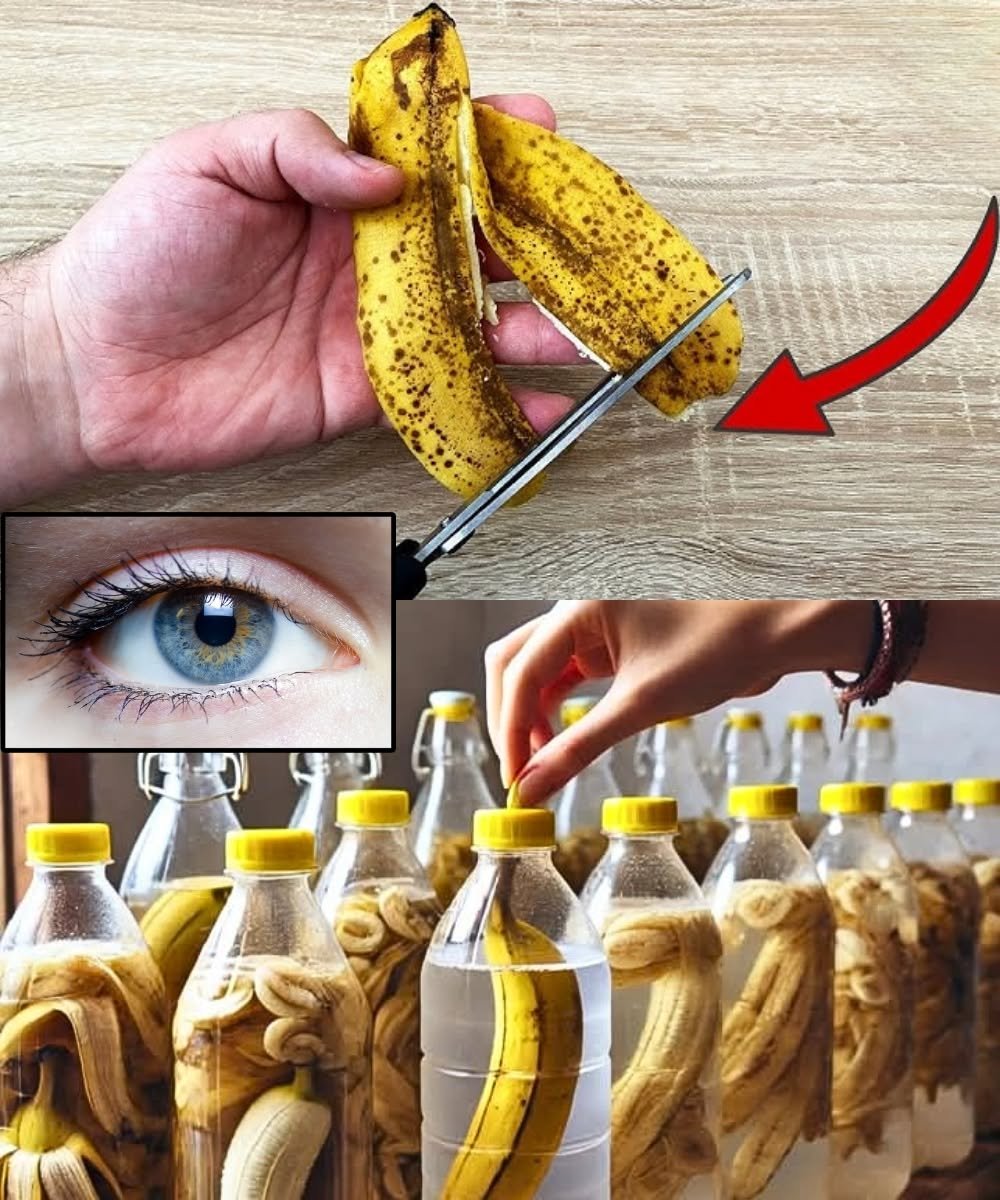
The image suggests placing banana peels inside water bottles. This is not a recommended way to purify drinking water .
Banana peels have been investigated in laboratory research for their ability to adsorb certain contaminants under controlled conditions. However, putting a peel into a bottle does not reliably remove harmful bacteria, viruses, or chemicals. It may also introduce microorganisms into the water.
For safe drinking water, use an appropriate, tested filtration or disinfection method.
👁️ 5. Do Banana Peels Improve Eye Health?
Bananas provide nutrients as part of a balanced diet, but there is no good evidence that rubbing banana peel on the eyes improves eyesight or changes eye color.
Never put banana peel or its residue directly into your eyes.
♻️ 6. Five More Ways to Use Banana Peels
- Add them to a compost bin.
- Use properly prepared peels in recipes that call for them.
- Explore banana-peel chutney or curry recipes.
- Use them in a home composting system.
- Reduce food waste by finding suitable uses instead of automatically discarding them.
💛 Final Thoughts
Banana peels are more than kitchen waste. They contain useful plant compounds and can be valuable in composting and food preparation. But claims that they cure diseases, transform skin, improve eyesight, or make contaminated water safe should be treated with caution.
Nature offers many useful resources, and the best way to benefit from them is to combine curiosity with reliable scientific evidence. 🍌🌿