Don’t Throw Away Your Eggshells: 7 Smart Ways to Use Them in Your Garden
Don’t Throw Away Your Eggshells: 7 Smart Ways to Use Them in Your Garden
If you eat eggs regularly, don’t throw the shells away just yet. Eggshells can become a useful gardening resource when they are properly cleaned, dried, crushed, and added to your compost or soil.
Eggshells are made primarily of calcium carbonate, which makes them a potential source of calcium for plants. While they are not a complete fertilizer, they can be part of a long-term soil improvement and organic gardening strategy.
Here is a simple step-by-step guide to turning your kitchen eggshell waste into a useful garden amendment.
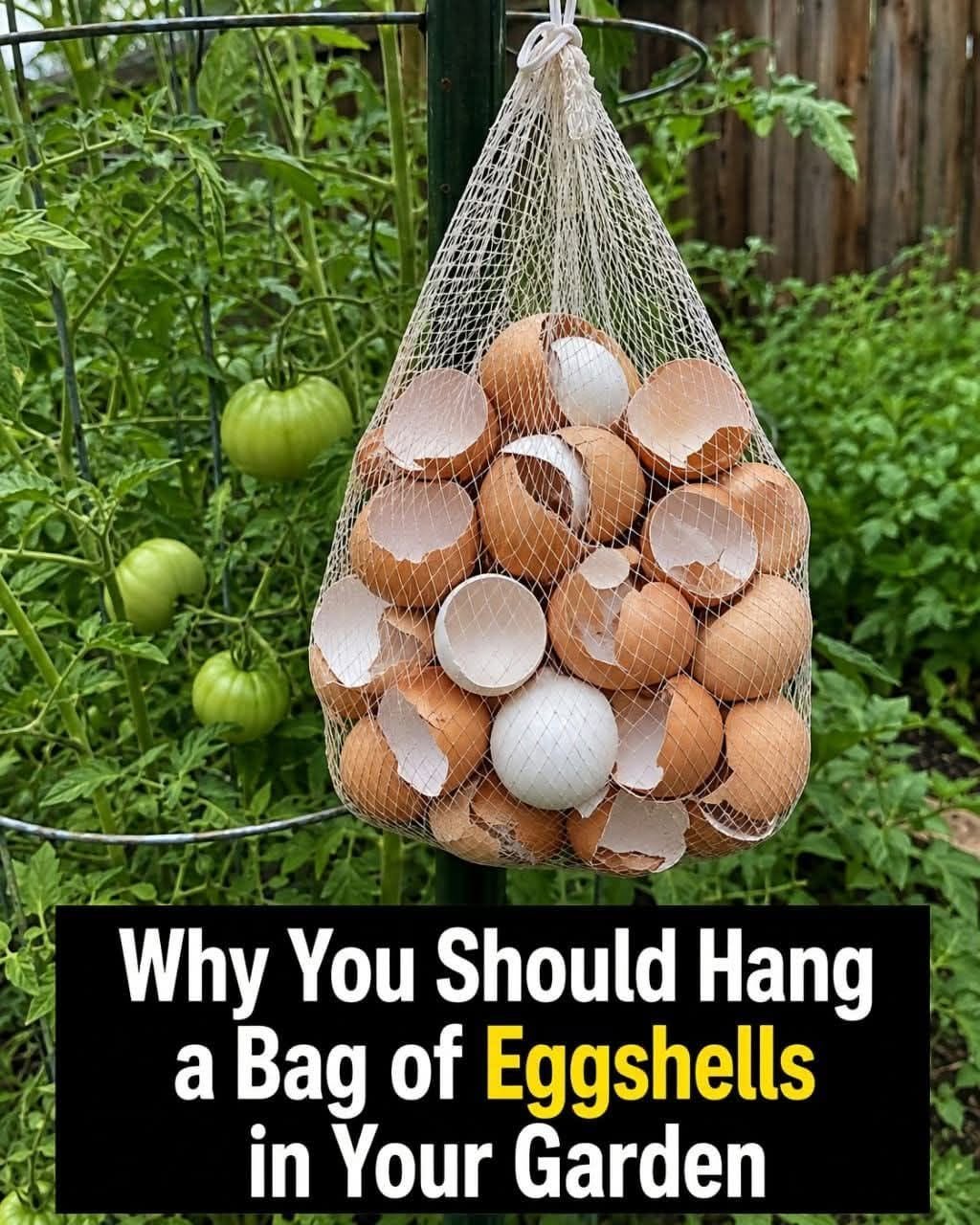
Why Do Gardeners Hang Eggshells in a Mesh Bag?
Hanging eggshells in a breathable mesh bag is mainly a convenient way to dry and store them.
Fresh eggshells can contain traces of egg residue and moisture. If they are placed in a closed container, they may develop unpleasant odors or attract insects.
A mesh bag allows air to circulate, helping the shells become:
- Drier
- More brittle
- Easier to crush
- Easier to store
- Less likely to develop odors
You can hang the bag in a dry, sheltered location such as a greenhouse, ventilated shed, covered patio, or garden storage area.
Step 1: Rinse the Eggshells
After using the eggs, rinse the shells thoroughly to remove leftover egg residue.
You don’t need to scrub them aggressively. A quick rinse is generally enough.
Allow excess water to drain before placing the shells into the collection bag.
Step 2: Dry the Eggshells Properly
Place the rinsed shells in a breathable mesh or net bag.
Good air circulation is important because moisture can encourage unpleasant smells and microbial growth.
Keep the bag somewhere:
- Dry
- Sheltered from rain
- Well ventilated
- Away from excessive humidity
Let the shells dry completely before grinding them.
Step 3: Collect the Shells Until You Have Enough
There is no need to crush every eggshell immediately.
Simply rinse each shell, allow it to drain, and add it to your hanging collection bag.
Over several weeks, you can build up a useful supply without creating extra daily work.
This makes eggshell recycling a simple addition to an eco-friendly gardening routine.
Step 4: Crush or Grind the Eggshells
Once the shells are completely dry, crush them into small pieces or grind them into a fine powder.
You can use:
- A mortar and pestle
- A rolling pin
- A food processor
- A dedicated coffee grinder
The finer the material, the greater its surface area and the easier it is for natural soil processes to act on it.
However, remember that eggshell powder is still a slow-release soil amendment, not a fast-acting fertilizer.
Step 5: Add Eggshell Powder to Compost
One of the easiest ways to use eggshells is by adding them to your compost.
Crushed eggshells can be combined with common compost ingredients such as:
- Vegetable scraps
- Coffee grounds
- Dry leaves
- Grass clippings
- Plant trimmings
- Shredded cardboard
This creates a more diverse organic compost mixture than relying on eggshells alone.
For homeowners interested in organic soil amendments, composting eggshells is a simple way to reduce household waste.
Step 6: Use Eggshells in a Worm Bin
Finely crushed eggshells can also be added in small amounts to a vermicomposting system.
The mineral material can provide useful grit for worms.
Avoid adding large, sharp pieces. Instead, grind the shells finely and sprinkle a small amount into the worm bin periodically.
Step 7: Add Eggshells to Garden Soil
Finely ground eggshells can be incorporated into garden soil, especially when a soil test indicates that additional calcium may be appropriate.
Calcium is an essential plant nutrient and plays an important role in plant structure and development.
However, eggshells should not be considered a complete plant fertilizer. Plants also require nitrogen, phosphorus, potassium, micronutrients, water, sunlight, and healthy soil conditions.
Can Eggshells Prevent Blossom-End Rot?
Eggshells are often recommended for tomato and pepper plants because blossom-end rot is associated with calcium problems.
However, adding eggshells around a tomato plant is not an instant cure.
Blossom-end rot can occur when plants have difficulty taking up or transporting calcium, particularly when soil moisture fluctuates significantly.
For healthier tomato and pepper plants, focus on:
- Maintaining consistent soil moisture
- Using organic mulch
- Avoiding root damage
- Avoiding excessive nitrogen fertilizer
- Testing the soil when calcium deficiency is suspected
Eggshells may contribute calcium gradually, but proper watering and overall plant care are extremely important.
Do Eggshells Really Repel Slugs and Snails?
You may have seen gardeners placing crushed eggshells around plants as a natural slug barrier.
The theory is that sharp shell fragments discourage slugs and snails from crossing them.
However, eggshells are not a consistently reliable pest-control method. Slugs can sometimes cross the material, especially after it becomes wet.
If you have a serious slug problem, consider more dependable garden pest-control methods rather than relying entirely on eggshells.
Can Hanging Eggshells Repel Garden Pests?
There are also claims that hanging eggshells can scare away deer, rodents, squirrels, and other garden pests.
There is not strong evidence that simply hanging clean eggshells provides dependable pest protection.
For animal control, physical barriers such as:
- Garden netting
- Fencing
- Plant cages
- Protective covers
are generally more reliable.
The main benefit of hanging eggshells is collection and drying, not pest control.
How Much Eggshell Powder Should You Use?
More is not always better.
If your soil already contains sufficient calcium or has a relatively high pH, adding large quantities of calcium carbonate may be unnecessary.
A soil test is the best way to determine whether your garden actually needs a significant calcium amendment.
For most households, adding moderate amounts of crushed eggshells to compost is a practical approach.
How Long Do Eggshells Take to Break Down?
Don’t expect immediate results.
Large eggshell fragments can remain recognizable in soil for a very long time. Even finely ground eggshells react gradually because calcium carbonate is not instantly soluble.
For this reason, eggshells are better viewed as part of a long-term soil health strategy rather than a quick fertilizer solution.
If your plants need immediate nutrition, use an appropriate fertilizer or compost based on their specific requirements.
Eggshells vs. Commercial Garden Fertilizer
Eggshells have one major advantage: they are inexpensive and readily available as a household waste product.
However, they don’t provide the broad range of nutrients found in a complete commercial fertilizer.
Think of eggshells as a potential natural soil amendment, rather than a replacement for balanced plant nutrition.
Important Safety Tips
If you’re collecting eggshells for several weeks, don’t place dirty shells containing egg residue into a damp, poorly ventilated bag.
Instead:
- Rinse the shells.
- Allow excess water to drain.
- Keep them well ventilated.
- Dry them completely before grinding.
- Store the finished powder in a clean, dry container.
If you use a food processor or grinder for garden materials, clean and sanitize it properly before using it for food again. Using separate equipment for gardening is even better.
The Biggest Mistake Gardeners Make With Eggshells
The biggest mistake is expecting eggshells to solve every garden problem.
Eggshells are not a complete fertilizer.
They primarily provide calcium carbonate and cannot replace the nutrients plants need for healthy growth.
Successful gardening depends on a combination of:
- Healthy soil
- Proper watering
- Adequate sunlight
- Organic matter
- Balanced plant nutrition
- Appropriate pest management
Eggshells can complement these practices, but they should not be the foundation of your entire fertilization program.
Final Thoughts
If you regularly eat eggs, saving the shells is an easy way to reduce household waste and create a potentially useful garden amendment.
The process is simple:
Rinse → Dry → Collect → Crush → Compost or Use in Soil
The hanging mesh bag isn’t a magical pest-control method or a secret fertilizer trick. Its real purpose is to provide an easy way to dry and store eggshells until you have enough to process.
For the best results, use finely crushed shells in moderation, combine them with quality compost, and rely on a soil test when you need to determine whether your garden actually needs additional calcium.
Sometimes the most useful gardening resources are already sitting in your kitchen waste bin—you just need to prepare them properly before putting them back into the soil.