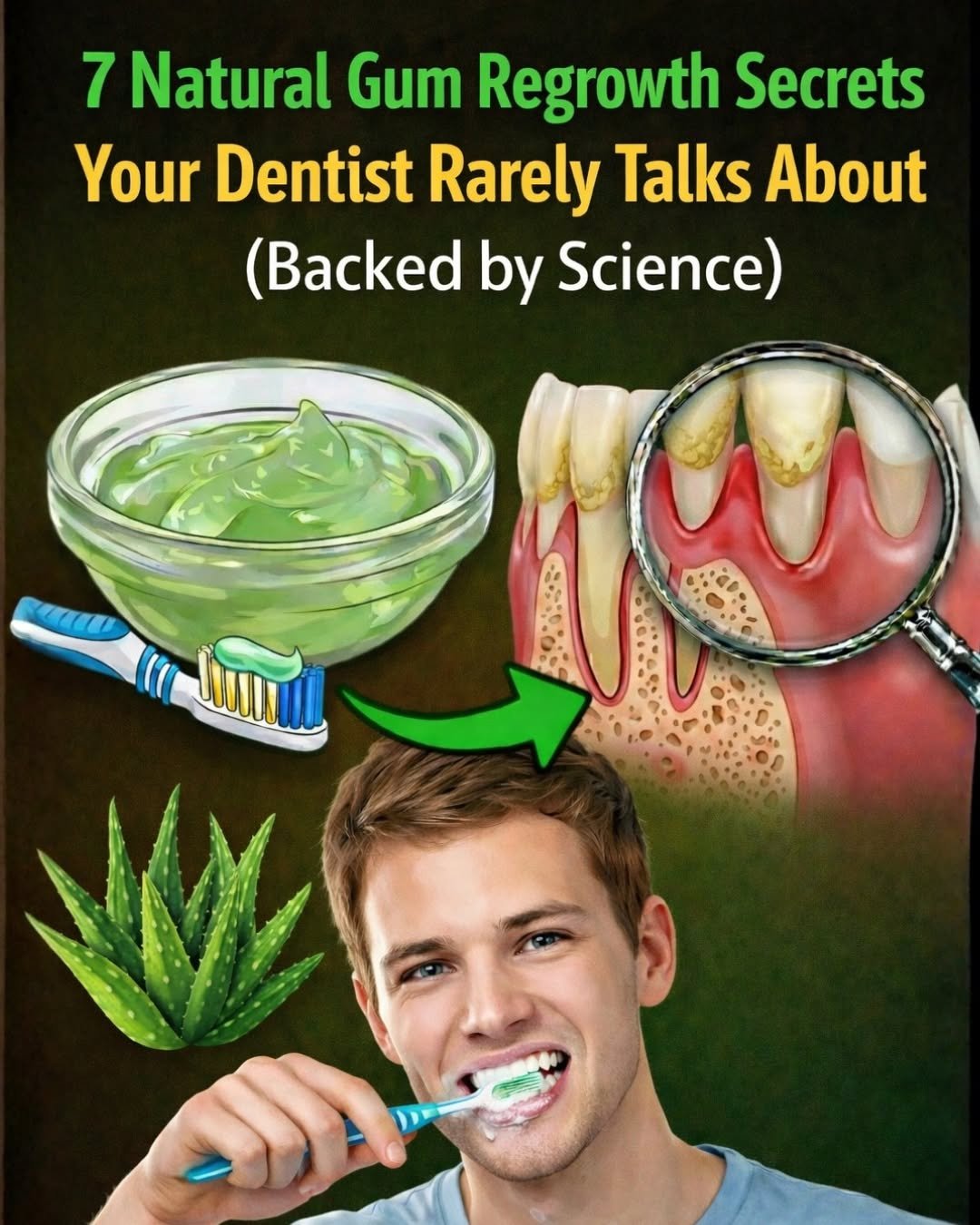
7 Natural Gum Regrowth Secrets Your Dentist Rarely Talks About (Backed by Science)
7 Natural Gum Regrowth Secrets Your Dentist Rarely Talks About (Backed by Science)
Gum recession is one of the most common dental problems in adults. Many people assume that once gums start pulling away from teeth, there’s nothing they can do except undergo expensive procedures like gum graft surgery.
But the truth is more complex.
Healthy gums depend heavily on nutrients, collagen production, inflammation control, and oral microbiome balance. When these factors are supported, the body may improve gum health and slow or partially reverse early gum recession.
In this article, we’ll explore seven natural strategies that may help strengthen gums, reduce inflammation, and support gum tissue repair.
What Causes Gum Recession?
Before exploring solutions, it’s important to understand why gums start shrinking in the first place.
Common causes include:
Loss of collagen as we age
Chronic inflammation from bacteria
Vitamin deficiencies
Poor oral microbiome balance
Dry mouth and mouth breathing
Weak jawbone support
Research suggests collagen production declines with age, which weakens gum tissue and makes it easier for bacteria to cause damage.
The key to protecting your gums is supporting the body’s natural repair processes.
1. Collagen Peptides + CoQ10: The Powerful Gum Repair Combo
Gums are made largely of collagen, which acts as the structural framework for gum tissue.
When collagen production drops, gums become thinner and more vulnerable.
Two nutrients that may support gum repair are:
Collagen peptides
These provide amino acids that fibroblast cells use to rebuild connective tissue.
CoQ10 (Ubiquinol)
CoQ10 supports cellular energy and tissue repair. It also helps protect gums from oxidative stress.
Some research suggests combining collagen peptides with CoQ10 can improve gum health markers such as bleeding and pocket depth over time.
Tip:
Take collagen peptides daily with a healthy fat source to improve absorption.
2. Vitamin D3 and Vitamin K2 for Jawbone Support
Healthy gums depend on strong jawbone structure.
Two vitamins play a critical role in bone metabolism:
Vitamin D3
Improves calcium absorption
Supports immune function
Vitamin K2
Directs calcium into bones and teeth
Prevents calcium buildup in arteries
Together, these vitamins support bone density in the jaw, which helps anchor teeth and maintain healthy gum structure.
Without strong bone support, gums may recede faster.
3. Hyaluronic Acid Gel for Gum Healing
Hyaluronic acid isn’t just for skin care.
In dentistry, it’s used to:
Reduce inflammation
Improve tissue hydration
Support wound healing
When applied to gums, hyaluronic acid forms a protective layer that allows tissues to repair underneath.
Some clinical research shows improvements in gum pocket depth when hyaluronic acid is used alongside regular dental care.
How to use:
Apply after brushing
Avoid eating or drinking for 30 minutes
4. Aloe Vera + Vitamin E for Gum Tissue Repair
Aloe vera has long been used to soothe inflammation and support tissue healing.
For gums, it may:
Reduce bacterial activity
Calm irritated gum tissue
Support cell regeneration
Vitamin E adds antioxidant protection, helping protect gum cells from damage caused by inflammation.
Studies have shown aloe vera gel can reduce gum pocket depth when used regularly.
DIY remedy
Mix:
1 teaspoon aloe vera gel
A few drops of vitamin E oil
Apply gently along the gum line before bed.
5. Matcha Green Tea Paste for Gum Protection
Green tea contains a powerful antioxidant called EGCG (epigallocatechin gallate).
This compound may help:
Reduce gum inflammation
Prevent collagen breakdown
Slow bacterial growth
Instead of drinking green tea, applying matcha powder paste directly to gums allows the compounds to contact gum tissue directly.
How to make it
Mix matcha powder with a few drops of water
Apply to gum line
Leave for 5–10 minutes
Rinse
6. Salt Water + Tea Tree Oil Rinse
Saltwater rinses are a traditional oral health remedy.
They help:
Reduce bacteria
Soothe inflammation
Clean irritated gums
Adding a tiny drop of tea tree oil may increase antibacterial effects.
However, this method mainly reduces inflammation rather than regrowing tissue, so it should be combined with other strategies.
7. Improve Nighttime Breathing
One overlooked cause of gum recession is chronic mouth breathing during sleep.
When you breathe through your mouth:
Gums dry out
Saliva protection decreases
Bacteria grow faster
Some studies suggest mouth breathing may significantly increase gum recession risk.
Possible solutions include:
Nasal breathing training
Humidifying the bedroom
Using xylitol lozenges to stimulate saliva
A Simple Daily Gum Health Routine
If you want to protect your gums naturally, try this simple routine:
Morning
Brush and floss
Take collagen peptides
Take Vitamin D3 + K2
Daytime
Drink green tea or use matcha paste occasionally
Stay hydrated
Evening
Brush and floss
Apply hyaluronic acid or aloe mixture
Weekly
Saltwater rinse several times
Monitor gum sensitivity and bleeding
Consistency is key.
When to See a Dentist
Natural strategies can support gum health, but professional dental care is still essential.
See a dentist if you notice:
Persistent bleeding gums
Loose teeth
Deep gum pockets
Severe gum recession
Early treatment can prevent permanent damage.
Final Thoughts
Gum recession doesn’t always mean tooth loss is inevitable.
By addressing the underlying causes—nutrient deficiencies, inflammation, and collagen loss—you can support healthier gums naturally.
Small daily habits like proper nutrition, oral care, and targeted nutrients can make a major difference over time.
Your gums are living tissue—and with the right support, they can become stronger and healthier.