Bee Venom and the Future of Cancer Therapy: The Surprising Power of Melittin
Bee Venom and the Future of Cancer Therapy: The Surprising Power of Melittin
🚨 In recent years, cancer research has moved beyond conventional chemotherapy and radiation. A new wave of discoveries is reshaping treatment possibilities—and one of the most exciting breakthroughs comes from an unexpected source: bee venom 🐝.
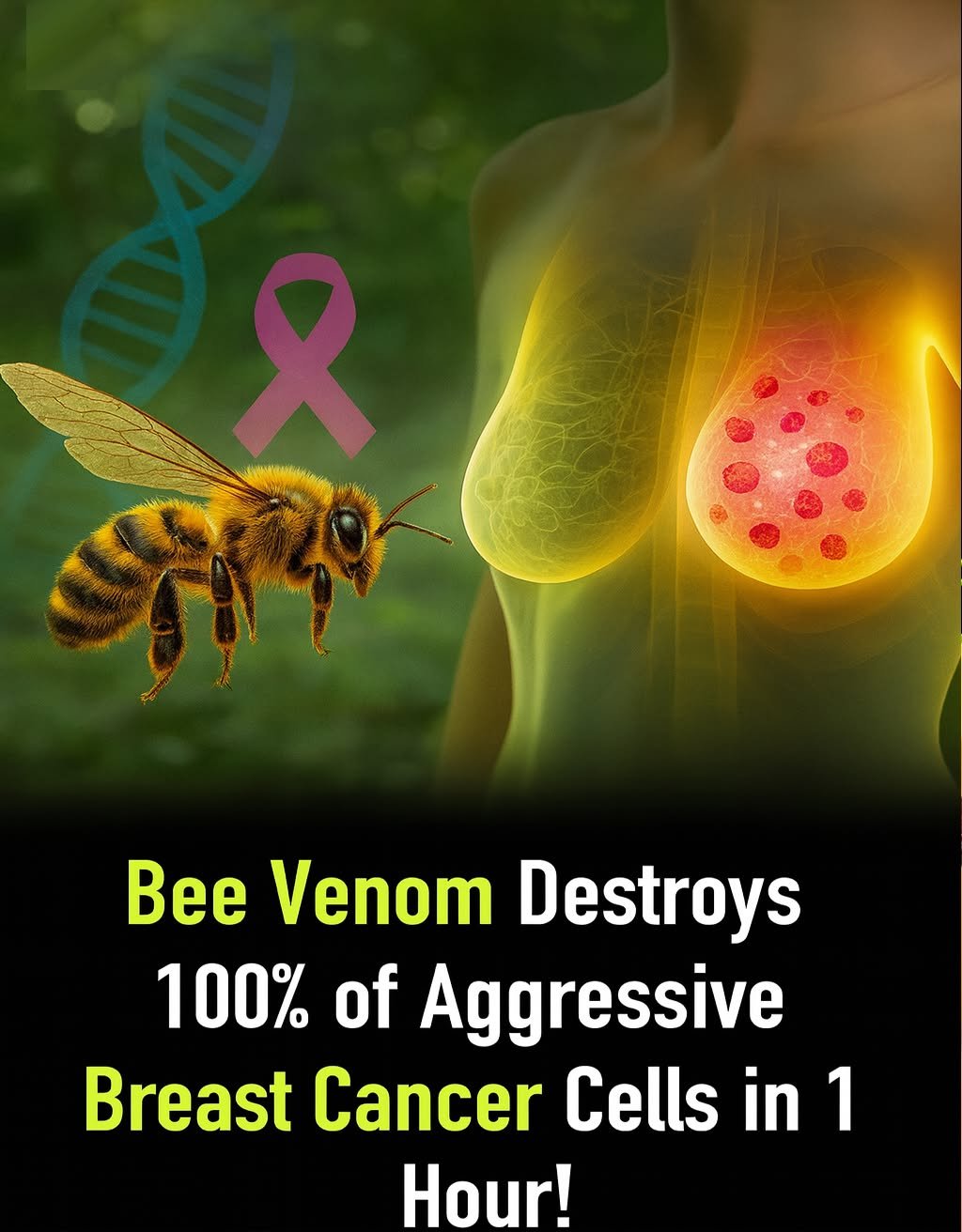
Australian researchers discovered that melittin, a small but incredibly powerful molecule in bee venom, can destroy 100% of aggressive breast cancer cells, including triple-negative and HER2-enriched types, in under an hour ⏱️. Even more remarkable, healthy cells nearby remain unharmed.
This finding offers hope that nature may hold keys to safer, more precise cancer treatments, reducing the harsh side effects often seen with standard therapies. Let’s explore what melittin is, how it works, and why it could redefine cancer care.
🌿 Understanding Melittin: Nature’s Tiny Weapon
Bee venom has fascinated scientists for centuries and has been used in traditional medicine, especially in apitherapy, where bee stings are applied for therapeutic purposes. The main active compound, melittin, makes up about 50% of bee venom’s dry weight.
Melittin is known for:
Piercing cell membranes.
Strong anti-inflammatory effects at small doses.
Modulating immune responses.
Recent research has highlighted its targeted action against cancer cells, offering potential beyond traditional uses.
🔬 How Melittin Targets Cancer Cells
A major challenge in cancer therapy is avoiding damage to healthy cells. Chemotherapy attacks all rapidly dividing cells, causing hair loss, nausea, and fatigue.
Melittin shows unprecedented precision:
Rapid Cell Destruction: Breast cancer cells disintegrated within 60 minutes.
Selective Targeting: Cancer cell membranes are pierced, while healthy cells remain intact.
Dual Mechanism: It disrupts cancer cell membranes and internal signaling pathways necessary for growth, making resistance less likely.
⚡ Why Triple-Negative and HER2-Enriched Cancers Matter
Triple-Negative Breast Cancer (TNBC): Lacks estrogen, progesterone, and HER2 receptors, making it hard to treat with hormone or HER2-targeted therapies.
HER2-Enriched Breast Cancer: Characterized by overexpressed HER2 protein, fueling rapid tumor growth.
Melittin’s ability to eliminate both types offers hope for patients facing limited options.
🌍 A Safer, More Natural Path Forward
Melittin’s potential lies not just in effectiveness, but also in its gentleness on healthy cells. Key advantages include:
Selectivity: Targets only cancer cells.
Minimal Side Effects: Less toxicity than chemotherapy.
Natural Origins: Derived from a substance produced by nature for millions of years.
While it won’t replace chemotherapy immediately, it opens the door to precise, less toxic treatments.
💡 Could Melittin Become a Standard Therapy?
Transforming a natural compound into a safe, effective treatment requires research:
Determining safe doses for humans.
Developing targeted delivery methods to tumors.
Combining with existing therapies for enhanced results.
Assessing long-term effects.
Nanoparticle technology is already being explored, delivering melittin directly to tumors to maximize benefits while reducing risks.
🌸 Beyond Cancer: Other Potential Benefits
Studies suggest melittin may also:
Reduce inflammation in chronic conditions like arthritis.
Fight bacterial and viral infections.
Support immune system regulation.
It’s a multifunctional natural compound with broad therapeutic potential.
⚠️ A Word of Caution
Lab results are promising, but melittin is not yet an approved cancer treatment. Raw bee venom can cause allergic reactions, tissue damage, or even life-threatening responses. Safe use will depend on controlled, medical-grade applications.
🌟 The Future of Cancer Treatment
Melittin represents a shift toward:
Targeted therapy for aggressive cancers.
Complementary therapy alongside conventional treatments.
Natural molecule-based medicine with reduced toxicity.
Nature has historically inspired life-saving medicines, from willow bark to penicillin. Now, bee venom and melittin may mark the next breakthrough in oncology.
👉 Could the cure for cancer already exist in nature, waiting to be discovered? Perhaps it’s quietly buzzing in the wings of a honeybee 🐝✨.