Mix Ginger with Cloves and Discover What This Simple Combination Can Do for You

Mix Ginger with Cloves and Discover What This Simple Combination Can Do for You

 Have you ever looked at the spices in your kitchen and wondered if they could do more than just flavor your food?

Ginger and cloves have been used for centuries in traditional wellness practices across Asia, Africa, and Latin America. When combined, these two powerful ingredients create a warm, aromatic infusion that may gently support digestion, circulation, immunity, and overall vitality.

This is not a miracle cure.
This is not an instant fix.

But it can be a simple, natural habit that many people incorporate into their daily wellness routine. The real value lies in how these two ingredients work together.

Let’s explore why this combination is gaining so much attention.


Why Ginger and Cloves Work So Well Together

Both ginger and cloves contain bioactive compounds that have been studied for their antioxidant and anti-inflammatory properties.

  • Ginger contains gingerol, which is linked to digestive comfort and improved circulation.
  • Cloves are rich in eugenol, known for its antioxidant and antimicrobial effects.

When brewed together, they create a soothing drink that may help the body feel more balanced and naturally energized.


Potential Benefits of Ginger and Clove Infusion

1. Supports Healthy Digestion

Ginger is widely used to relieve bloating and digestive discomfort, while cloves may help stimulate digestive enzymes. Together, they make an ideal after-meal drink.

2. Promotes Circulation

Ginger’s warming effect may help improve blood flow, and cloves complement this with their antioxidant profile.

3. Boosts Immune Support

Both spices contain plant compounds that help the body manage oxidative stress, an important factor in maintaining a strong immune system.

4. Provides Natural Energy

Unlike caffeine, this blend offers a gentle and steady energy boost without causing jitters.

5. Supports Respiratory Comfort

Traditionally used during colder seasons, ginger and cloves may help soothe the throat and promote easier breathing.

6. Contributes to Oral Health

Cloves are well known in traditional remedies for oral care due to their antibacterial properties.


Simple Ginger–Clove Infusion Recipe

Ready in just a few minutes.

Ingredients:

  • 1 small piece of fresh ginger (2–3 cm), sliced
  • 4–6 whole cloves
  • 2 cups (500 ml) water
  • Honey or lemon (optional)

Instructions:

  1. Bring water to a boil.
  2. Add ginger and cloves.
  3. Reduce heat and let it simmer for about 10 minutes.
  4. Strain into a cup.
  5. Add honey or lemon to taste.
  6. Enjoy warm or hot.

When Should You Drink It?

  • In the morning to start your day with warmth
  • After meals to support digestion
  • During cold weather
  • 3–4 times per week is generally sufficient

If you are sensitive to stimulating spices, avoid drinking it in large amounts at night.


Important Precautions

Even though they are natural, ginger and cloves are potent spices:

  • Avoid excessive consumption
  • Consult a healthcare professional if you are taking blood thinners
  • Those with stomach ulcers or sensitive digestion should use caution
  • During pregnancy or breastfeeding, seek medical advice before regular use

This content is for informational purposes only and does not replace professional medical advice.


Final Thoughts

  • Combining ginger and cloves is not about dramatic overnight changes.
  • It’s about small, consistent habits that gently support your body’s natural systems.
  • With regular use and a balanced lifestyle, this simple infusion may help you feel more comfortable, energized, and supported from within.
  •  Sometimes, the most powerful routines begin with the simplest ingredients.
Similar Posts

  • Remove Cracked Heels and Get Beautiful Feet Permanently: Magical Remedy with Red Onion

    Remove Cracked Heels and Get Beautiful Feet Permanently: Magical Remedy with Red Onion Cracked heels can be uncomfortable and unsightly, but with this simple home remedy using red onion, you can restore your feet to their soft, smooth, and beautiful state naturally. Red onions are not just for cooking—they’re packed with antibacterial, antifungal, and skin-healing…

  • Benefits and Uses of Papaya Flowers Soaked in Honey

    Benefits and Uses of Papaya Flowers Soaked in Honey Papaya flowers, often overlooked compared to the fruit, are packed with nutrients and medicinal properties. When soaked in honey, their health benefits are enhanced, creating a powerful natural remedy for various ailments. This combination is not only delicious but also offers numerous health-promoting properties. Benefits of…

  • Stop Tossing Eggshells—Soak Them in Hot Water and See the Magic

    Stop Tossing Eggshells—Soak Them in Hot Water and See the Magic   Stop Tossing Eggshells—Soak Them in Hot Water and See the Magic Most people toss eggshells into the trash without a second thought. But what if that fragile shell you’re discarding is actually a hidden treasure for your garden? Next time you crack open…

  • Discover the Power of Pumpkin Seeds for Prostate Health

    Discover the Power of Pumpkin Seeds for Prostate Health   Pumpkin seeds — also known as auyama seeds in many Latin cultures — are a small yet mighty food that has earned its place in natural wellness traditions.Packed with zinc, magnesium, antioxidants, and healthy fats, they are often praised for supporting prostate health, urinary balance,…

  • 10 Warning Signs of Breast Cancer You Should Never Ignore

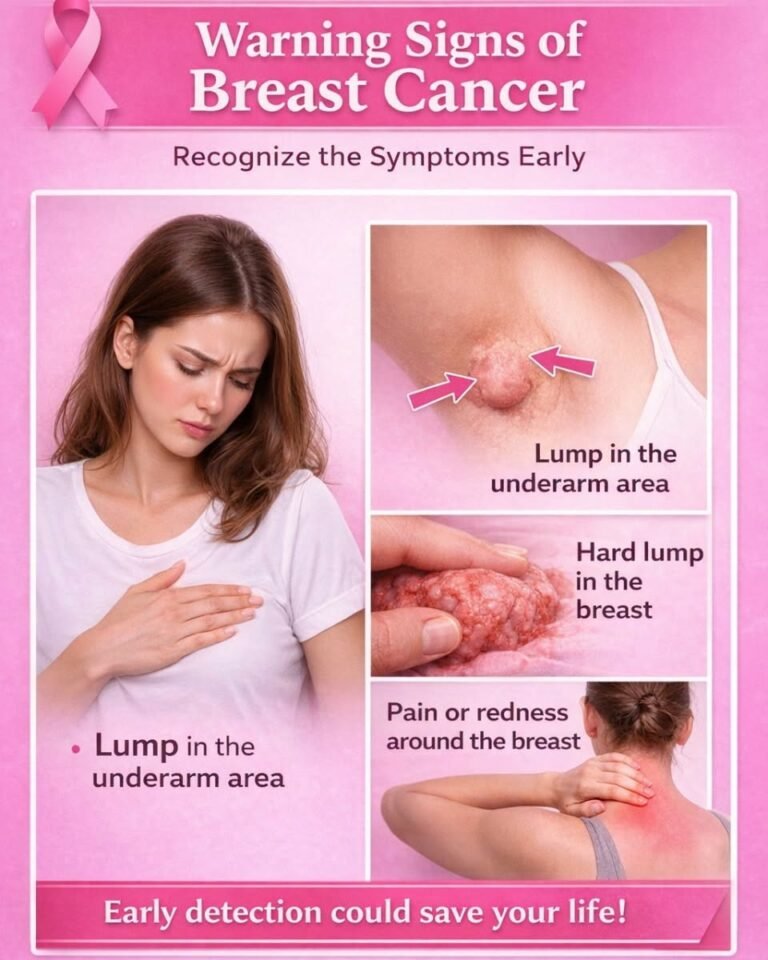
    10 Warning Signs of Breast Cancer You Should Never Ignore Breast health is something many people think about only occasionally. Small changes in the breast are often dismissed as hormonal fluctuations, stress, or temporary irritation. Life gets busy, and it’s easy to assume that unusual symptoms will simply disappear. However, in some situations, these subtle changes may represent early warning signs of breast cancer. Ignoring them could allow a condition that is highly treatable in its early stages to progress into a more serious health concern. The encouraging news is that early detection dramatically improves outcomes. Awareness and timely medical evaluation can truly save lives. In this article, we explore 10 potential warning signs of breast cancer that both women and men should be aware of, along with why early detection is so important. Why Early Detection Matters Breast cancer often begins silently, developing within the milk ducts or lobules without obvious symptoms. When the disease is detected early—before spreading beyond the breast—the five-year survival rate can reach about 99%, according to the American Cancer Society. When cancer spreads to nearby lymph nodes or distant organs, survival rates decline significantly. Numerous studies consistently show that routine screening and attention to physical changes lead to earlier diagnosis and more effective, less aggressive treatment. In the United States alone, estimates suggest that in 2025 approximately 316,950 new invasive breast cancer cases will be diagnosed in women, along with about 2,800 cases in men. At the same time, more than 4 million survivors are living today—an encouraging reminder of how powerful early detection can be. Unfortunately, delays often occur because people hope symptoms will disappear on their own. Knowledge helps change that pattern. 10 Possible Warning Signs of Breast Cancer 1. Swollen Lymph Nodes Near the Armpit or Collarbone Enlarged lymph nodes can sometimes indicate that cancer cells have spread beyond the breast. Possible signs include: Firm swelling under the arm A lump near the collarbone Persistent enlargement that does not go away Any unexplained lymph node swelling should be evaluated by a healthcare professional. 2. Unusual Nipple Discharge Any nipple discharge unrelated to breastfeeding deserves medical attention, especially if it appears suddenly. Examples include: Bloody discharge (most concerning) Clear or colored fluid Spontaneous leakage without squeezing Although many causes are benign, a doctor should always assess this symptom. 3. Redness, Scaling, or Thickening of the Nipple or Areola Persistent redness or flaking around the nipple may be associated with Paget’s disease of the breast, a rare condition that is often linked to underlying breast cancer. Signs may include: Skin irritation around the nipple Crusting or peeling skin Persistent itching or burning sensation 4. Nipple Retraction or Turning Inward If the nipple suddenly pulls inward after previously pointing outward, it may indicate underlying tissue changes. Warning indicators: Sudden inversion of the nipple Changes affecting only one breast Associated lump or skin change nearby 5. Unexplained Swelling in the Breast or Underarm Breast cancer does not always appear as a distinct lump. Sometimes it causes generalized swelling in the breast or nearby lymph nodes. This may include: Sudden enlargement of one breast Swelling in the armpit area Tightness or fullness in the breast 6. Persistent Breast or Nipple Pain…

  • ✨ Unlock a Dazzling Smile: Natural Teeth Whitening Secrets You’ll Wish You Knew Sooner

    ✨ Unlock a Dazzling Smile: Natural Teeth Whitening Secrets You’ll Wish You Knew Sooner  Who doesn’t dream of a radiant, Hollywood-worthy smile? A bright, confident grin can light up a room, boost your self-esteem, and leave a lasting impression. But let’s face it—daily habits like sipping coffee, enjoying a glass of red wine, or even…

Leave a Reply

Your email address will not be published. Required fields are marked *