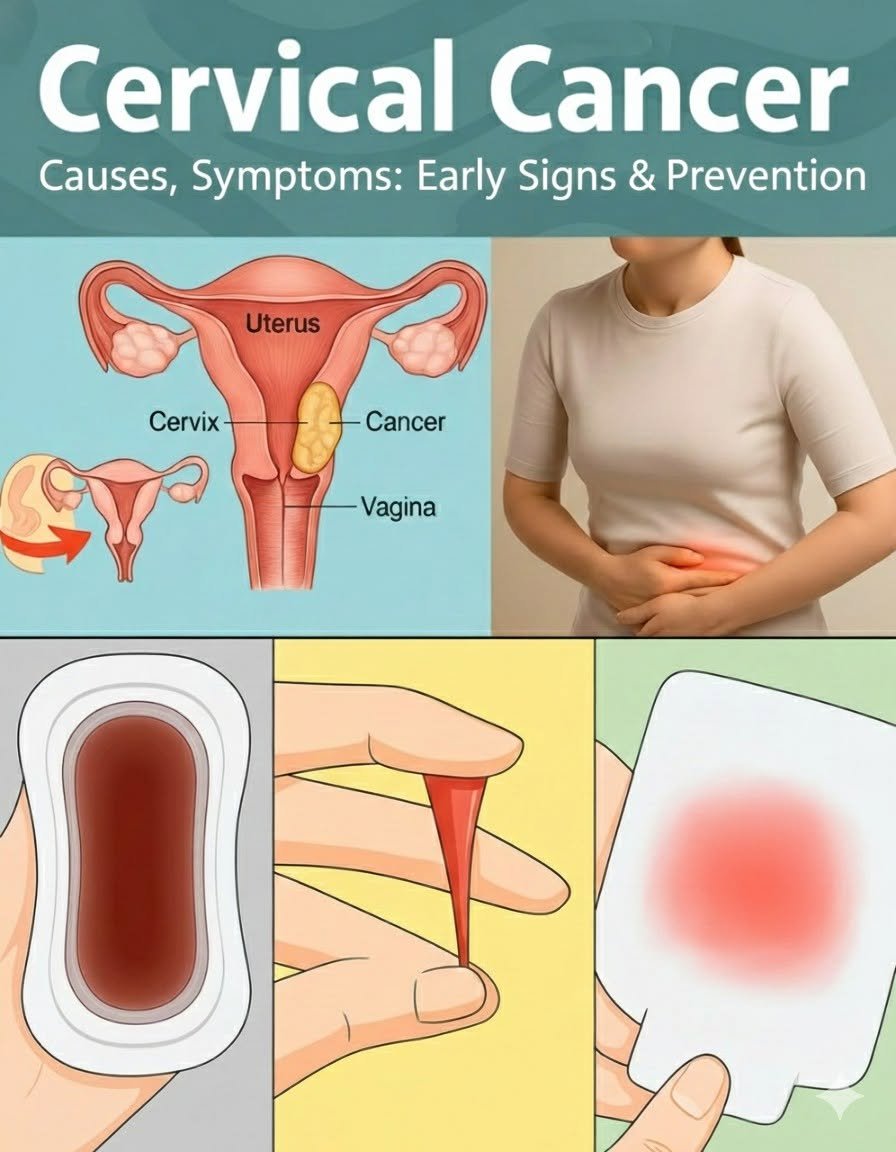
12 Warning Signs Your Body May Be Sending: Understanding Possible Symptoms of Cervical Cancer
12 Warning Signs Your Body May Be Sending: Understanding Possible Symptoms of Cervical Cancer
Cervical cancer often develops slowly, and in its earliest stages, it may cause no noticeable symptoms at all. That’s why routine screening with Pap tests and HPV testing is so important. However, when symptoms do occur, they should never be ignored.
It’s important to remember that these symptoms are not specific to cervical cancer. They can also be caused by infections, hormonal changes, fibroids, endometriosis, or other medical conditions. The key is to seek medical evaluation if symptoms are persistent, unusual, or worsening.
1. Unusual Vaginal Bleeding
Bleeding that occurs outside your normal menstrual cycle deserves medical attention.
This includes:
- Bleeding between periods
- Bleeding after sexual intercourse
- Bleeding after menopause
- Menstrual periods that become much heavier than usual
Although these symptoms often have non-cancerous causes, they should always be evaluated by a healthcare professional.
2. Persistent Pelvic Pain
Ongoing pain or pressure in the lower abdomen or pelvis that lasts for several weeks is not something to ignore.
Pelvic pain may result from many conditions, including:
- Endometriosis
- Ovarian cysts
- Pelvic inflammatory disease
- Fibroids
- Cervical or uterine cancer
A medical examination can help determine the underlying cause.
3. Unusual Vaginal Discharge
Healthy vaginal discharge is usually clear or white and has little odor.
See a healthcare provider if you notice discharge that is:
- Watery
- Bloody
- Brown or rust-colored
- Foul-smelling
- Persistent and unusual for you
These changes may be caused by infection, but they can also be associated with cervical abnormalities.
4. Pain During Sexual Intercourse
Pain during intercourse (dyspareunia) should not be considered normal.
Possible causes include:
- Vaginal infections
- Hormonal changes
- Endometriosis
- Pelvic inflammatory disease
- Cervical abnormalities
A gynecologic evaluation can identify the cause.
5. Changes in Menstrual Flow
Sudden changes in your menstrual cycle—such as unusually heavy bleeding, prolonged periods, or bleeding that lasts much longer than normal—should be discussed with your healthcare provider.
Many benign conditions can cause these changes, but persistent abnormalities deserve evaluation.
6. Unexplained Weight Loss
Losing weight without trying can sometimes indicate a serious underlying illness.
If you’ve unintentionally lost a significant amount of weight, especially if it’s accompanied by fatigue or loss of appetite, it’s important to seek medical advice.
7. Changes in Urination
Advanced cervical cancer can sometimes affect nearby organs, including the bladder.
Symptoms may include:
- Frequent urination
- Pain while urinating
- Blood in the urine
- Difficulty emptying the bladder
These symptoms are more commonly caused by urinary tract infections or bladder conditions, but persistent problems require assessment.
8. Changes in Bowel Habits
Constipation, diarrhea, or difficulty passing stool that persists for several weeks should be evaluated.
Although digestive problems are common and often unrelated to cancer, long-lasting bowel changes should never be ignored.
9. Ongoing Fatigue
Persistent fatigue that doesn’t improve with rest may result from many conditions, including:
- Iron-deficiency anemia
- Thyroid disorders
- Depression
- Chronic illness
- Certain cancers
A healthcare provider can determine whether testing is needed.
10. Lower Back Pain
Lower back pain is extremely common and is usually related to muscle strain or spine problems.
However, if back pain is persistent, unexplained, or occurs together with abnormal bleeding or pelvic pain, medical evaluation is recommended.
11. Recurrent Vaginal Infections
Frequent vaginal infections or infections that keep returning despite treatment may indicate an underlying issue.
While recurrent infections are not a typical warning sign of cervical cancer, they should still be assessed by a healthcare professional.
12. Swelling in One or Both Legs
Swelling of the legs is not usually an early symptom of cervical cancer.
In advanced disease, cancer may affect lymphatic drainage, causing leg swelling. However, leg swelling is much more commonly caused by conditions such as:
- Venous insufficiency
- Heart disease
- Kidney disease
- Blood clots
- Certain medications
Sudden or painful leg swelling requires prompt medical attention.
How Cervical Cancer Is Detected
Regular screening remains the best way to detect cervical changes before cancer develops.
Your healthcare provider may recommend:
- Pap test (Pap smear): Detects abnormal cervical cells.
- HPV test: Identifies high-risk strains of human papillomavirus (HPV), the cause of nearly all cervical cancers.
- Colposcopy: A closer examination of the cervix if screening results are abnormal.
- Biopsy: Confirms whether abnormal cells are cancerous or precancerous.
Can Cervical Cancer Be Prevented?
Many cases of cervical cancer can be prevented through:
- HPV vaccination
- Routine cervical cancer screening
- Avoiding smoking
- Practicing safer sex
- Attending regular gynecologic checkups
Early detection dramatically improves treatment success.
When Should You See a Doctor?
Schedule an appointment if you experience:
- Abnormal vaginal bleeding
- Persistent pelvic pain
- Unusual vaginal discharge
- Pain during intercourse
- Unexplained weight loss
- Symptoms lasting more than two weeks
- Any new symptom that concerns you
Most of these symptoms are caused by conditions other than cancer, but only a healthcare professional can determine the cause.
Frequently Asked Questions
Is abnormal bleeding always a sign of cervical cancer?
No. Hormonal changes, infections, fibroids, pregnancy, and many other conditions commonly cause abnormal bleeding. However, it should always be evaluated.
Does cervical cancer always cause symptoms?
No. Early cervical cancer often causes no symptoms, which is why regular screening is essential.
What is the biggest risk factor for cervical cancer?
Persistent infection with high-risk types of HPV is the primary risk factor.
Can cervical cancer be cured?
When detected early, cervical cancer is often highly treatable, and outcomes are generally much better than when diagnosed at a later stage.
Final Thoughts
Knowing your body and paying attention to persistent or unusual symptoms is an important part of protecting your health. While symptoms like abnormal bleeding, pelvic pain, or unusual discharge do not automatically mean cancer, they deserve medical evaluation if they continue or worsen.
The most effective protection against cervical cancer remains HPV vaccination, routine Pap and HPV screening, and timely medical care. If something doesn’t feel right, seeking advice early can make a significant difference.
Disclaimer: This article is for educational purposes only and should not replace professional medical advice, diagnosis, or treatment. If you have concerning symptoms, consult a qualified healthcare professional promptly.