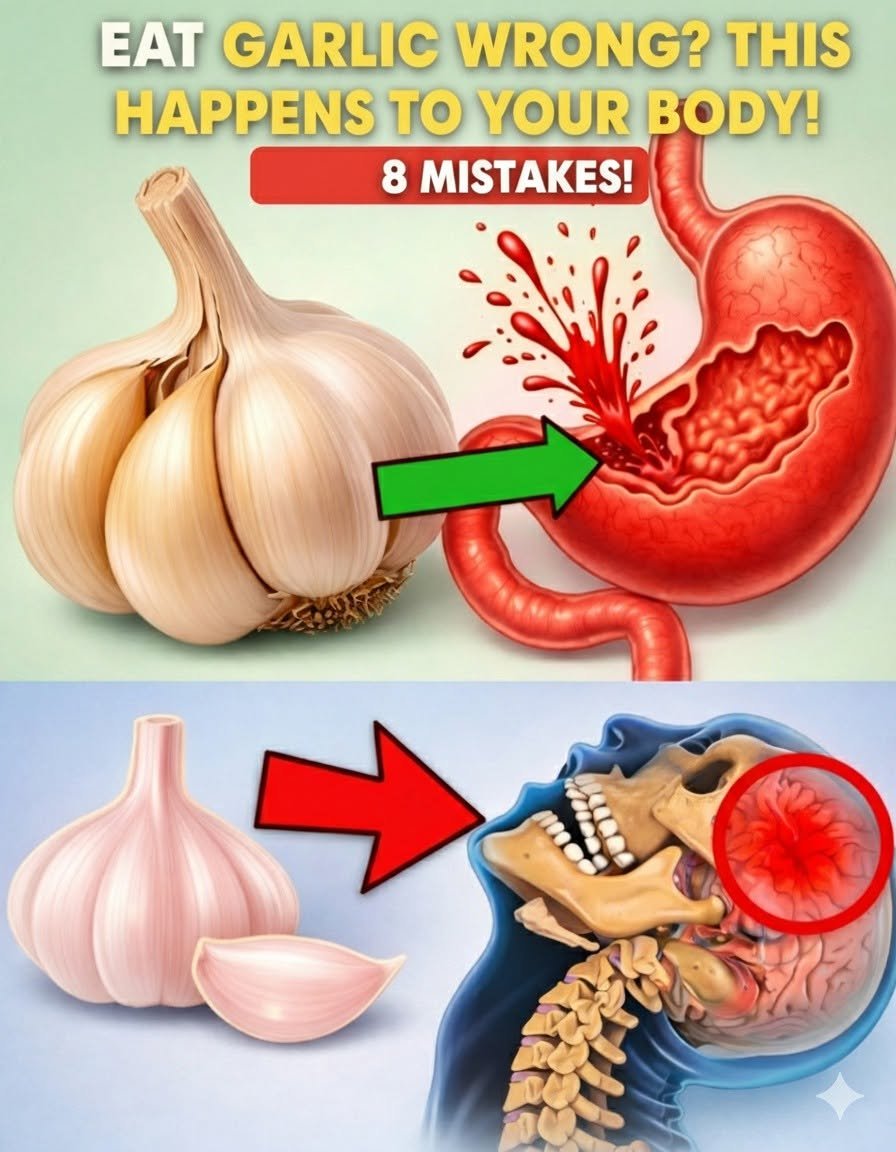
Eat Garlic Every Day? Avoid These 8 Common Mistakes to Get the Most Health Benefits
Eat Garlic Every Day? Avoid These 8 Common Mistakes to Get the Most Health Benefits
Introduction
Garlic has been used for centuries as both a flavorful cooking ingredient and a natural part of healthy diets around the world. Beyond enhancing meals, garlic contains sulfur-rich compounds that have been studied for their potential role in supporting heart health, immune function, and antioxidant activity.
However, simply eating garlic isn’t enough to enjoy its full benefits. The way you prepare, cook, and consume garlic can affect the amount of beneficial compounds your body receives. Some common habits may also lead to digestive discomfort, unpleasant breath, or reduced effectiveness.
In this guide, you’ll learn eight common mistakes people make when eating garlic, along with practical tips to help you enjoy it safely and make the most of its nutritional value.
Why Garlic Is Considered a Superfood
Garlic contains several naturally occurring plant compounds, including allicin, which forms when fresh garlic is chopped or crushed. Researchers have investigated these compounds for their potential to support:
- Heart and blood vessel health
- Normal immune function
- Antioxidant protection
- Healthy circulation
- Overall wellness
While garlic is not a medicine or cure for disease, it can be a valuable addition to a balanced diet.
8 Mistakes That Can Reduce Garlic’s Benefits
1. Eating Raw Garlic on an Empty Stomach
Some people believe eating garlic first thing in the morning provides the greatest health benefits. While this may work for some, others may experience stomach irritation, heartburn, nausea, or digestive discomfort.
A Better Approach
If raw garlic upsets your stomach, try eating it with breakfast, lunch, or dinner. Combining garlic with other foods may reduce irritation while still allowing you to benefit from its natural compounds.
2. Eating Too Much Garlic
When it comes to garlic, more isn’t always better.
Large amounts may cause:
- Bloating
- Gas
- Heartburn
- Bad breath
- Body odour
- Stomach discomfort
A Better Approach
For many healthy adults, one to two fresh cloves per day is generally enough as part of a balanced diet. If you’re new to eating garlic regularly, start with smaller amounts and see how your body responds.
3. Cooking Garlic at Very High Temperatures
Garlic’s beneficial sulfur compounds are sensitive to heat.
Cooking garlic over high temperatures for long periods can reduce the formation of allicin and alter its flavour, leaving it bitter and less aromatic.
A Better Approach
Instead of frying garlic until it browns, add it during the final few minutes of cooking or use lower heat whenever possible.
4. Swallowing Whole Garlic Cloves
Some people swallow garlic cloves whole, believing it delivers the same health benefits as chopped garlic.
Unfortunately, whole cloves release far less allicin because the cells remain mostly intact.
A Better Approach
Always chop, crush, mince, or chew garlic before eating it. Breaking the cloves activates the natural enzyme responsible for producing allicin.
5. Not Letting Garlic Rest After Chopping
This is one of the most overlooked tips.
After garlic is crushed, the enzyme that creates allicin needs a few minutes to complete the reaction.
A Better Approach
Allow chopped or crushed garlic to sit for about 10 minutes before cooking or eating it. This simple habit may help preserve more of its beneficial compounds.
6. Ignoring Possible Medication Interactions
Garlic may have mild blood-thinning properties.
For people taking medications such as blood thinners or preparing for surgery, consuming large amounts of garlic may not be appropriate.
A Better Approach
Speak with your healthcare provider if you regularly consume garlic supplements or large quantities of fresh garlic while taking prescription medicines.
7. Using Old or Poorly Stored Garlic
Garlic gradually loses freshness during storage.
Old bulbs often become:
- Dry
- Soft
- Bitter
- Less flavourful
Although sprouted garlic is generally safe to eat, fresh bulbs usually provide better taste and quality.
A Better Approach
Store garlic in a cool, dry, well-ventilated place away from direct sunlight. Avoid refrigerating whole bulbs unless necessary.
8. Expecting Garlic to Replace Medical Treatment
Garlic has many nutritional advantages, but it cannot cure chronic illnesses or replace prescribed treatment.
A healthy lifestyle includes:
- Balanced nutrition
- Regular exercise
- Adequate sleep
- Stress management
- Routine medical care
Garlic works best as one part of an overall healthy lifestyle.
Simple Ways to Get More Benefits from Garlic
You don’t need expensive supplements to enjoy garlic’s natural goodness.
Try these practical habits:
- Use fresh garlic whenever possible.
- Crush or chop garlic before cooking.
- Let it rest for around 10 minutes.
- Add garlic near the end of cooking.
- Pair garlic with vegetables, whole grains, and healthy fats such as olive oil.
- Eat garlic consistently rather than in very large amounts occasionally.
- Drink enough water if garlic causes mild digestive discomfort.
Common Garlic Myths
Myth: The more garlic you eat, the healthier you’ll become.
Fact: Excessive amounts may cause digestive problems without providing additional benefits.
Myth: Garlic supplements always work better than fresh garlic.
Fact: Fresh garlic naturally provides beneficial compounds, although supplements may be appropriate in some situations after professional advice.
Myth: Cooked garlic has no health value.
Fact: Although some heat-sensitive compounds decrease during cooking, cooked garlic still contains valuable nutrients and antioxidants.
Frequently Asked Questions
Is it safe to eat garlic every day?
For most healthy adults, moderate daily consumption as part of a balanced diet is generally considered safe. Individual tolerance varies.
Should garlic be eaten raw or cooked?
Raw garlic preserves more allicin, while cooked garlic is often easier to digest. Both can be included in a healthy diet.
Can garlic help support heart health?
Research suggests garlic may support cardiovascular health as part of an overall healthy lifestyle, but it should not replace medical treatment.
Why does garlic cause bad breath?
Garlic contains sulfur compounds that are absorbed into the bloodstream and released through the lungs, leading to its characteristic odour.
Who should be cautious about eating garlic?
People taking blood-thinning medications, those with stomach ulcers or digestive disorders, and individuals preparing for surgery should consult a healthcare professional before significantly increasing their garlic intake.
Final Thoughts
Garlic remains one of the most nutritious and versatile ingredients you can add to your meals. While it offers potential health benefits, getting the most from garlic depends on how you prepare and consume it.
Simple habits—such as crushing garlic before use, allowing it to rest for several minutes, avoiding excessive heat, and eating moderate amounts—can help preserve its beneficial compounds while reducing unwanted side effects.
Rather than viewing garlic as a miracle cure, think of it as one part of a balanced diet that includes nutritious foods, regular physical activity, adequate sleep, and routine healthcare. Small, consistent habits often provide the greatest long-term benefits.
Medical Disclaimer: This article is for educational purposes only and should not be considered medical advice. Always consult a qualified healthcare professional before making significant dietary changes or using garlic for health purposes, particularly if you have a medical condition or take prescription medications.