
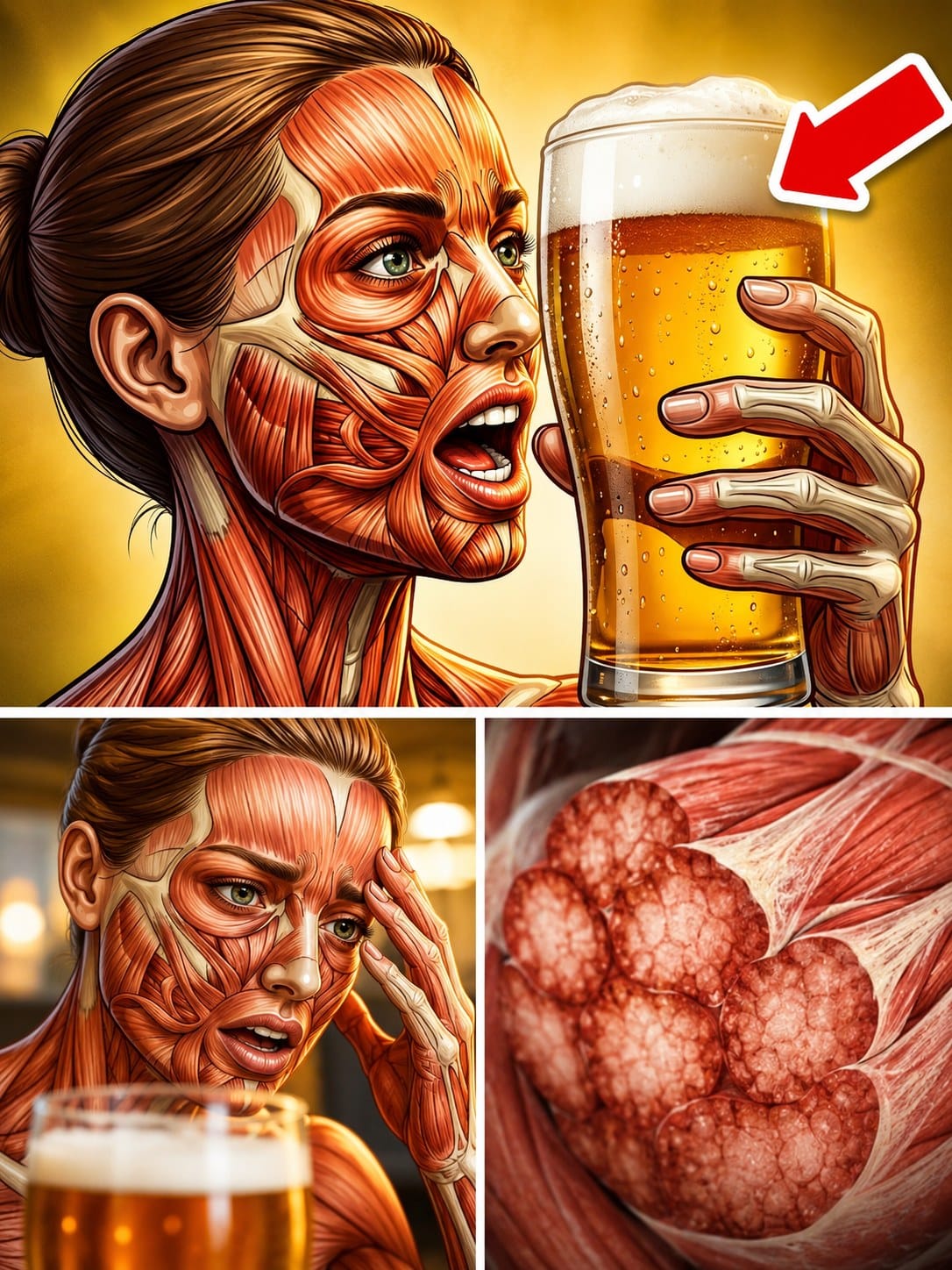
That frothy glass doesn’t just hit your tongue. The moment beer becomes a nightly ritual, ethanol punches through your intestinal wall and forces your liver into emergency mode, like a factory floor switching from production to fire cleanup. You can almost smell it — cold hops, bitter foam, that sharp yeasty bite — while inside, your body is dealing with a chemical that slips past barriers like it owns the place.
The liver is the first place the bill comes due. It grabs alcohol, converts it, and burns through the coenzymes it needs for fat metabolism. That’s not a side effect. That’s a metabolic hijack.
And if you’ve ever felt that heavy, puffy, “why do I feel sluggish even when I didn’t eat much?” drag after a string of evenings like that, you already know the feeling. The system looks relaxed on the outside, while inside the liver is being forced to choose between detox work and normal cleanup — and it never gets both. That’s the part nobody puts on the label, because the label is busy selling the foam. But the next organ in line gets hit just as hard, and it changes the way your brain behaves when the glass is gone…
The Cellular Cleanup Crew Gets Overrun
Here’s the mechanism: alcohol dehydrogenase turns ethanol into acetaldehyde, a compound that acts like wet cement in the machinery of your cells. Then another enzyme has to finish the job and convert it into acetate, but that process drains the very fuel your liver uses to burn fat.
Think of your liver like a furnace with a clogged filter. Every night, beer dumps more ash into the system, and instead of burning clean, the whole chamber starts smearing grease into the walls. That’s how fat begins collecting inside liver cells — not because your body “got lazy,” but because it was forced to reroute its energy just to survive the insult.
The first thing people notice is the slowdown. Not dramatic. Not cinematic. Just a growing sense that the body is moving through syrup. The belly feels fuller, recovery feels worse, and by the time the pattern is obvious, the liver has already been working overtime for weeks.
And that is exactly why this keeps getting normalized: there’s no patent on a nightly can, no glossy ad campaign built around a stressed-out liver cell. Not because it doesn’t do damage — because damage doesn’t pay. But the brain takes the hit next, and that’s where the trap gets nastier…
Why Sleep Gets Fragile and Nerves Get Loud
Alcohol mimics GABA, the brain’s braking signal, while blocking glutamate, the gas pedal. That’s why the first drink feels like a sigh coming out of your shoulders. The room feels softer. The edges blur. The nervous system gets shoved into a lower gear.
But daily use forces the brain to fight back. It strips down GABA receptors and builds more glutamate receptors, like a thermostat that’s been tampered with until it can no longer find “normal.” So when the beer is gone, the brain doesn’t relax — it snaps awake, overclocked and irritated.
That’s the ugly contrast: the same thing that helps you “unwind” at 8 p.m. can leave you wired, shallow-sleeping, and oddly on edge at 2 a.m. The bed is dark, the room is quiet, and your mind is still humming like a refrigerator with a bad compressor. That’s not stress leaving your body. That’s your brain learning it needs alcohol to stand down.
And once that pattern is set, the next damage shows up in a place most people never connect to beer at all — the hormones. That shift is why some bodies start storing fat in all the wrong places…
The Hormone Tilt That Rewrites Your Shape
Beer doesn’t just bring ethanol. The hops bring phytoestrogens, and alcohol pushes cortisol upward while dragging testosterone production downward. That’s a chemical three-way collision, and the result is not subtle.
For men, the shift often shows up first in the midsection and chest. The body starts acting like it’s been told to store, not build. Muscle feels harder to keep, fat settles more easily, and the waistline thickens even when the rest of life looks “normal” on the surface.
Picture a construction site where the foreman is shouting “store materials!” while the crew trying to pour concrete has been sent home. That’s what happens when testosterone gets suppressed and estrogen pressure rises. The body stops favoring lean tissue and starts padding the frame instead.
The weird part is how ordinary it feels while it’s happening. Jeans get tighter. The mirror looks a little softer. Strength doesn’t vanish overnight — it leaks. And because the change is slow, people blame age, stress, or bad luck instead of the nightly drink that keeps rewriting the instructions.
But there’s another layer underneath the shape change, and it’s the one that leaves you feeling wrung out the next day: the fluid loss, the mineral drain, the night-time dehydration that keeps the whole body brittle…
The Nightly Dehydration That Leaves Tissue Cracked
Alcohol blocks antidiuretic hormone, which tells the kidneys how much water to keep. Without it, the kidneys open the floodgates. You lose more fluid than the beer gave you, and with it go electrolytes like magnesium, potassium, and zinc.
That’s why the body can feel dry even after a full glass. Skin looks dull. Muscles feel flat. Blood vessels lose some of their elasticity, like rubber bands left in the sun. You wake up with a mouth like cotton and a body that feels sanded down.
It’s a plumbing problem, plain and simple. The kidneys are supposed to act like smart valves, carefully reabsorbing what the body needs. Beer turns that system into a broken spigot, and the loss doesn’t stop at thirst — it shows up in recovery, circulation, and the way your tissues hold their shape.
And then there’s the heart, the organ that has to live with all of this at once. The dehydration, the stress chemistry, the nightly pressure spike — that’s where the gamble turns serious…
The Heart Pays for the “Relaxation”
Ethanol and acetaldehyde damage the mitochondria inside heart muscle cells, which means the heart loses some of its power source with every round of repeated exposure. At the same time, the nervous system stays more activated during alcohol breakdown, and blood vessels tighten in the second half of the night.
That’s like asking a pump to push through narrower and narrower pipes while its motor is running hot. The heart has to work harder against resistance, and over time that strain raises blood pressure and increases the risk of rhythm problems like atrial fibrillation.
So the drink that feels like an off-switch is often doing the opposite at the cellular level. It calms the surface, then taxes the machinery underneath. Relief comes from knowing this isn’t random. There is a mechanism. There is a reason your body keeps sounding the alarm.
And once you see the chain — liver, brain, hormones, hydration, heart — the pattern stops looking mysterious. It starts looking like a system under repeated pressure, and that changes what you do next…
The One Habit That Quietly Makes It Worse
The worst move is stacking beer on an empty stomach late at night. That’s when the alcohol hits faster, the blood sugar swings harder, and the dehydration lands like a hammer. You can feel it: the warm flush, the dry mouth, the heavy head, the restless sleep that follows.
And here’s the final twist: pairing beer with salty snacks and poor sleep turns the whole thing into a loop. Thirst rises, cravings rise, recovery drops, and the next night’s drink feels “needed” because the body is already behind.
The next thing that matters most is timing. Because the same beer has a very different effect depending on when it shows up, what it’s paired with, and what your liver has already been forced to handle all day.
This article is for informational purposes only and does not replace professional medical advice. Please consult your healthcare provider for personalized guidance.