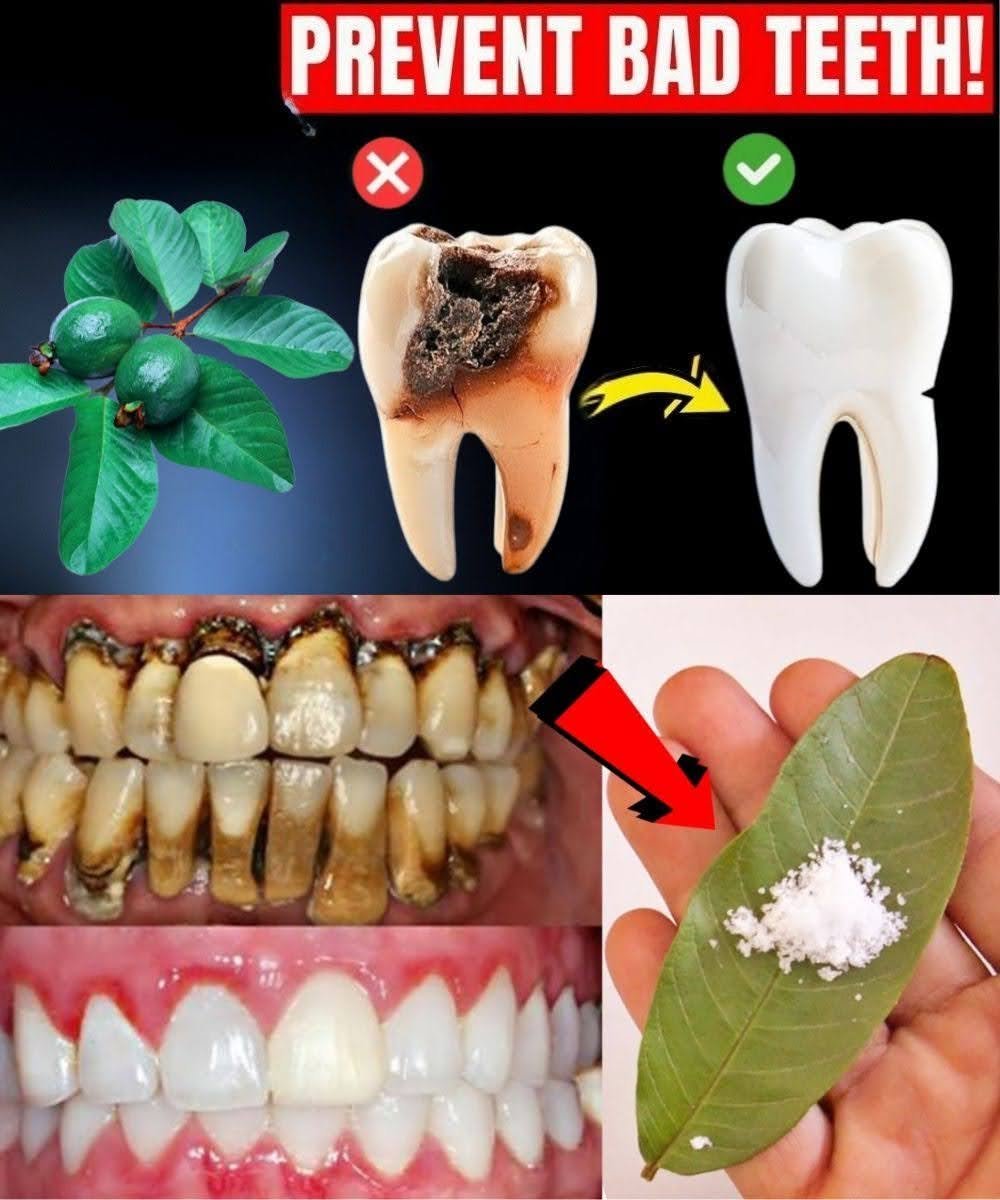
Guava Leaves and Teeth – Tradition vs Reality
1. What Guava Leaves Actually Contain
Guava leaves have been used in traditional medicine for a long time.
Compounds: Tannins, flavonoids, and other plant compounds with antibacterial and antioxidant properties.
Traditional use: Chewed or used as a mouth rinse for gum inflammation and mouth ulcers in some cultures.
Lab studies: Some laboratory studies show antibacterial activity against certain oral bacteria.
What they DON’T do: Regrow enamel, fill cavities, whiten decayed teeth, or cure tooth decay.
2. What the Image Claims vs Reality
| Claim | Evidence | What’s True |
|---|---|---|
| “Prevents bad teeth” | Limited clinical evidence | May help reduce some oral bacteria but is not proven to prevent cavities. |
| Fixes decayed/cavitated teeth | None | Cavities require professional dental treatment. |
| Whitens stained teeth | No evidence | Scrubbing with salt can wear down enamel and irritate gums. |
The dramatic before-and-after tooth shown in the image is misleading. Lost enamel does not grow back, and established cavities cannot be reversed with guava leaves.
3. Safe Traditional Use
If you want to try a guava leaf rinse as a complement to good oral hygiene:
Guava Leaf Mouth Rinse
- Wash 5–6 young guava leaves.
- Boil them in 2 cups of water for about 10 minutes.
- Allow the rinse to cool.
- Swish for 30 seconds, then spit it out. Do not swallow.
- Use occasionally alongside regular brushing and flossing.
Note: Skip the salt. Scrubbing teeth with salt can contribute to enamel wear and gum irritation over time.
4. What Actually Prevents “Bad Teeth”
Dentists agree these methods are effective:
- Brush twice daily with fluoride toothpaste.
- Floss daily to remove plaque between teeth.
- Limit sugary foods and acidic drinks.
- Visit your dentist regularly for check-ups.
- Fluoride helps strengthen enamel and reduces the risk of cavities.
5. Safety Tips
- Don’t scrub your teeth with salt—it can wear down enamel and irritate gums.
- Don’t chew hard leaves—they may chip or damage teeth.
- Stop using the rinse if it causes irritation or an allergic reaction.
- See a dentist if you have tooth pain, cavities, bleeding gums, swelling, or persistent bad breath.
- Children and pregnant or breastfeeding women should consult a healthcare professional before using herbal remedies regularly.
Bottom Line
Guava leaf rinse is a traditional practice that may help freshen breath and support gum health. However, it is not a replacement for fluoride toothpaste, regular brushing and flossing, or professional dental treatment. Viral images claiming that guava leaves can repair cavities or regrow enamel are not supported by scientific evidence.
Disclaimer: This article is for informational and educational purposes only. It is not medical or dental advice. Guava leaves are not proven to diagnose, treat, cure, or prevent dental disease. If you have tooth pain, cavities, or gum problems, consult a licensed dentist promptly.