
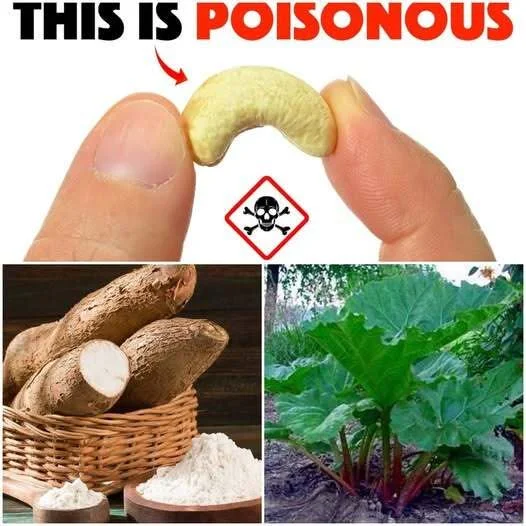
10 Common Foods That Can Actually Kill You
1. Cassava (Yuca)
Risk: Raw cassava contains cyanogenic compounds that can release cyanide.
Safe to eat? Yes. Peeling, soaking, fermenting, and thoroughly cooking cassava greatly reduces these compounds, making it safe for consumption.
2. Rhubarb Leaves
Risk: The leaves contain high levels of oxalic acid and other compounds that can be toxic.
Safe to eat? Only the stalks are commonly eaten. The leaves should be discarded.
3. Raw or Undercooked Kidney Beans
Risk: Raw red kidney beans contain phytohaemagglutinin, a toxin that can cause severe nausea, vomiting, and diarrhea.
Safe to eat? Yes. Boil vigorously for at least 10 minutes after soaking to destroy the toxin.
4. Bitter Almonds
Risk: Bitter almonds naturally contain compounds that can release cyanide.
Safe to eat? Sweet almonds sold in grocery stores are safe. Bitter almonds should not be eaten raw.
5. Apple Seeds
Risk: They contain amygdalin, which can release small amounts of cyanide if the seeds are crushed and consumed in large quantities.
Safe to eat? Accidentally swallowing a few whole seeds is generally not a concern.
6. Potato Sprouts and Green Potatoes
Risk: Green potatoes and sprouts contain solanine, which can cause nausea, vomiting, and neurological symptoms if consumed in large amounts.
Safe to eat? Remove sprouts and green portions. Discard potatoes that are extensively green or heavily sprouted.
7. Pufferfish (Fugu)
Risk: Contains tetrodotoxin, one of the most potent natural toxins.
Safe to eat? Only when prepared by specially trained, licensed chefs.
8. Ackee Fruit
Risk: Unripe ackee contains hypoglycin A, which can cause severe illness.
Safe to eat? Only naturally opened, fully ripe ackee is considered safe.
9. Nutmeg
Risk: Very large amounts can cause hallucinations, confusion, rapid heartbeat, and other toxic effects.
Safe to eat? Normal culinary amounts are perfectly safe.
10. Cashew Shells (Not the Nuts)
The image points to a cashew.
Important fact: The cashew nut sold in stores is not poisonous.
The shell surrounding raw cashews contains urushiol, the same irritating chemical found in poison ivy. Commercial cashews are processed to remove this safely before reaching consumers.
Bottom Line
The image is partly true but highly sensationalized. Most of these foods are safe when:
- Properly prepared
- Properly cooked
- Consumed in normal amounts
They only become dangerous under specific circumstances, not simply because they are “common foods.”
If you’d like, I can also explain the other foods that are commonly included in viral lists like this (such as mushrooms, elderberries, star fruit, and raw honey).