
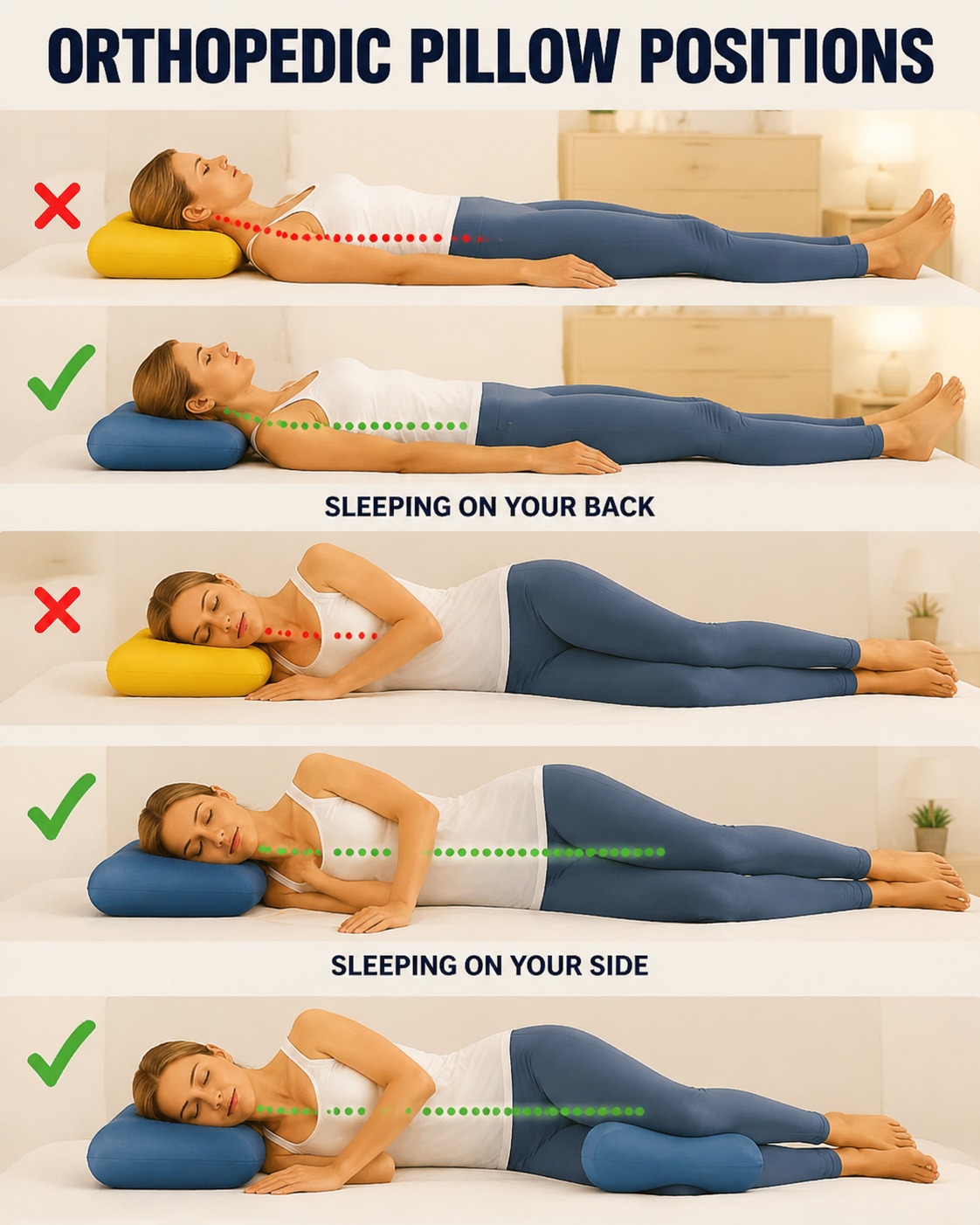
Have you ever woken up with a stiff neck or an achy back, wondering why your body feels anything but rested after a full night’s sleep? That nagging discomfort can turn a good morning into a grumpy one, making even simple tasks feel like a chore. The culprit is often hiding in plain sight: how you position your pillow based on your sleeping posture. But what if the right orthopedic pillow placement could help keep your spine aligned and your body more comfortable throughout the night?
In this guide, we’ll break down the best ways to use pillows for side, back, and stomach sleeping positions. You might be surprised by how small adjustments make a big difference. And stick around until the end—there’s a common pillow mistake that could be sabotaging your sleep without you even realizing it.
Why Your Pillow Position Matters More Than You ThinkYour sleeping posture and pillow setup play a key role in maintaining proper spinal alignment overnight. When everything lines up just right, your muscles and joints can relax more effectively. Research from sources like the Mayo Clinic highlights how supportive pillow use can help reduce strain on your neck and back areas.
But here’s the thing: many people grab whatever pillow is handy and call it a night. That’s where things go wrong. Poor positioning can subtly shift your spine out of its natural curves, leaving you feeling the effects the next day.
Sleeping on Your Side: The Most Popular Position Needs Proper Support
Side sleeping is one of the most common positions, and for good reason. It can be comfortable for many. But without the right pillow setup, it can lead to misalignment.
Look at common mistakes: Using a pillow that’s too thin or too thick can tilt your head awkwardly, putting pressure on your neck. Or skipping support for your legs, which can cause your hips to twist.
Correct Side Sleeping Pillow Position
Place an orthopedic or supportive pillow under your head that’s thick enough to fill the gap between your shoulder and ear. Your neck should stay in a straight line with your spine.
Add a pillow between your knees. This keeps your hips level and prevents your top leg from pulling your lower back out of alignment.
Here’s a quick step-by-step:
Lie on your side with knees slightly bent.
Position the head pillow so your head and neck are neutral.
Slide a second pillow between your thighs and knees, hugging it lightly if it feels good.
Optionally, place a small pillow in front of your chest to support your top arm.
Studies suggest this setup helps maintain spinal alignment from head to toe.
But that’s not all—many side sleepers also benefit from a body pillow for full-length support.
Sleeping on Your Back: Keeping the Natural Curves Intact
Back sleeping is often praised for promoting good posture because it allows your spine to rest in its natural position. However, the wrong pillow can flatten or exaggerate those curves.
The wrong setup often shows a pillow that’s too high, pushing the head forward and straining the neck, or one that’s too flat, leaving gaps that let the lower back sag.
How to Position Pillows for Back Sleepers
Use a pillow under your head that supports the natural curve of your neck without pushing your head forward or letting it drop back.
Place another pillow under your knees. This helps maintain the lordotic curve in your lower back and reduces pressure.
Actionable tips:
Choose a medium-loft pillow for your head.
Keep your arms at your sides or on your chest, not overhead.
If there’s a gap in your lower back, a small rolled towel or thin pillow can provide extra support.
This combination can make back sleeping feel incredibly supportive.
What About Sleeping on Your Stomach? It’s Tricky But Manageable
Stomach sleeping puts unique demands on your body. It’s generally not the top choice for spinal health because it can arch your back and twist your neck. But if it’s your go-to position, smart pillow use is essential.
In the illustrations of proper setups, you’ll see how strategic adjustments help minimize strain.
Pillow Setup for Stomach Sleepers
Opt for a very thin pillow or even no pillow under your head to keep your neck closer to neutral.
Place a pillow under your pelvis and lower abdomen. This helps prevent excessive arching in the lower back.
Quick list of adjustments:
Turn your head to one side periodically or alternate sides to avoid one-sided strain.
Use a firmer mattress if possible to minimize sinking.
Consider transitioning to side sleeping with the help of strategic pillows.
Here’s where it gets interesting: many experts recommend trying to shift away from full stomach sleeping over time, using pillows to train better habits.
Common Pillow Mistakes to Avoid (And What to Do Instead)
Let’s look at some frequent errors highlighted in sleep posture guides:
Too high pillow: Forces your neck into an unnatural angle.
No leg support: Leads to hip and lower back rotation.
Inconsistent pillow height: Different pillows for different positions without adjustment.
The solution? Invest in a quality orthopedic pillow designed with contours that adapt to multiple positions, or use multiple standard pillows strategically.
Additional Tips for Better Sleep Posture Night After Night
Test your setup: Lie in bed for 10-15 minutes in your usual position and check if your spine feels aligned.
Replace pillows regularly: They lose support over time—every 1-2 years typically.
Combine with a supportive mattress for best results.
Pay attention to your body: If you wake up sore, tweak one thing at a time.
But wait—there’s more to creating the perfect sleep environment. Choosing the right pillow type makes these positions even more effective.
Choosing the Right Orthopedic Pillow
Orthopedic pillows often feature ergonomic shapes, like contoured designs with higher sides for side sleepers and a lower center for back sleepers. Look for materials that offer both support and breathability, such as memory foam or latex.
Here’s a handy comparison to guide your choices based on your primary position:
| Position | Pillow Loft Recommendation | Additional Support |
|---|---|---|
| Side | Higher loft | Between knees |
| Back | Medium loft | Under knees |
| Stomach | Low or none | Under pelvis |