
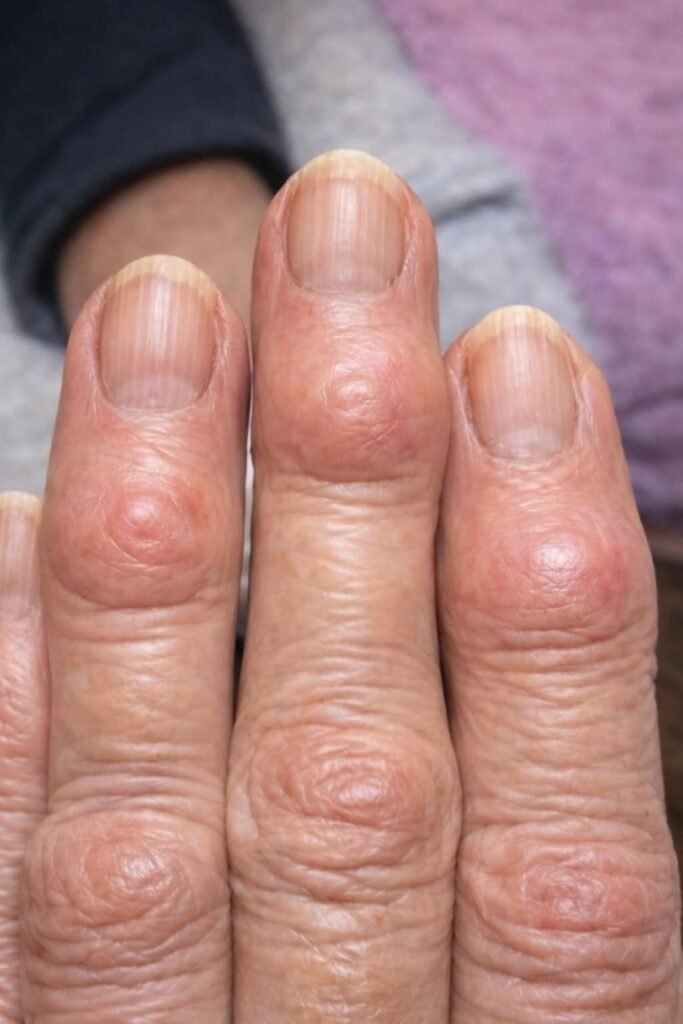
Hard Bumps on Finger Joints Near the Nails: Causes, Symptoms, Treatment, and When to See a Doctor
Have you noticed small, hard bumps developing on the joints closest to your fingernails? These changes can be surprising, especially if they appear gradually over time. While they may look concerning, they are often linked to common joint conditions that become more frequent with age.
One of the most common causes is osteoarthritis, a degenerative joint condition that affects millions of adults worldwide. Understanding why these bumps develop and knowing when to seek medical advice can help you manage symptoms and maintain healthy hand function.
What Are Hard Finger Joint Bumps?
Hard bumps that develop on the joints nearest the fingernails are commonly called Heberden’s nodes. These are bony enlargements that typically occur in the distal interphalangeal (DIP) joints—the last joints before the fingertips.
Heberden’s nodes are most often associated with osteoarthritis and usually develop gradually over several years.
Although they can change the appearance of the fingers, they are generally not dangerous.
Why Do These Bumps Develop?
Osteoarthritis occurs when the protective cartilage that cushions the joints gradually wears away.
As cartilage becomes thinner, bones begin rubbing against one another. In response, the body may form extra bone around the joint, creating the hard bumps known as Heberden’s nodes.
This process is part of the body’s attempt to stabilize the affected joint.
Common Symptoms
People with finger osteoarthritis may notice:
- Hard, immovable bumps near the fingernails
- Mild swelling around the joints
- Finger stiffness, especially in the morning
- Pain during gripping or pinching movements
- Reduced flexibility
- Enlarged or knobby-looking finger joints
Interestingly, discomfort is often greatest while the bumps are developing. Once the nodes become established, pain may lessen even though the bumps remain.
Risk Factors
Several factors increase the likelihood of developing osteoarthritis and Heberden’s nodes.
Aging
Joint cartilage naturally wears down over time, making osteoarthritis more common after middle age.
Family History
Genetics play an important role. People with close relatives who have osteoarthritis may have a higher risk.
Repetitive Hand Use
Years of repetitive hand movements through work, hobbies, or household activities may contribute to joint wear.
Hormonal Changes
Women, particularly after menopause, appear to develop hand osteoarthritis more frequently than men.
Previous Joint Injury
Old fractures or injuries affecting finger joints may increase the risk of later arthritis.
Other Possible Causes of Finger Joint Bumps
Although osteoarthritis is the most common explanation, similar bumps can develop from other medical conditions.
These include:
- Rheumatoid arthritis, an autoimmune disease that usually causes softer swelling and affects multiple joints symmetrically.
- Digital mucous cysts, fluid-filled sacs that often develop near the fingernails.
- Gout, which can occasionally cause hard deposits called tophi after years of uncontrolled uric acid levels.
- Less commonly, infections or other inflammatory conditions.
A healthcare professional can determine the exact cause through a physical examination and, if needed, imaging or laboratory tests.
How Are These Bumps Diagnosed?
Diagnosis usually involves:
- Reviewing medical history.
- Examining the hands.
- Assessing joint movement.
- Taking X-rays to evaluate joint damage when necessary.
Blood tests may be ordered if inflammatory arthritis or another condition is suspected.
Treatment Options
While Heberden’s nodes cannot usually be reversed, several treatments may help reduce pain and improve hand function.
Gentle Hand Exercises
Regular stretching and strengthening exercises may improve flexibility and reduce stiffness.
Warm Therapy
Warm compresses or warm-water soaks can help ease stiffness, particularly in the morning.
Joint Protection
Using ergonomic kitchen utensils, jar openers, larger-handled tools, and assistive devices may reduce stress on painful joints.
Medications
Your healthcare provider may recommend pain-relieving medications or anti-inflammatory treatments depending on symptom severity.
Healthy Lifestyle
Maintaining a healthy weight, staying physically active, and eating a balanced diet rich in fruits, vegetables, whole grains, lean proteins, and healthy fats supports overall joint health.
When Should You See a Doctor?
Seek medical evaluation if you experience:
- Severe or persistent finger pain
- Sudden swelling or redness
- Warm joints with fever
- Difficulty using your hands
- Rapidly changing finger deformities
- Numbness or weakness
Early diagnosis helps identify whether symptoms are due to osteoarthritis or another condition requiring different treatment.
Frequently Asked Questions
Can Heberden’s nodes disappear?
No. Once these bony enlargements develop, they usually remain permanently. However, pain often improves after the active phase of joint changes.
Are they dangerous?
In most cases, they are not dangerous. They mainly affect appearance and hand function rather than overall health.
Can I prevent them?
Complete prevention is not always possible because aging and genetics play major roles. However, protecting your joints, staying active, and maintaining a healthy lifestyle may support long-term joint health.
Final Thoughts
Hard bumps near the fingernails are commonly caused by Heberden’s nodes, a typical feature of hand osteoarthritis. Although these bony enlargements can change the appearance of the fingers, they are often manageable with simple lifestyle adjustments, gentle exercises, joint protection strategies, and appropriate medical care.
If you develop significant pain, swelling, or difficulty using your hands, consult a qualified healthcare professional for an accurate diagnosis and personalized treatment plan. Early management can help preserve hand function, improve comfort, and support healthy aging.