
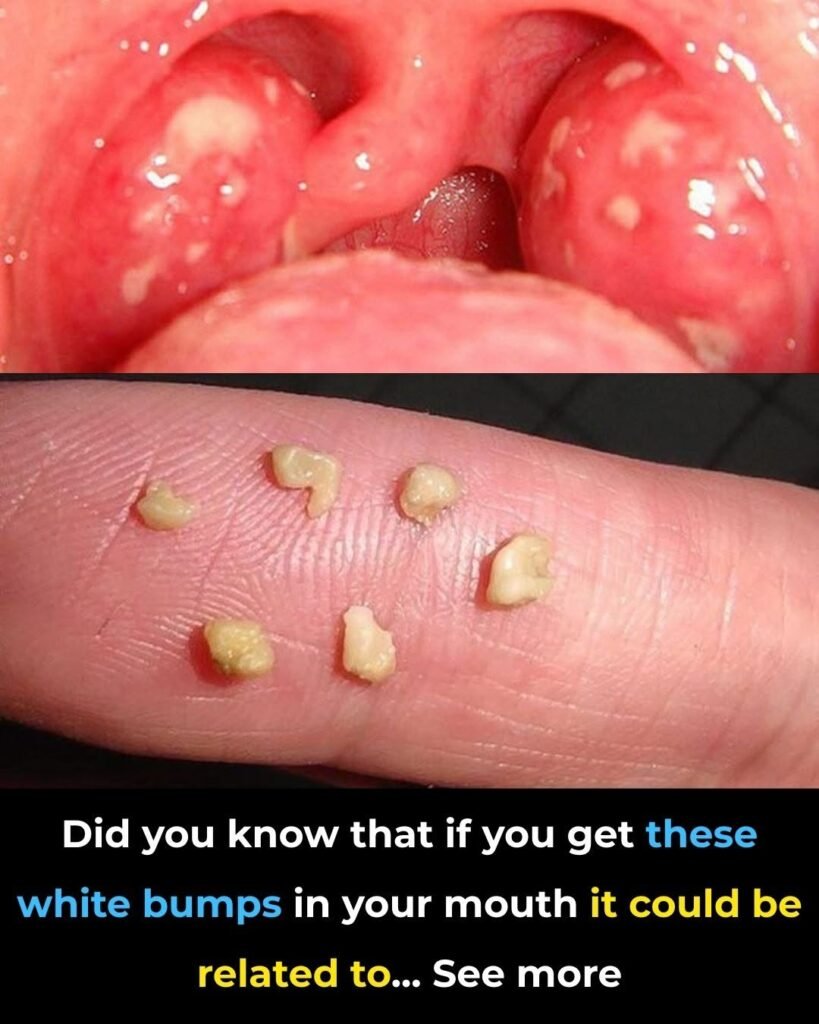
Here’s what you need to know about tonsil stones – the weird pimple-like growths in your throat
What are tonsil stones?
Tonsil stones (tonsilloliths) are small collections of debris that form in the natural crevices (crypts) of the tonsils. They can contain:
- Food particles
- Dead cells
- Mucus
- Bacteria
- Minerals (such as calcium), which can harden the material over time
They are common and usually harmless.
Common symptoms
Many people have tonsil stones without realizing it. When symptoms occur, they may include:
- Bad breath (halitosis)
- A sensation that something is stuck in the throat
- Visible white or yellow spots on the tonsils
- Mild sore throat or irritation
- Difficulty swallowing (less common)
- Ear pain due to shared nerve pathways (referred pain)
Who is more likely to develop them?
Risk factors include:
- Deep tonsil crypts
- Recurrent tonsillitis or throat infections
- Chronic postnasal drip or sinus problems
- Dry mouth
- Poor oral hygiene (although many people with good oral hygiene also develop them)
Managing tonsil stones
For most people, simple measures are enough:
- Brush your teeth and tongue twice daily.
- Floss regularly.
- Gargle with warm salt water.
- Stay well hydrated.
- Treat allergies or postnasal drip if they contribute to mucus buildup.
Home removal
If a stone is easily visible and loose, some people can remove it gently.
However:
- Avoid digging into the tonsils with sharp or hard objects.
- Be gentle to avoid bleeding or injury.
- If using a water flosser, use the lowest pressure setting, as high pressure can damage tonsil tissue.
When to see a healthcare provider
Seek medical evaluation if you have:
- Frequent or bothersome recurring tonsil stones
- Severe pain
- Fever or signs of infection
- Significant swelling
- Difficulty swallowing or breathing
- Bleeding from the tonsils
- A persistent lump or one-sided tonsil enlargement
These symptoms may indicate another condition that requires evaluation.
Medical treatments
If tonsil stones become a recurring problem, treatment options may include:
- Professional removal by a healthcare provider
- Managing underlying allergies or chronic sinus drainage
- Antibiotics only if there is a bacterial infection (they do not treat the stones themselves)
- Laser or radiofrequency cryptolysis to reduce deep tonsil crypts in selected cases
- Tonsillectomy for severe, persistent, or recurrent cases when other treatments haven’t helped
Myths
These statements are supported by current evidence:
- ✅ Tonsil stones are not caused solely by poor hygiene.
- ✅ They are not contagious.
- ✅ They are not linked to throat cancer.
- ✅ Most people do not need their tonsils removed because of them.
Bottom line
Tonsil stones are a common, usually benign condition caused by debris collecting in the tonsils. Good oral hygiene and hydration can help reduce their formation, and many stones resolve or come out on their own. If they become painful, recur frequently, or are associated with fever, significant swelling, or difficulty swallowing, it’s a good idea to see a healthcare professional or an ear, nose, and throat (ENT) specialist for evaluation.