
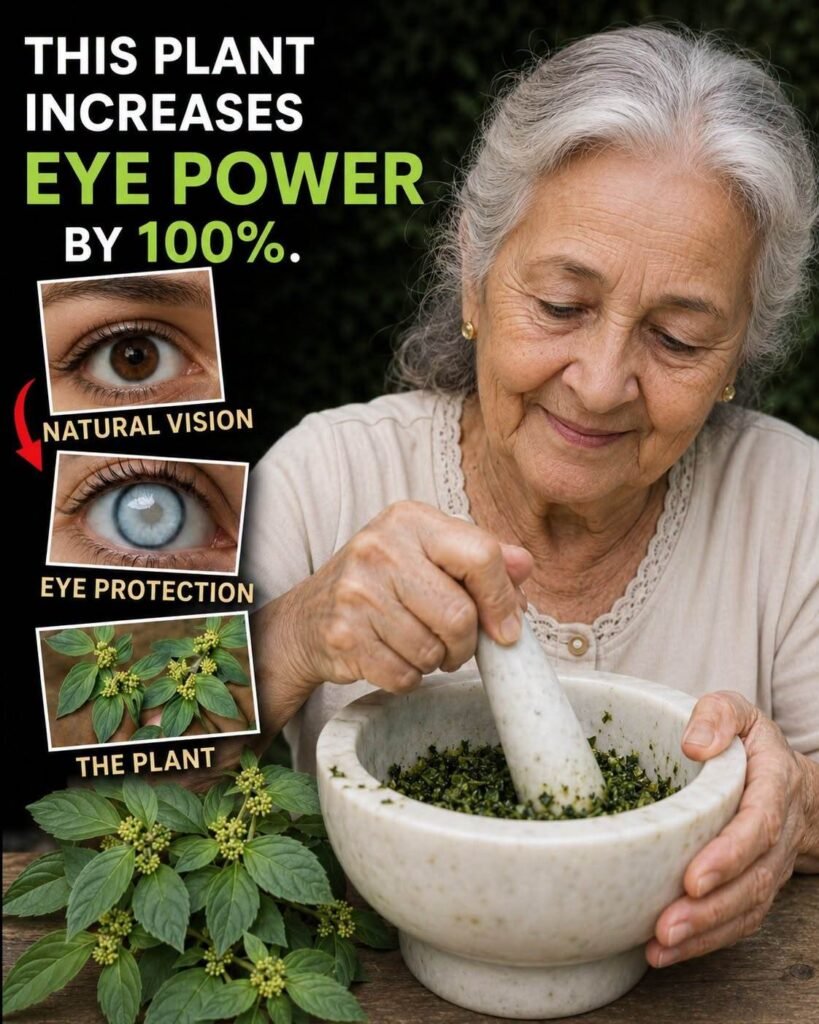
Euphorbia hirta Leaves for Eye Comfort: Traditional Uses, Benefits, Safety, and What You Should Know
Can a Common Wild Herb Help Soothe Tired Eyes?
Digital screens have become part of everyday life. Whether you’re working on a computer, scrolling through your phone, or watching television, your eyes spend hours focusing on bright displays. As a result, many people experience symptoms such as dry eyes, eye fatigue, blurred vision, or mild irritation after long periods of screen use.
Because of this growing problem, interest in natural wellness practices has increased. Many people are exploring traditional herbs that have been used for generations to promote comfort and relaxation. One plant that frequently appears in traditional herbal medicine is Euphorbia hirta, a wild herb found throughout many tropical and subtropical regions.
Although this plant has a long history in folk medicine, it is important to understand both its traditional uses and its potential risks. Modern research into Euphorbia hirta is still limited, and many of the health claims shared online have not been confirmed by high-quality clinical studies. Learning about the herb’s traditional role while following current medical safety recommendations is the safest approach.
What Is Euphorbia hirta?
Euphorbia hirta is a small flowering herb that grows naturally along roadsides, gardens, fields, and open spaces. It thrives in warm climates and is commonly found in parts of Asia, Africa, Central America, and South America.
The plant is easy to recognize by several distinctive features:
- Small oval-shaped leaves covered with fine hairs
- A reddish or purple-colored vein running through the center of each leaf
- Thin reddish stems
- Tiny clustered flowers growing close to the stem
- A white milky latex that appears when the stem or leaves are broken
Although many people consider it an ordinary roadside weed, Euphorbia hirta has been included in traditional herbal practices for centuries.
Why Is This Herb Receiving Attention?
Traditional healers have historically used Euphorbia hirta for a variety of wellness purposes, including herbal compresses and topical applications intended to promote relaxation after long hours of reading or outdoor work. These practices have led to renewed interest as more people search for natural ways to ease everyday eye strain.
However, one important fact should never be overlooked: the plant’s milky sap can irritate both the skin and the eyes. Traditional applications involved only external use on closed eyelids or nearby areas, never direct contact with the eye itself.
In the following sections, we’ll explore the traditional uses of Euphorbia hirta, discuss the plant compounds it contains, review important safety precautions, and explain what current scientific research says about this well-known herbal plant.
Traditional Uses of Euphorbia hirta and Important Safety Precautions
Traditional Uses for Eye Comfort
For generations, Euphorbia hirta has been included in traditional herbal practices in several parts of Asia, Africa, and Latin America. Rather than being viewed as a cure for eye diseases, the herb was commonly used as part of general wellness routines to help people relax after long hours of reading, sewing, farming, or other activities that required prolonged visual focus.
One of the best-known traditional methods involved preparing a warm herbal compress. Fresh leaves were carefully washed, gently warmed, and wrapped in a clean cloth before being placed over closed eyelids for several minutes. The purpose was simply to provide a soothing, relaxing sensation after eye strain—not to treat infections, improve eyesight, or replace professional eye care.
Some traditional practitioners also prepared mild herbal infusions from processed plant material as part of broader wellness practices. These beverages were traditionally consumed for general health support rather than specifically for vision improvement. In other traditions, crushed leaves were applied to the temples instead of the eyes to create a cooling sensation during periods of tension or fatigue.
Although these practices remain part of traditional herbal knowledge, they should not be interpreted as scientifically proven medical treatments.
Naturally Occurring Plant Compounds
Researchers have identified several naturally occurring compounds in Euphorbia hirta that continue to attract scientific interest. These include:
- Flavonoids
- Polyphenols
- Plant antioxidants
- Tannins
- Various bioactive phytochemicals
Laboratory studies suggest these compounds have biological activity, but human research is still limited. More clinical studies are needed before scientists can determine whether these compounds provide meaningful health benefits for people.
Why Safety Is So Important
One of the most important things to know about Euphorbia hirta is that it produces a white milky latex whenever the leaves or stems are broken. This sap can irritate sensitive tissues, particularly the eyes and skin.
Direct exposure may lead to:
- Burning sensations
- Redness
- Eye irritation
- Temporary discomfort
- Skin irritation in sensitive individuals
Because of these risks, healthcare professionals advise never placing the sap or crushed leaves directly into the eyes. Anyone handling the plant should wash their hands thoroughly afterward and avoid touching their face until their hands are clean.
Better Ways to Reduce Everyday Eye Strain
If your eyes often feel tired after using digital devices, evidence-based habits are generally more effective and safer than relying on unproven herbal remedies. These include:
- Following the 20-20-20 rule by looking at something about 20 feet away for 20 seconds every 20 minutes.
- Taking regular breaks from screens.
- Keeping your room well lit to reduce glare.
- Staying hydrated throughout the day.
- Getting enough sleep each night.
- Using lubricating eye drops if recommended by an eye care professional.
- Scheduling routine eye examinations, especially if you experience ongoing discomfort.
While traditional herbal practices remain an important part of many cultures, they should always be approached with realistic expectations and appropriate safety precautions. Combining healthy daily habits with professional eye care remains the most reliable strategy for maintaining long-term eye comfort and vision health.