
Soothing Foot Soak with Olive Oil, Apple Cider Vinegar & Salt: A Relaxing Self-Care Ritual
Introduction
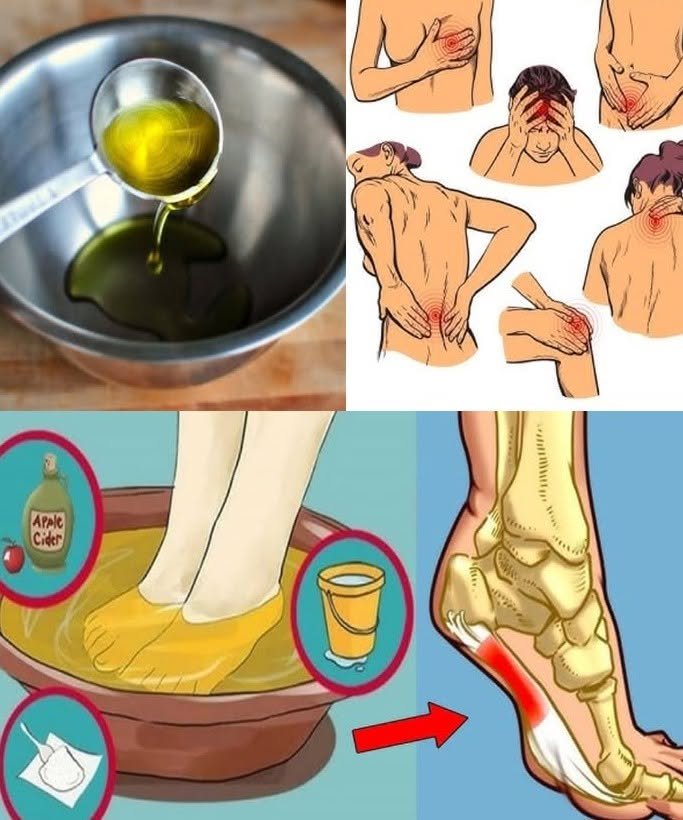
A viral social media image shows a spoonful of olive oil, apple cider vinegar, salt, a foot bath, and illustrations of pain affecting the chest, head, back, knees, and heels. The caption claims this simple mixture acts as a “natural painkiller in no time.” While olive oil, apple cider vinegar (ACV), and salt are commonly used in home wellness routines, the scientific evidence does not support claims that they can instantly relieve pain throughout the body. Here’s what this popular foot soak can—and cannot—do.
What’s in the Picture?
The viral image features several familiar household ingredients often associated with relaxation and self-care.
Olive Oil: Frequently used as a natural moisturizer and massage oil to help soften dry skin.
Apple Cider Vinegar and Salt: Often added to warm foot baths as part of traditional home care routines. Apple cider vinegar should always be diluted before use, as concentrated vinegar may irritate the skin.
Body Pain Graphics: Images showing pain in the head, chest, back, knees, and heels are included to suggest that the foot soak provides fast relief for multiple conditions. However, these illustrations are not supported by medical evidence.
Can This Foot Soak Relieve Pain “In No Time”?
The simple answer is no.
A warm foot soak may help you relax after a long day and temporarily soothe tired, achy feet, but it is not a painkiller and cannot treat conditions such as headaches, chest pain, arthritis, back pain, or plantar fasciitis.
Pain can have many different causes, including muscle strain, joint disease, nerve disorders, injuries, poor circulation, or underlying medical conditions. Proper diagnosis is essential, especially when pain is severe, persistent, or accompanied by other symptoms.
Why Do People Use These Ingredients?
Although the mixture is not a medical treatment, each ingredient has a practical role in personal care.
Olive oil helps moisturize dry skin and may leave the feet feeling softer after soaking.
Diluted apple cider vinegar is commonly used in cosmetic foot baths because many people find it refreshing and cleansing. However, it should never be applied undiluted to the skin.
Salt—whether table salt or Epsom salt—is often added to warm water because many people find foot soaks soothing and relaxing, although scientific evidence for pain relief remains limited.
How to Make a Gentle Foot Soak
If you enjoy relaxing foot baths, you can safely prepare a simple soak at home for cosmetic purposes.
- Fill a basin with comfortably warm (not hot) water.
- Add ½ cup of apple cider vinegar and 2–3 tablespoons of salt, stirring until dissolved.
- Optionally add 1 teaspoon of olive oil to help soften dry skin.
- Soak your feet for 10–15 minutes, then gently pat them dry and apply a moisturizer.
Avoid using this soak if you have open wounds, severe skin irritation, diabetes with reduced sensation, or poor circulation unless your healthcare provider recommends it.
What Actually Helps Body Pain?
For ongoing back, knee, heel, head, or chest pain, evidence-based treatments are far more effective than home remedies alone.
Helpful approaches may include:
- Consulting a healthcare professional for persistent or severe pain.
- Gentle stretching, walking, or physical therapy exercises.
- Heat or cold therapy when recommended by a clinician.
- Maintaining a balanced diet, healthy sleep habits, and regular physical activity.
- Using prescribed medications, orthotics, or other treatments when medically appropriate.
Conclusion
An olive oil, apple cider vinegar, and salt foot soak can be a pleasant self-care ritual that helps tired feet feel refreshed and relaxed. However, it is not a natural painkiller and should not be relied upon to treat headaches, chest pain, back pain, knee pain, or heel pain. For lasting pain relief, seek proper medical evaluation and follow treatments supported by scientific evidence.
Medical Disclaimer: This article is for educational and cosmetic purposes only. It does not diagnose, treat, cure, or prevent any disease or pain condition. If you experience persistent or severe pain—especially chest pain, difficulty breathing, sudden severe headache, or worsening foot pain—seek prompt medical attention. In an emergency, contact your local emergency services immediately.