
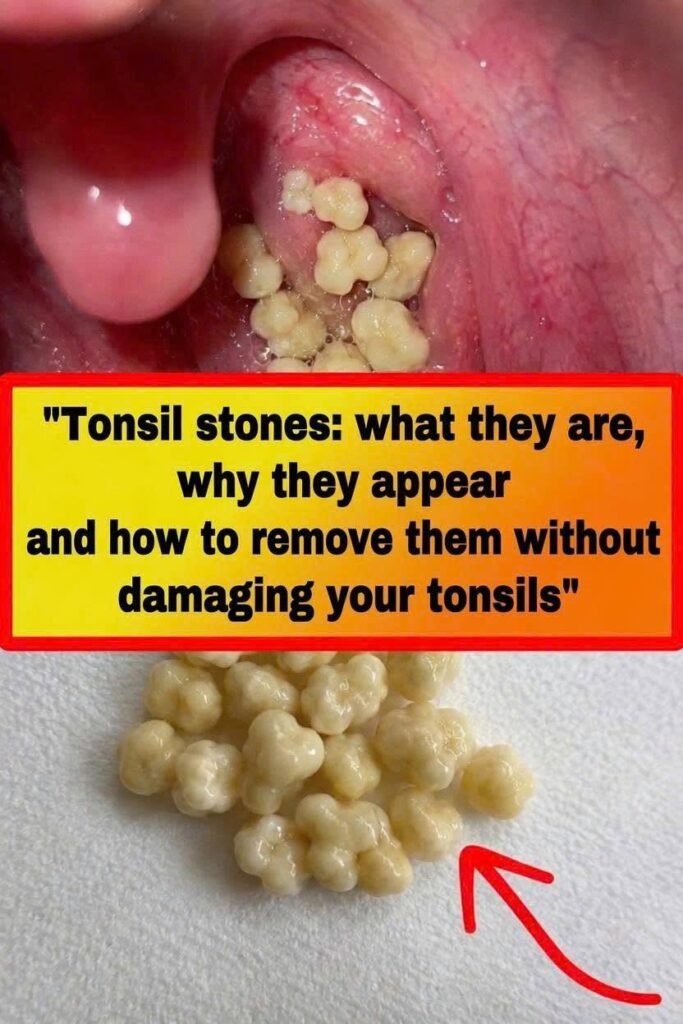
Tonsil Stones: What They Are, Why They Appear, and How to Remove Them Safely
1. What Tonsil Stones Are
Tonsil stones are small, hard lumps that form in the tonsils. They develop when debris gets trapped in tiny holes (crypts) in the tonsils and gradually hardens.
This trapped material can include:
- Food particles
- Dead cells
- Mucus
- Bacteria
- Minerals from saliva
Over time, this mix forms white or yellowish stones at the back of the throat.
2. Why Tonsil Stones Form
They usually develop when debris is not properly cleared from the tonsils.
Common causes include:
- Poor oral hygiene
- Chronic tonsil infections
- Large or deep tonsil crypts
- Excess mucus or postnasal drip
- Frequent throat inflammation
Bacteria inside the trapped material can also produce bad odor.
3. Symptoms of Tonsil Stones
Some people don’t notice any symptoms, especially if stones are small.
When symptoms appear, they may include:
- Bad breath (very common)
- Sore or irritated throat
- Trouble swallowing
- Feeling of something stuck in the throat
- Ear discomfort
- Visible white/yellow spots on tonsils
- Bad or metallic taste
Bad breath happens because bacteria release sulfur-like compounds.
4. Are Tonsil Stones Dangerous?
Most tonsil stones are harmless and not dangerous.
However:
- Large stones can cause discomfort
- Repeated cases may lead to throat irritation or infection
- Deep stones may need medical removal
5. Safe Ways to Remove Tonsil Stones
Method 1: Salt Water Gargle
- Mix 1 cup warm water + ½ teaspoon salt
- Gargle several times daily
- Helps loosen small stones and reduce bacteria
Method 2: Gentle Coughing
- Sometimes stones come out naturally when coughing
- Do not force or strain too hard
Method 3: Water Flosser (Low Pressure)
- Use the lowest setting only
- Aim carefully at the tonsil area
- Stop if there is pain or bleeding
Method 4: Cotton Swab (Careful Use)
- Only for visible stones
- Apply very gentle pressure
- Risk of bleeding or infection if done incorrectly
Method 5: Medical Removal
- ENT doctors can remove stones safely
- Recommended for large or recurring stones
- May include special procedures if needed
6. How to Prevent Tonsil Stones
Good daily habits can reduce risk:
- Brush teeth twice daily
- Floss regularly
- Clean tongue
- Gargle after meals
- Stay hydrated
- Treat sinus or postnasal drip issues
- Avoid smoking
7. When to See a Doctor
Seek medical help if you have:
- Severe pain
- Swelling or fever
- Trouble breathing or swallowing
- Frequent recurrence
- Bleeding
- Large persistent stones
8. Can They Come Back?
Yes. Tonsil stones often return, especially if:
- Tonsil crypts are deep
- There are ongoing infections or mucus buildup
In severe cases, doctors may suggest long-term treatments or surgery.
9. Final Idea
Tonsil stones are common and usually harmless, but they can be uncomfortable. Most cases improve with good oral hygiene and simple home care. Persistent problems should be checked by a healthcare professional.