Doctors Warn: Your Sleeping Position May Affect Acid Reflux Symptoms
Doctors Warn: Your Sleeping Position May Affect Acid Reflux Symptoms
What Is the Best Sleeping Position for Acid Reflux? The Position That May Help at Night
You finally crawl into bed after a long day, hoping to get a good night’s sleep.
Then the burning starts.
A warm sensation rises through your chest. Your throat feels irritated, and you may notice an unpleasant sour or bitter taste in your mouth. Instead of relaxing into sleep, you find yourself shifting from one position to another, trying to get comfortable.
If you regularly experience acid reflux, GERD, or nighttime heartburn, your sleeping position may be one factor worth paying attention to.
For many people, sleeping on the left side may help reduce nighttime reflux symptoms. Elevating the upper body and avoiding meals shortly before bedtime may also make a difference.
Here’s what to know about sleeping positions and nighttime acid reflux.
Why Does Acid Reflux Get Worse at Night?
Acid reflux occurs when stomach contents move backward into the esophagus, the tube connecting your mouth to your stomach.
Normally, the lower esophageal sphincter helps keep stomach contents from traveling upward. When this barrier relaxes or does not close effectively, stomach acid can enter the esophagus and cause the familiar burning sensation of heartburn.
During the day, sitting or standing upright gives gravity an advantage. When you lie down, that assistance is reduced.
That is one reason some people notice that acid reflux becomes worse after going to bed.
Nighttime reflux can also interfere with sleep, creating an uncomfortable cycle in which poor sleep and repeated awakenings make the following day more difficult.
Is Sleeping on Your Left Side Better for Acid Reflux?
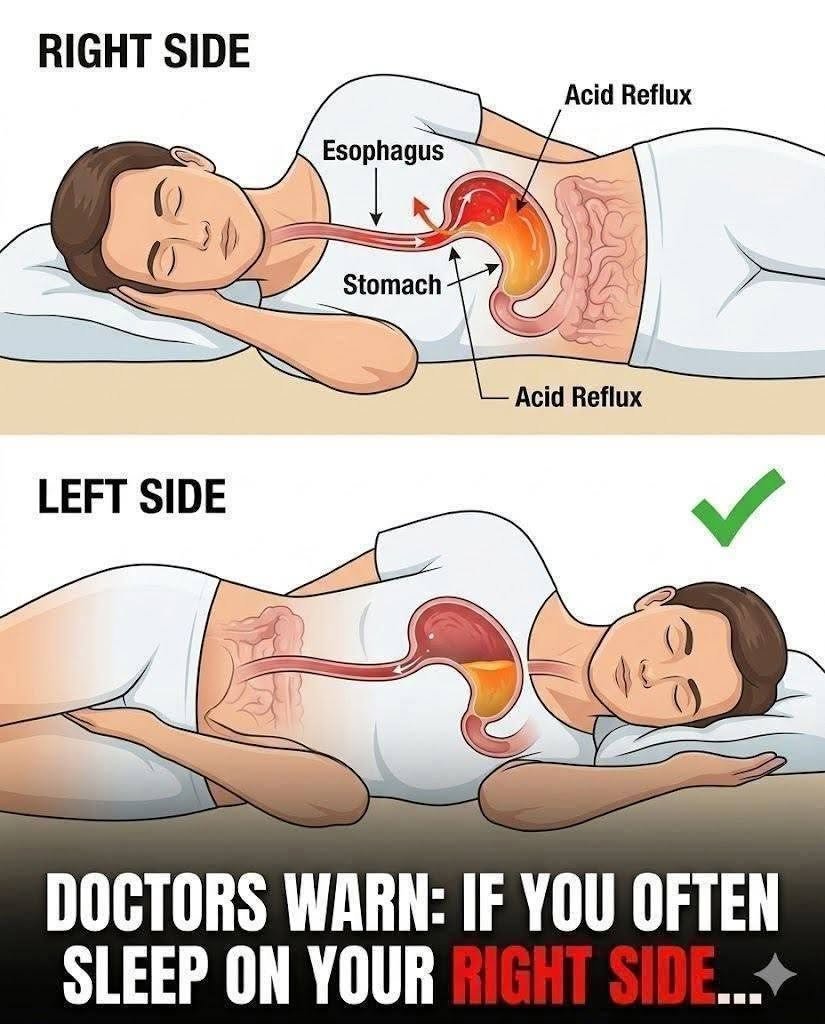
For many people with nighttime reflux, sleeping on the left side may be the most comfortable position.
The anatomy of the stomach and esophagus means that lying on the left side can make it harder for stomach contents to move upward into the esophagus.
Research has also suggested that left-side sleeping can reduce nighttime acid exposure and may improve reflux symptoms for some people.
It isn’t a guaranteed solution, and individual responses vary. But because it is simple and generally easy to try, switching to your left side may be worth experimenting with if nighttime heartburn regularly bothers you.
What About Sleeping on Your Right Side?
This is where sleeping position can make a noticeable difference.
Some people experience more reflux when sleeping on their right side.
The position of the stomach may make it easier for stomach contents to move toward the esophagus in this position.
If you usually sleep on your right side and regularly wake up with heartburn, try switching to your left side for several nights and pay attention to whether your symptoms change.
Keeping a simple symptom journal can help you identify patterns.
Is Sleeping Flat on Your Back Bad for Acid Reflux?
Sleeping completely flat can be uncomfortable for people who frequently experience nighttime reflux.
Without elevation, gravity provides less assistance in keeping stomach contents down.
However, there is an important distinction between simply raising your head and properly elevating your upper body.
Why Stacking Pillows May Not Be Enough
Putting several ordinary pillows underneath your head might seem like an easy solution, but it can cause your body to bend at the waist.
That position may not provide the type of gradual upper-body elevation that is typically intended for nighttime reflux.
Instead, a wedge pillow designed to elevate the upper torso or an appropriately elevated bed surface may be more effective for some people.
The goal is to raise the upper chest and abdomen while keeping the body relatively aligned rather than simply bending the neck upward.
Can Elevating Your Upper Body Help?
For people with frequent nighttime reflux, elevating the upper portion of the body may help reduce symptoms.
A wedge pillow can gradually raise the torso, potentially making it more difficult for stomach contents to travel upward while you are lying down.
This approach may be particularly useful for people whose symptoms occur primarily after they go to bed.
Comfort matters, too. A sleeping position that reduces reflux but makes it impossible to sleep comfortably may not be practical long-term.
Don’t Go to Bed Immediately After Eating
Your sleeping position isn’t the only factor that can influence nighttime heartburn.
Going to bed shortly after eating a large meal can make reflux more likely. Giving your body time to digest before lying down may help reduce symptoms.
This can be particularly important after:
- Large meals
- High-fat meals
- Spicy foods
- Alcohol
- Chocolate
- Caffeinated beverages
However, food triggers are highly individual.
Rather than eliminating every food on a long list, pay attention to which foods consistently make your own reflux symptoms worse.
Can Weight Affect Acid Reflux?
For some people, excess abdominal pressure can contribute to reflux.
If you are overweight, gradual weight loss may help reduce reflux symptoms. Even relatively modest lifestyle changes may provide benefits for some people.
That said, reflux can affect people of all body sizes. Weight is only one potential factor, so persistent symptoms should not simply be attributed to body weight.
Can Tight Clothing Make Reflux Worse?
Tight clothing around the abdomen may increase pressure or discomfort for some people.
If you regularly experience nighttime reflux, choosing loose, comfortable sleepwear may be a simple adjustment worth trying.
It is a small change, but reducing unnecessary pressure around the abdomen may make bedtime more comfortable.
5 Simple Nighttime Habits That May Help Acid Reflux
If reflux regularly wakes you up at night, consider incorporating these habits into your evening routine.
1. Finish Dinner Earlier
Give yourself several hours between your evening meal and bedtime when possible.
Going to bed immediately after eating can make nighttime reflux more likely.
2. Try Sleeping on Your Left Side
If you normally sleep on your right side, experiment with the left side.
For many people, this position may reduce nighttime acid exposure.
3. Elevate Your Upper Body
Consider using a properly designed wedge pillow or another method that gradually elevates the upper torso.
Simply stacking pillows beneath your head may not provide the same effect.
4. Identify Your Personal Trigger Foods
Keep track of what you eat and drink in the hours before symptoms occur.
You may discover that particular foods or beverages consistently trigger your heartburn.
5. Avoid Large Meals Before Bed
A heavy meal shortly before lying down can leave your stomach full when you are trying to sleep.
Smaller evening meals and earlier dinner times may be more comfortable for some people.
What Is the Best Sleeping Position for GERD?
There isn’t one sleeping position that works perfectly for everyone.
However, for people who experience nighttime GERD or acid reflux, left-side sleeping and upper-body elevation are commonly recommended strategies.
The combination can give gravity more of a role in keeping stomach contents where they belong.
If you continue experiencing symptoms despite lifestyle changes, it is worth discussing them with a healthcare professional.
When Should You See a Doctor About Acid Reflux?
Occasional heartburn is common, but frequent or severe symptoms deserve attention.
Talk with a healthcare professional if reflux:
- Happens regularly
- Frequently wakes you from sleep
- Interferes with daily activities
- Requires frequent use of over-the-counter medication
- Continues despite lifestyle changes
You should also seek prompt medical attention for concerning symptoms such as severe or unexplained chest pain, difficulty swallowing, vomiting blood, or black, tarry stools.
Most importantly, don’t automatically assume that chest pain is heartburn. Chest pain can have serious causes and may require urgent evaluation.
Frequently Asked Questions
Which side should I sleep on with acid reflux?
For many people, the left side may be more comfortable and may reduce nighttime acid exposure compared with right-side sleeping.
Is it better to sleep sitting up with GERD?
You don’t necessarily need to sleep upright. Elevating the upper body gradually with a wedge pillow or appropriate bed elevation may help some people while allowing them to remain in a more natural sleeping position.
Can sleeping on your right side cause heartburn?
Some people experience worse reflux when sleeping on their right side. If this happens to you, switching to your left side may be worth trying.
How long should I wait after eating before going to bed?
Many people with nighttime reflux find it helpful to avoid lying down for several hours after eating, particularly after a large meal.
Can acid reflux affect sleep?
Yes. Nighttime reflux can cause burning, throat irritation, coughing, or an unpleasant taste that may make it difficult to fall asleep or stay asleep.
The Bottom Line
Your sleeping position isn’t a cure for acid reflux, but it may influence how uncomfortable your symptoms become at night.
For many people, sleeping on the left side, elevating the upper body, avoiding large meals close to bedtime, and identifying personal food triggers can be useful strategies.
If nighttime heartburn happens frequently or continues despite these changes, don’t simply accept it as something you have to live with. Persistent reflux deserves a proper medical evaluation so that an appropriate treatment plan can be considered.