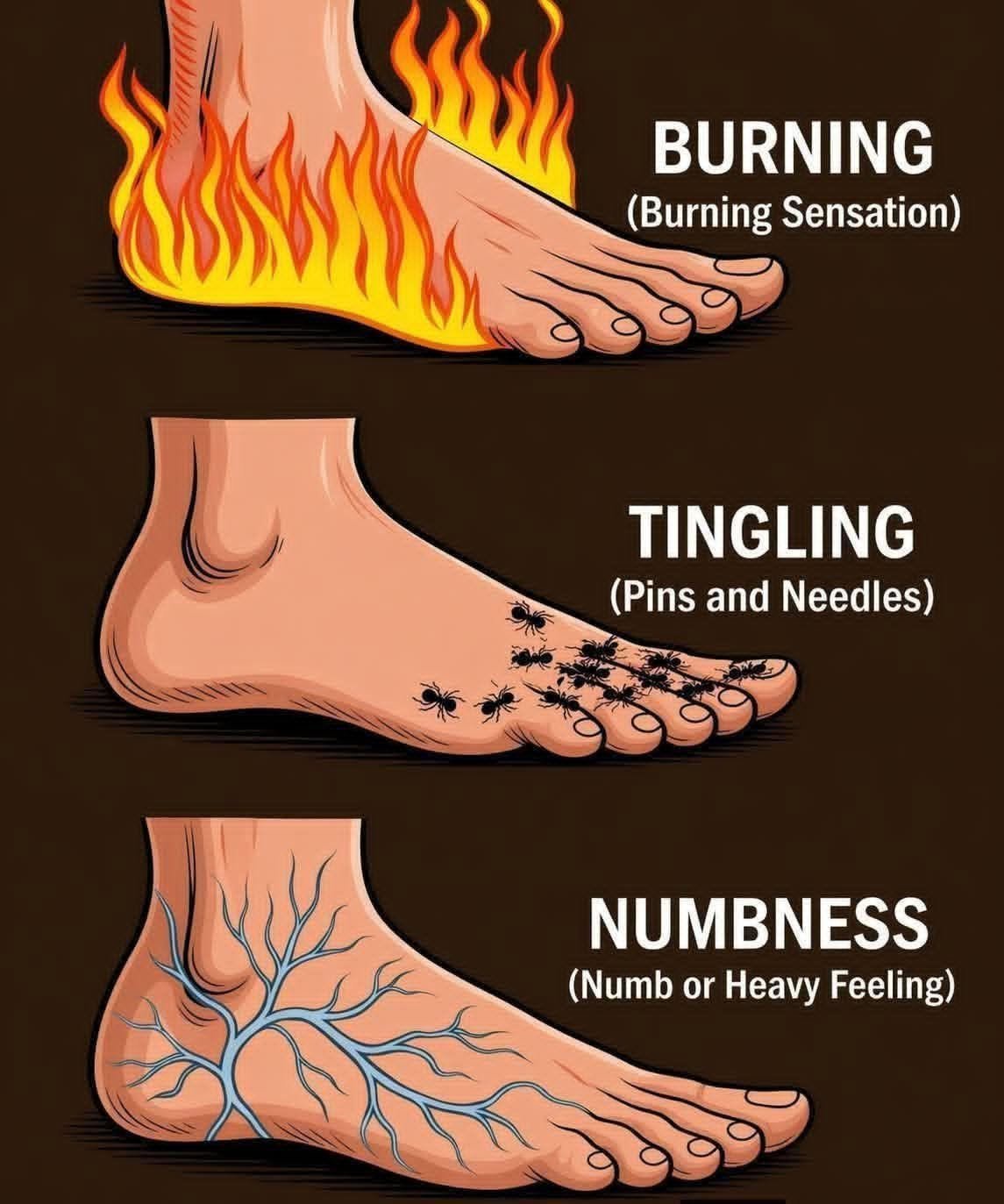
Burning, Numbness, and Tingling in the Feet
Burning, Numbness, and Tingling in the Feet
What Do Burning and Tingling in the Feet Mean? 7 Possible Causes You Should Know
Have you ever experienced a burning sensation, pins and needles, or an unusual tingling feeling in your feet? These sensations are relatively common and can happen after sitting in one position for too long. In many cases, they disappear within a few minutes.
However, when burning, numbness or tingling becomes frequent or persistent, it may indicate an underlying health problem that deserves attention.
These symptoms are sometimes associated with nerve damage, diabetes, vitamin deficiencies, circulation problems or spinal conditions.
Understanding the possible causes can help you recognise when to seek medical advice and how to protect your foot health.
What Causes Burning and Tingling in the Feet?
The medical term for tingling or pins and needles is paresthesia. It describes unusual sensations such as prickling, burning, numbness or an electric-shock-like feeling.
Here are seven common possible causes.
1. Poor Posture and Temporary Nerve Compression
Sitting cross-legged, wearing tight footwear or remaining in one position for extended periods can place pressure on nerves.
This may temporarily interfere with normal nerve signals and produce sensations such as:
- Pins and needles.
- Temporary numbness.
- Mild tingling.
- A prickling sensation when movement resumes.
These symptoms usually improve after changing position and relieving the pressure.
If numbness continues despite changing positions, it may require medical assessment.
2. Diabetes-Related Nerve Damage (Peripheral Neuropathy)
<escape><strong></escape>Diabetes is one of the most important conditions associated with persistent burning and tingling in the feet.
Over time, elevated blood glucose levels can damage peripheral nerves, particularly those in the feet and legs. This condition is known as diabetic peripheral neuropathy.
Common symptoms include:
- Burning pain, particularly at night.
- Tingling or electric-shock sensations.
- Reduced sensitivity to temperature.
- Numbness in the toes and feet.
- Increased sensitivity to touch.
- Difficulty noticing cuts, blisters or injuries.
People with diabetes should take these symptoms seriously because reduced sensation can allow foot injuries to go unnoticed.
Maintaining appropriate blood glucose levels and having regular foot examinations can help reduce the risk of complications.
3. Poor Blood Circulation
Circulatory problems can affect the supply of oxygen-rich blood to the legs and feet.
One possible cause is peripheral artery disease (PAD), which develops when arteries become narrowed or blocked.
Possible warning signs include:
- Cold feet or toes.
- Pain in the legs while walking that improves with rest.
- Slow-healing foot wounds.
- Changes in skin colour.
- Weak pulses in the feet.
- Numbness or unusual sensations.
It is important to understand that burning and tingling alone do not necessarily mean poor circulation. Nerve problems are also common causes.
Sudden severe pain, a cold or pale foot, or sudden loss of sensation requires emergency medical assessment.
4. Vitamin B Deficiencies
Certain B vitamins are essential for healthy nerve function.
Deficiencies can sometimes contribute to peripheral neuropathy, particularly:
Vitamin B1 (Thiamine): Helps the nervous system function properly. Severe deficiency can cause nerve damage.
Vitamin B6 (Pyridoxine): Supports normal nerve function. Interestingly, excessive vitamin B6 from supplements can also cause nerve damage and tingling.
Vitamin B12 (Cobalamin): Important for maintaining healthy nerve cells and producing red blood cells. A deficiency can cause numbness, tingling, balance difficulties and weakness.
People experiencing unexplained tingling may benefit from medical assessment and appropriate blood tests.
Do not start high-dose vitamin supplements without identifying the underlying cause.
5. Spinal Problems and Compressed Nerves
Problems involving the lower spine can sometimes cause symptoms that travel down the legs and into the feet.
For example, a herniated disc may press against a nerve root, producing a condition known as lumbar radiculopathy.
Symptoms may include:
- Burning pain travelling down one leg.
- Tingling in the toes.
- Numbness in parts of the foot.
- Lower back pain.
- Muscle weakness.
Sciatica is another common condition involving irritation or compression of the sciatic nerve.
Persistent symptoms, especially when accompanied by weakness, should be assessed by a healthcare professional.
6. Alcohol Consumption and Certain Medications
Excessive alcohol consumption over time can damage peripheral nerves and contribute to burning, numbness and tingling.
Certain medications can also cause peripheral neuropathy as a side effect.
Examples include some chemotherapy medicines and particular medications used to treat infections.
If symptoms begin after starting a new medication, speak with your healthcare professional. Never stop prescribed medication without medical advice.
7. Other Medical Conditions
Several other conditions can contribute to burning or tingling feet, including:
- Hypothyroidism (underactive thyroid).
- Kidney disease.
- Certain autoimmune disorders.
- Infections affecting the nervous system.
- Nerve injuries.
- Tarsal tunnel syndrome, involving compression of a nerve near the ankle.
Because different conditions can produce similar symptoms, a proper diagnosis is important.
When Should You Be Concerned?
Occasional tingling that disappears quickly is often harmless. However, persistent or worsening symptoms should not be ignored.
Arrange a medical assessment if you experience:
- Frequent burning or tingling in your feet.
- Numbness that does not go away.
- Increasing sensitivity or pain at night.
- Difficulty walking or maintaining balance.
- Muscle weakness.
- Reduced ability to feel heat, cold or pain.
- Foot wounds that are slow to heal.
Seek emergency medical attention if numbness or weakness develops suddenly, particularly on one side of the body or alongside facial drooping, difficulty speaking or severe dizziness.
New severe back pain accompanied by numbness around the groin, difficulty passing urine or loss of bladder or bowel control also requires emergency assessment.
Natural and Practical Ways to Support Foot Health
Treatment depends on the underlying cause, but several everyday habits can help maintain healthy feet and reduce avoidable discomfort.
1. Stay Physically Active
Regular walking and gentle movement support general cardiovascular health and may improve circulation.
Choose activities appropriate for your physical condition. If you have reduced sensation in your feet, check your feet after exercise.
2. Wear Comfortable Footwear
Choose shoes that fit properly and provide adequate cushioning and support.
Avoid footwear that places excessive pressure on your toes or compresses your feet.
3. Maintain Healthy Blood Glucose Levels
For people living with diabetes, managing blood glucose is an important part of protecting nerve health.
Follow your prescribed treatment plan and attend regular diabetes reviews.
4. Eat a Balanced Diet
Include foods containing essential nutrients, particularly B vitamins.
Good dietary sources include:
- Eggs.
- Fish.
- Dairy products.
- Meat and poultry.
- Whole grains.
- Beans and lentils.
- Leafy green vegetables.
People following restrictive diets may need particular attention to vitamin B12 intake.
5. Check Your Feet Regularly
Look for cuts, blisters, swelling, redness, changes in skin colour or unusual injuries.
This is particularly important for people with diabetes or reduced foot sensation.
6. Limit Alcohol Consumption
Excessive alcohol can contribute to nerve damage and nutritional deficiencies.
Reducing alcohol consumption can support overall health and help reduce certain neuropathy risks.
7. Avoid Prolonged Pressure on Your Feet and Legs
Change positions regularly, avoid sitting with crossed legs for extended periods and take movement breaks during long periods of sitting.
How Do Doctors Diagnose the Cause?
If burning or tingling persists, a healthcare professional may review your medical history, examine your feet and assess nerve function.
Depending on your symptoms, investigations may include:
- Blood glucose or HbA1c testing.
- Vitamin B12 levels.
- Thyroid function tests.
- Kidney function tests.
- Nerve conduction studies.
- Electromyography (EMG).
- Imaging of the spine when clinically indicated.
Not everyone needs all these tests. Investigations depend on the suspected cause.
Frequently Asked Questions
1. Why do my feet burn more at night?
Nerve-related pain can become more noticeable at night, particularly in people with peripheral neuropathy. However, several other conditions can also cause nighttime discomfort.
2. Can vitamin B12 deficiency cause burning feet?
Yes. Vitamin B12 deficiency can damage nerves and cause tingling, numbness, burning sensations and balance difficulties.
3. Is burning in the feet always a sign of diabetes?
No. Diabetes is an important possible cause, but vitamin deficiencies, nerve compression, alcohol-related nerve damage and other medical conditions can produce similar symptoms.
4. Can walking help reduce tingling in the feet?
Gentle walking may help general circulation and physical health. However, it will not necessarily resolve tingling caused by nerve damage or an underlying medical condition.
5. Should I worry about occasional pins and needles?
Occasional pins and needles that disappear after changing position are usually not a cause for concern. Persistent, recurrent or worsening symptoms should be medically assessed.
Final Thoughts
Burning, numbness and tingling in the feet can have several possible explanations, ranging from temporary nerve compression to diabetes-related neuropathy, vitamin deficiencies and spinal conditions.
Although occasional pins and needles are often harmless, persistent symptoms deserve attention.
Pay attention to changes in sensation, maintain healthy lifestyle habits and seek medical advice when symptoms continue or worsen.
Your feet can sometimes provide important clues about your overall health. Recognising unusual symptoms early can help identify underlying problems and prevent avoidable complications.
Medical disclaimer: This article is intended for general educational purposes only. It does not replace professional medical advice, diagnosis or treatment. Always consult a qualified healthcare professional about persistent or concerning symptoms.