The Leaf That Destroys Cancer Cells? Exploring the Science Behind Natural Plant Remedies
The Leaf That Destroys Cancer Cells? Exploring the Science Behind Natural Plant Remedies
Can a simple green leaf really help fight cancer? Stories circulating online, including claims associated with Barbara O’Neill’s natural-health approach, have sparked interest in the potential health benefits of medicinal plants. But what does science actually say about these claims?
Plants have been used in traditional medicine for centuries. Today, researchers continue to investigate plant compounds for their potential roles in preventing disease, supporting health, and developing new cancer treatments. However, it is essential to distinguish scientific evidence from sensational headlines.
Can Plant Leaves Kill Cancer Cells?
Some plants contain naturally occurring compounds that have demonstrated effects against cancer cells in laboratory experiments. These compounds may influence cell growth, trigger cell death, or affect biological pathways involved in cancer development.
However, a laboratory experiment is only an early stage of scientific investigation. A substance that damages cancer cells in a laboratory may not work the same way inside the human body. Its effectiveness, appropriate dosage, side effects, and interactions with other medicines must be carefully evaluated.
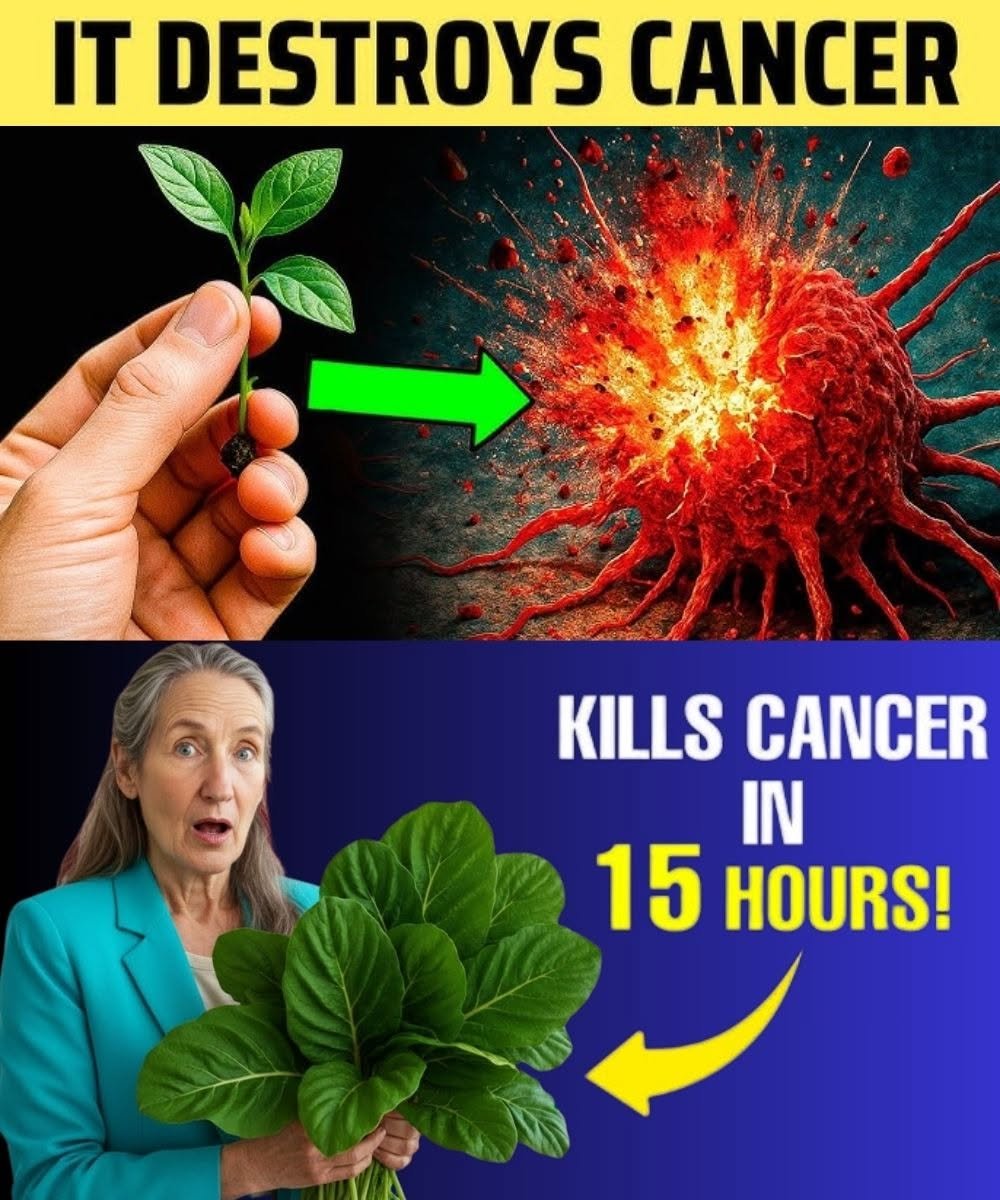
There is currently no reliable clinical evidence that eating a particular leaf destroys cancer throughout the human body in just 15 hours.
Medicinal Plants Researchers Are Studying
Several plants have attracted scientific interest because of their naturally occurring compounds.
1. Moringa Leaves
Moringa leaves contain vitamins, minerals, antioxidants, and other plant compounds. Researchers have investigated some of these substances for their biological effects, including potential anticancer activity in preclinical studies.
Although moringa can be part of a nutritious diet, it has not been established as a cancer treatment.
2. Neem Leaves
Neem has a long history of use in traditional medicine. Certain neem-derived compounds have been investigated in laboratory studies for their effects on cellular processes.
Nevertheless, these findings do not establish that consuming neem leaves can cure cancer. Safety also depends on the preparation, amount, and part of the plant used.
3. Soursop Leaves
Soursop, also known as graviola, is frequently discussed on social media as a natural cancer remedy. Some laboratory studies have examined compounds found in the plant for their effects on cancer cells.
However, convincing human clinical evidence showing that soursop leaves treat or cure cancer is lacking. Certain compounds may also pose safety concerns, particularly with excessive or prolonged exposure.
4. Holy Basil (Tulsi)
Holy basil is widely used in traditional wellness practices. It contains several plant compounds that researchers have studied for antioxidant and other biological activities.
Although it may be enjoyed as an herbal tea or culinary plant, it has not been proven to eliminate cancer cells in people.
What About the Claim That Cancer Cells Die in 15 Hours?
The headline claiming that a leaf kills cancer in 15 hours is a dramatic statement, but it should not be accepted without credible evidence.
To support such a claim, researchers would need to identify the exact plant, establish the active compound and dose, and demonstrate a meaningful treatment effect in well-designed human clinical trials.
A result observed in a laboratory cannot establish that eating a leaf will produce the same effect in a patient. Cancer also includes many different diseases, each with its own biology and treatment options.
Without a verifiable scientific study, the specific 15-hour claim remains unsubstantiated.
Can Natural Remedies Replace Conventional Cancer Treatment?
No plant remedy should be used as a substitute for proven cancer care without guidance from a qualified oncology professional.
Depending on the type and stage of cancer, evidence-based treatments may include surgery, chemotherapy, radiotherapy, immunotherapy, targeted therapy, or hormone therapy.
Some plant-derived substances have contributed to modern cancer medicines. However, purified medicines tested for safety and effectiveness are not equivalent to consuming raw leaves, teas, or homemade extracts.
Herbal products can also interact with prescribed medicines and may cause harmful side effects.
How to Approach Natural Cancer Remedies Safely
If you are interested in medicinal plants, consider these practical precautions:
- Check whether claims are supported by peer-reviewed research and human clinical trials.
- Consult your oncologist before using herbal supplements or concentrated plant extracts.
- Do not stop, delay, or replace prescribed cancer treatment with an unproven remedy.
- Remember that natural does not automatically mean safe or effective.
- Be cautious of products or articles promising guaranteed cures or exceptionally rapid results.
Final Thoughts
Nature has provided many valuable compounds for scientific discovery, and research into medicinal plants may continue to contribute to future medical advances. But promising laboratory results must be followed by rigorous clinical testing before a plant can be recommended as a cancer treatment.
The claim that a leaf destroys cancer in 15 hours is not supported by established clinical evidence. The most responsible approach is to remain curious about natural remedies while relying on scientifically validated cancer treatments and professional medical advice.
Disclaimer: This article is for educational purposes only and is not a substitute for professional medical advice, diagnosis, or treatment. Anyone diagnosed with cancer should consult a qualified healthcare professional about appropriate treatment options.