Never Ignore After 65: The Leg Signs That Can Warn of Stroke
Never Ignore After 65: The Leg Signs That Can Warn of Stroke
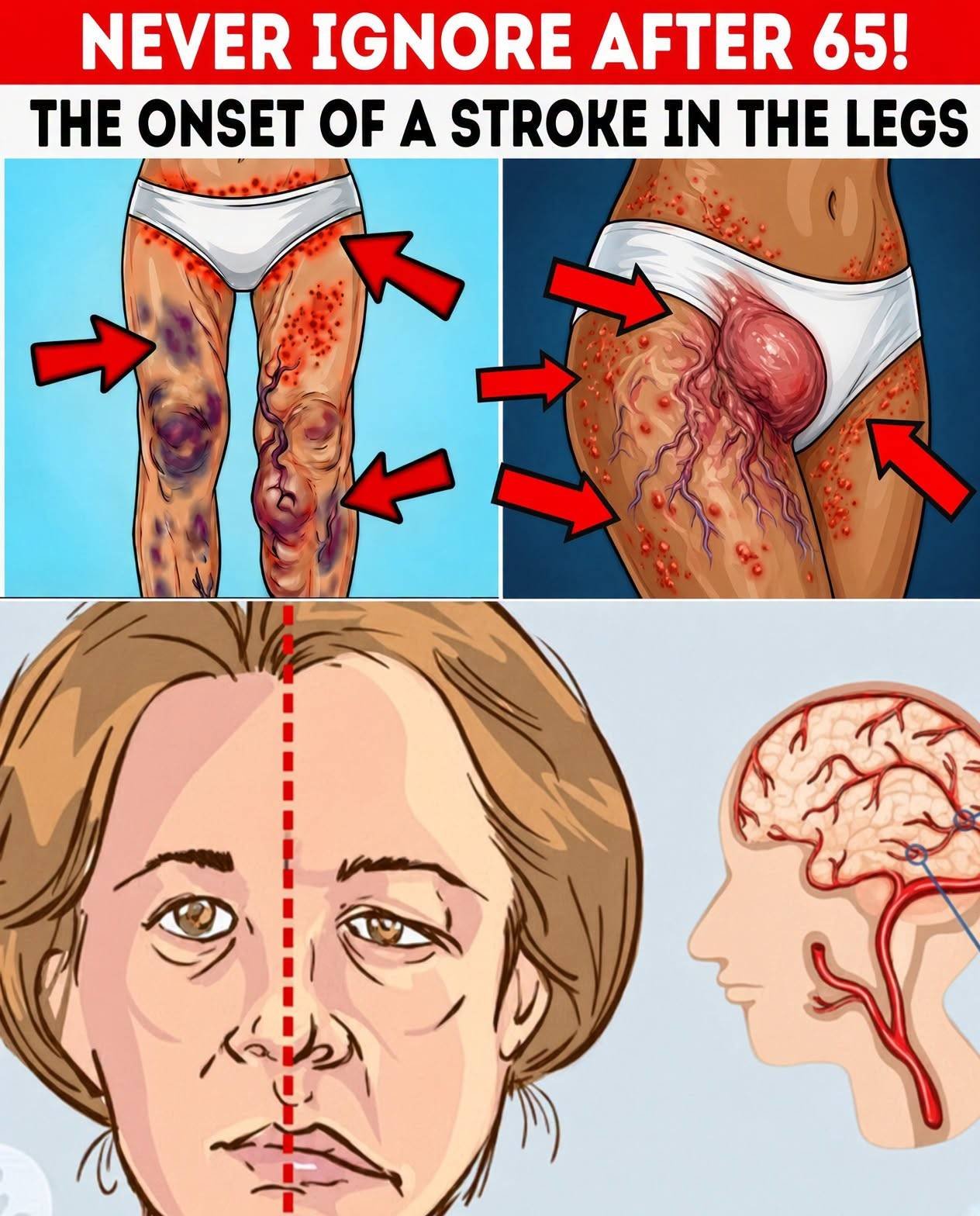
The viral poster shows illustrated legs marked with bruises, red spots and varicose veins, a drooping face, and brain blood vessels: “Never ignore after 65! The onset of a stroke in the legs.” Stroke warning signs showing up in the legs? The article behind this poster lists leg symptoms it links to stroke risk after 65. Some of this is legitimate vascular medicine — and some needs careful untangling.
The Signs Named
Unexplained bruising on the legs; red spots or rashes on the skin; visible varicose veins and venous changes; leg pain, heaviness or swelling; (plus the classic: facial drooping, shown in the illustration).
What the Vascular Medicine Actually Says
Legs and stroke share plumbing: the same atherosclerosis that clogs brain arteries clogs leg arteries (peripheral artery disease, PAD). Leg symptoms — cramping when walking (claudication), cold feet, slow-healing sores — genuinely mark someone at higher stroke and heart attack risk. This connection is real and underappreciated. Bruising: easy bruising after 65 often reflects blood thinners, fragile vessels, or low platelets — worth checking, but it’s not a direct stroke herald by itself. Varicose veins: venous disease, not arterial — uncomfortable and worth treating, but varicose veins themselves don’t cause strokes. The signs that DO warn of stroke: sudden facial drooping, arm weakness, speech difficulty — FAST. Sudden one-sided weakness or numbness is an emergency, whatever the legs look like. Red spots/rashes: can reflect vasculitis or clotting disorders — some of which do raise stroke risk and need a doctor’s eye.
What the Evidence Supports — and Its Limits
PAD as a risk marker: diagnosed peripheral artery disease roughly doubles-to-triples cardiovascular event risk — guidelines say these patients need aggressive risk-factor treatment. The poster’s instinct (legs warn of vascular danger) has a real core. What legs don’t do: predict the timing of a stroke. No leg sign tells you a stroke is “starting” — the poster overstates prediction as prophecy. The best stroke prevention: blood pressure control (the #1 lever), cholesterol treatment, diabetes control, no smoking, and blood thinners where indicated — proven, measured, unglamorous.
Safety Notes — Read Carefully
FAST = emergency: Face drooping, Arm weakness, Speech difficulty — Time to call emergency services. Don’t photograph your legs; call for help. Sudden leg pain with paleness or coldness can be an arterial emergency (acute limb ischemia) — also urgent. Don’t stop blood thinners because of bruising — talk to your doctor; the stroke they prevent is worse than the bruise. New rashes with leg pain/swelling deserve prompt medical evaluation.
How to Use It Wisely
After 65: know your blood pressure, cholesterol, and blood sugar numbers — and treat them. Walk regularly — it’s both PAD therapy and stroke prevention. Report new leg symptoms (claudication, sores that won’t heal, color changes) to your doctor — they’re risk markers worth acting on. Learn FAST and make sure your family knows it too.
Conclusion
The poster mangles the message — legs don’t announce a stroke’s arrival — but it stumbles onto a genuine truth: leg arteries and brain arteries share the same disease, and leg symptoms are a legitimate reason to get your vascular risk checked. The illustration’s drooping face is the real warning sign; the legs are the reason to act before you ever see it. Don’t ignore your legs after 65. But if the face droops, forget the poster — call emergency services.
This article is for informational purposes only and does not replace professional medical advice. Call emergency services immediately for sudden facial drooping, weakness, or speech difficulty. Consult your trusted doctor for personalized guidance on vascular risk.