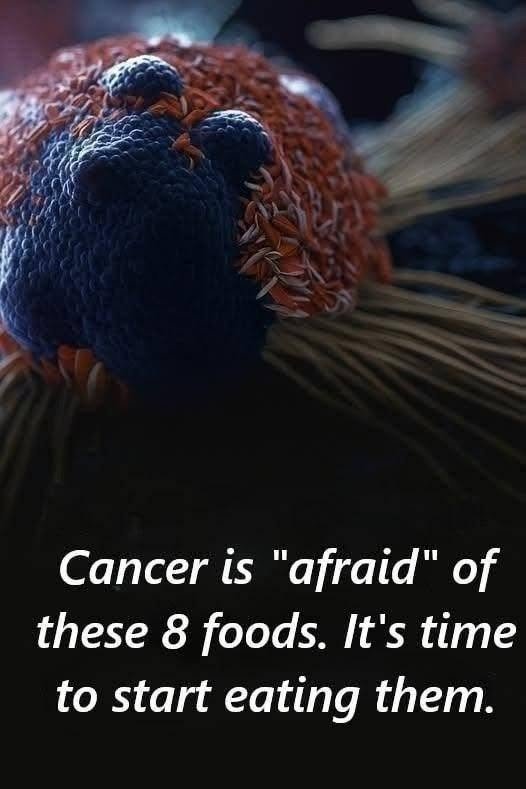
Cancer is “afraid” of these 8 foods.!!
Cancer is “afraid” of these 8 foods.!!
8 Foods That May Support Your Body’s Natural Defenses Against Cancer
A healthy diet cannot guarantee protection from cancer, but eating a variety of fruits and vegetables can provide important vitamins, minerals, fiber, and plant compounds that support overall health. Some foods contain compounds that researchers are studying for their potential role in cancer prevention.
Here are eight nutritious foods worth including in a balanced diet.
1. Purple Sweet Potatoes
Purple sweet potatoes are rich in anthocyanins, the natural pigments responsible for their deep purple color. These compounds have antioxidant and anti-inflammatory properties and are being studied for their potential effects on cancer-related processes.
Laboratory research has found that extracts from purple sweet potatoes can affect the growth of certain cancer cells. However, results from cell or animal studies do not mean that eating purple sweet potatoes can treat or cure cancer in humans.
How to enjoy them: Bake, roast, steam, or mash purple sweet potatoes as a nutrient-rich side dish.
2. Eggplant
Eggplant is another colorful vegetable containing a variety of naturally occurring plant compounds.
Its purple skin contains anthocyanins, while the vegetable also provides fiber, potassium, and other nutrients. Researchers continue to investigate whether compounds found in eggplant may have beneficial effects on pathways associated with cancer.
Rather than viewing eggplant as a “natural cancer remedy,” it is more accurate to consider it part of a varied, plant-rich eating pattern.
Easy idea: Roast eggplant with olive oil, garlic, and herbs, or add it to vegetable stews and stir-fries.
3. Broccoli
Broccoli is particularly interesting because it contains sulforaphane, a compound produced when certain compounds in cruciferous vegetables are broken down.
Laboratory and early human research has investigated sulforaphane for its effects on cellular defense mechanisms and other processes relevant to cancer biology.
Broccoli also provides vitamin C, vitamin K, folate, and fiber.
How to eat it: Add steamed broccoli to grain bowls, salads, stir-fries, soups, or roasted vegetable dishes.
4. Radishes
Radishes belong to the cruciferous vegetable family, which also includes broccoli, cabbage, kale, and cauliflower.
Their characteristic peppery flavor comes from naturally occurring compounds called glucosinolates and their breakdown products. These compounds are being studied for their potential biological effects.
Radishes are also low in calories and provide vitamin C and fiber.
Try this: Slice fresh radishes into salads, sandwiches, tacos, or grain bowls for a crisp, spicy flavor.
5. Tomatoes
Tomatoes are one of the best-known dietary sources of lycopene, a carotenoid responsible for their red color.
Lycopene has antioxidant properties, and researchers have studied its possible relationship with several types of cancer, particularly prostate cancer.
Interestingly, cooking tomatoes can increase the amount of lycopene that the body can absorb. Pairing tomatoes with a small amount of healthy fat can also improve carotenoid absorption.
Best options: Tomato sauce, roasted tomatoes, tomato soup, or cooked tomatoes served with olive oil.
6. Pumpkin
Pumpkin is packed with nutrients while remaining relatively low in calories. It provides beta-carotene, fiber, vitamin C, potassium, and other beneficial compounds.
Beta-carotene is converted by the body into vitamin A, which supports normal immune function and vision.
Although pumpkin should not be described as a cancer treatment, regularly eating nutrient-dense vegetables such as pumpkin can contribute to an overall healthy dietary pattern.
Simple idea: Use pumpkin in soups, roasted vegetable dishes, oatmeal, or homemade baked goods.
7. Pomegranate
Pomegranates contain polyphenols and other antioxidant compounds that have attracted considerable research interest.
Some laboratory studies have investigated pomegranate extracts and compounds in relation to prostate cancer cells. However, these findings should not be interpreted as proof that pomegranate juice or pomegranate fruit can prevent or treat prostate cancer.
Whole pomegranate provides fiber as well as plant compounds, making it a nutritious addition to a balanced diet.
How to enjoy it: Sprinkle the seeds over oatmeal, yogurt, salads, or roasted vegetables.
8. Turmeric
Turmeric contains curcumin, a compound widely studied for its anti-inflammatory and antioxidant properties.
Researchers have investigated curcumin in laboratory and clinical settings for its potential effects on several biological pathways involved in cancer. However, evidence is not strong enough to consider turmeric or curcumin a cancer treatment.
Turmeric is still an excellent way to add flavor to a healthy diet.
Try it in: Curries, soups, roasted vegetables, rice dishes, or golden milk.
Can These Foods Prevent or Cure Cancer?
This is the most important point.
No single food can guarantee that a person will avoid cancer, and foods should never replace cancer screening, medical treatment, or advice from a qualified healthcare professional.
Cancer risk is influenced by many factors, including genetics, age, tobacco exposure, alcohol consumption, body weight, physical activity, infections, environmental exposures, and overall dietary patterns.
The strongest approach is to focus on the bigger picture: eat plenty of vegetables and fruits, choose whole grains and other high-fiber foods, maintain a healthy weight when possible, stay physically active, avoid tobacco, limit alcohol, and follow recommended cancer-screening guidelines.
Final Thoughts
Purple sweet potatoes, eggplant, broccoli, radishes, tomatoes, pumpkin, pomegranate, and turmeric are all nutritious foods that can contribute to a varied, plant-rich diet.
Their naturally occurring compounds are an active area of scientific research, but “cancer-fighting food” is too strong a claim when discussing human health. A better message is that these foods can support a healthy eating pattern that may contribute to overall disease-risk reduction.
If you have cancer or are concerned about your personal cancer risk, talk with your doctor or a registered dietitian before making major dietary changes.