
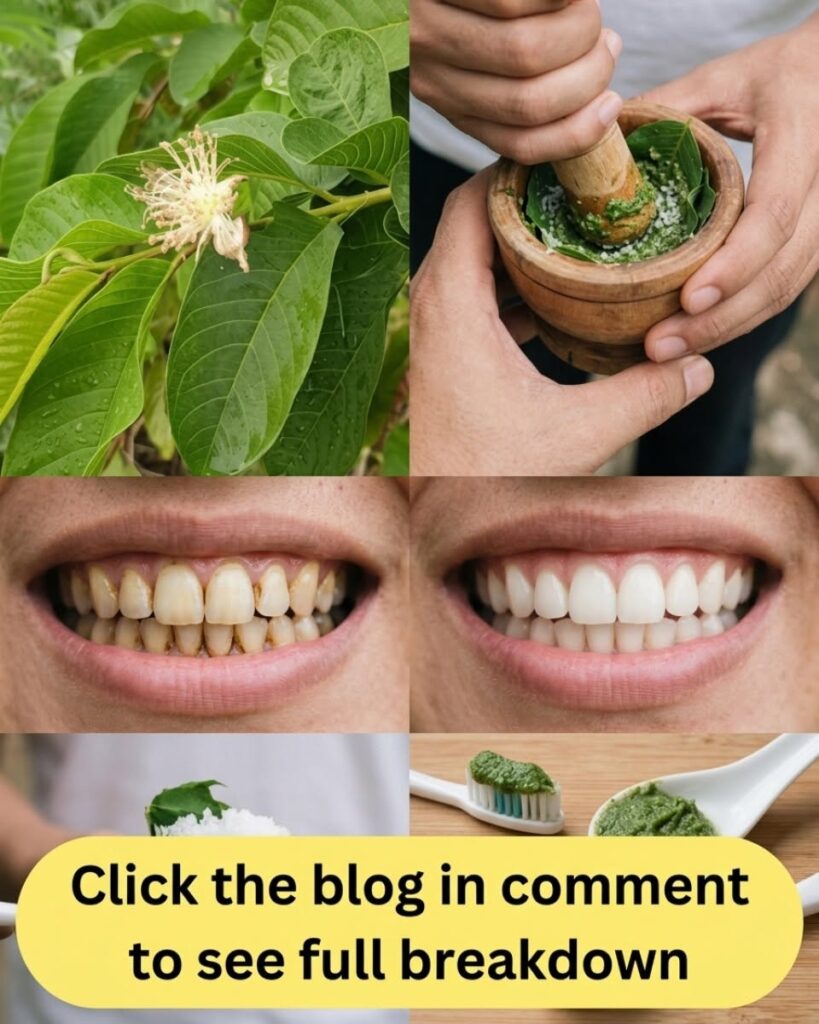
People Are Brushing With Guava Leaves – Dentists Are Finally Explaining Why It Works
Why Teeth Get Yellow in the First Place (It’s Not Just Stains)
Most discoloration comes from a mix of:
-
plaque biofilm buildup
-
bacterial acids that weaken enamel
-
gum inflammation that darkens the tooth margin
-
food pigments bonding to rough enamel surfaces
Brushing harder doesn’t solve this — it often makes it worse by damaging enamel and gums.
What helps instead is controlling bacteria and inflammation.
That’s where guava leaves come in.
What Makes Guava Leaves Special for Oral Health
Guava leaves are rich in:
-
Flavonoids – reduce bacterial growth
-
Tannins – tighten gums and reduce bleeding
-
Polyphenols – inhibit plaque-forming bacteria
-
Natural antimicrobials – support a balanced oral microbiome
Multiple studies have shown guava leaf extracts can reduce:
-
plaque accumulation
-
gum inflammation
-
bad breath (halitosis)
-
oral bacterial load
This doesn’t “bleach” teeth — it removes the conditions that cause yellowing.
How to Use Guava Leaves Safely (The Right Way)
Option 1: Gentle Brushing (1–2x per week)
-
Wash 1 fresh guava leaf thoroughly
-
Crush lightly to release juice
-
Add a pinch of salt (optional)
-
Dip toothbrush into the mixture
-
Brush gently for 30–60 seconds
-
Rinse well
Option 2: Guava Leaf Rinse (Safer for Daily Use)
-
Boil 3–5 guava leaves in water
-
Let cool
-
Rinse mouth for 30 seconds
-
Spit out (do not swallow)
This method is ideal for gum support without enamel wear.
What People Usually Notice Over Time
-
gums feel firmer, less tender
-
breath stays fresher longer
-
plaque buildup slows
-
teeth appear brighter due to cleaner enamel
What This Remedy Does Not Do
-
it does not replace toothpaste
-
it does not whiten teeth like chemical bleaching
-
it does not cure dental disease
Think of it as maintenance, not magic.
Who Should Avoid This
-
people with enamel erosion
-
those with mouth ulcers or open sores
-
anyone allergic to guava plants
If unsure, use the rinse method instead.